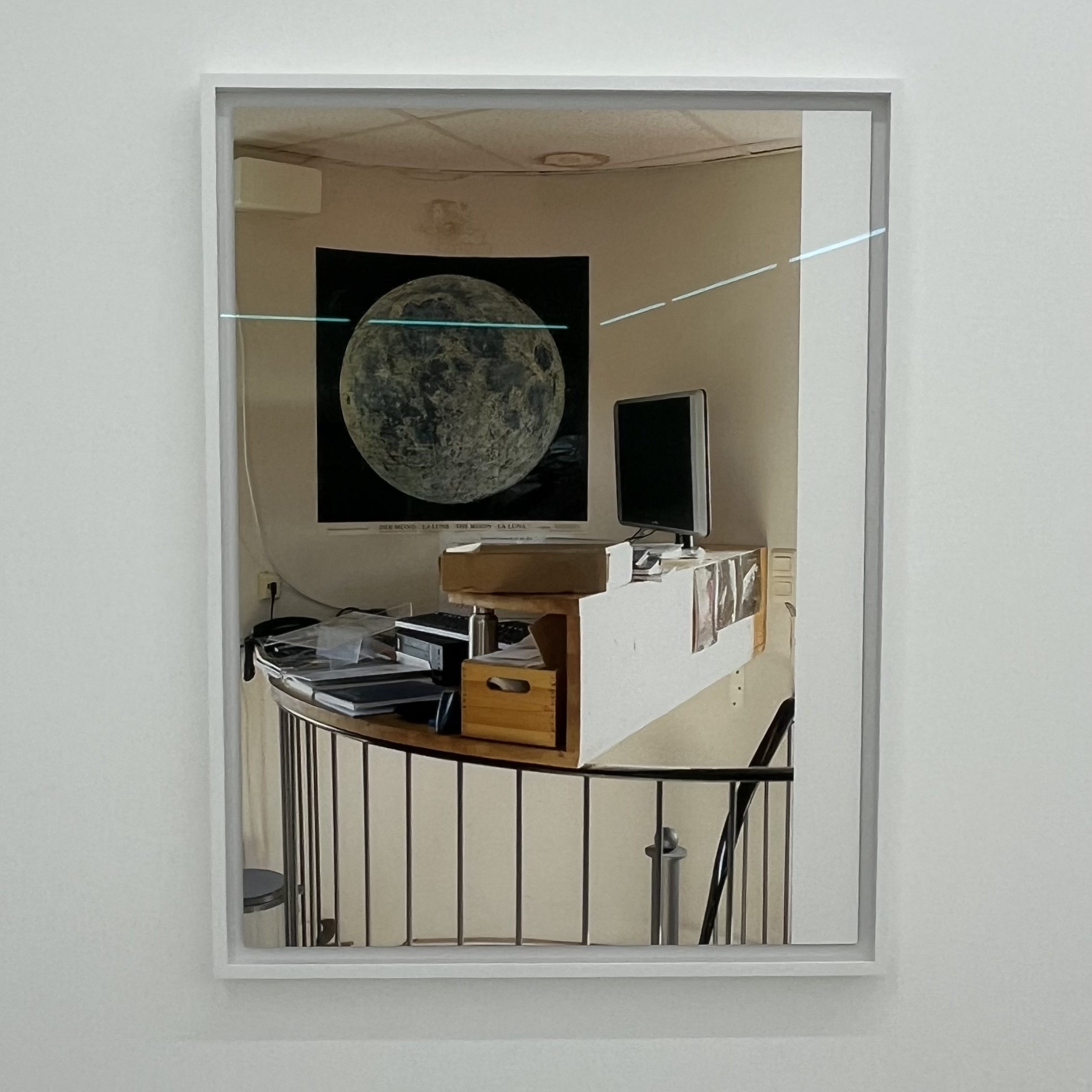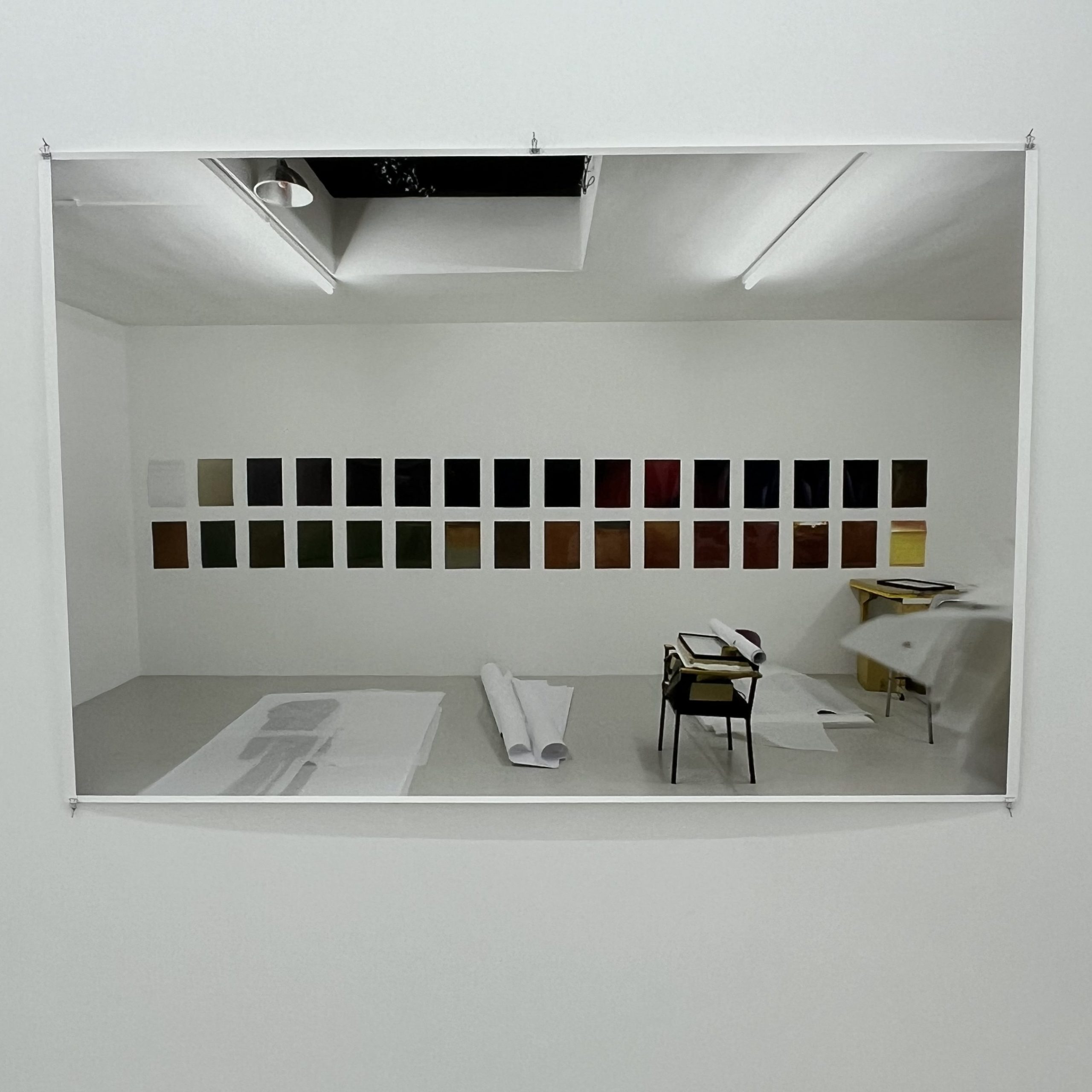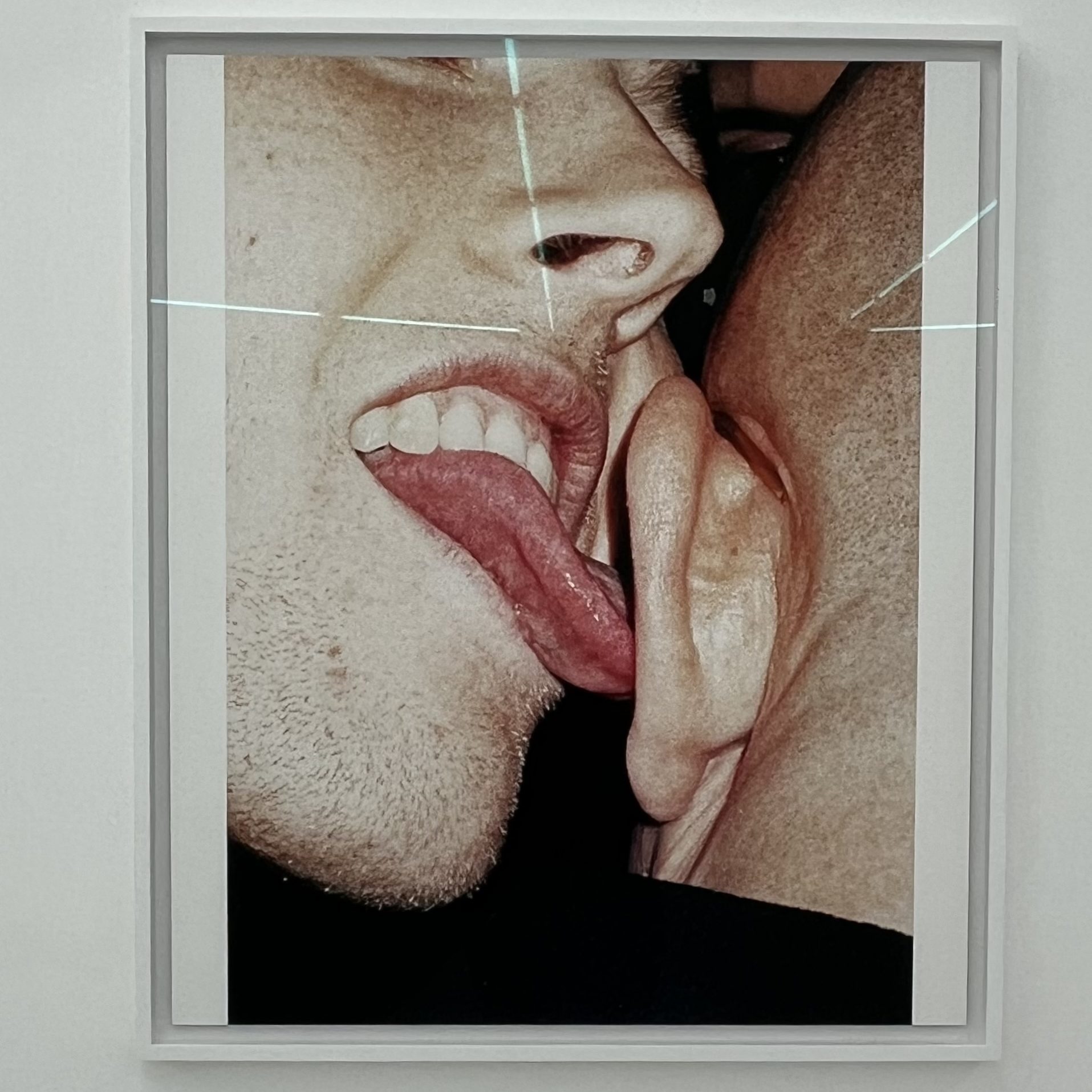

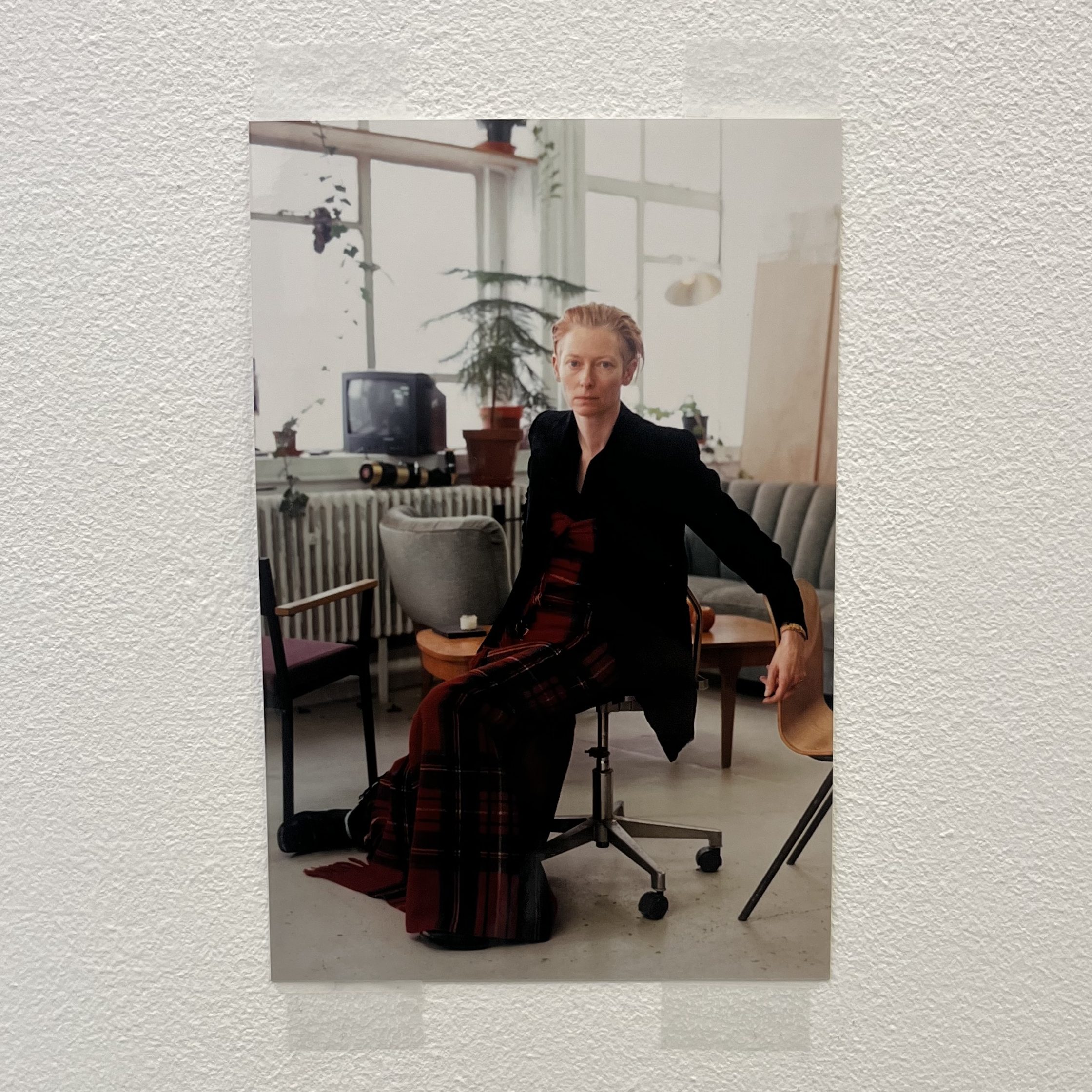
Build From Here marks the twentieth anniversary of Tillmans’s work cycle, Truth Study Centre, first displayed at Maureen Paley in 2005. In a sanctifying choice, the exhibition is the first to be staged at Paley’s Herald Street location — the artist’s studio before his move to Berlin — a stone’s throw from the gallery’s Three Colts Lane location.
A majority of the exhibition is photocopied, allowing visitors to get up close to the images, and enabling a curation that requires few boundaries. Since the mid-80s, Tillmans has regarded the inkjet printer as his loyalest friend, prizing its prints as “richer in texture because of their rather rough dot screen and the surface lines”.
The show is spread across three locations — 4 Herald St, 60 Three Colts Lane, and Studio M in London’s East End, where Paley was an early settler. It’s an almost-kinetic installation, though largely composed of photographic stills, where Tillmans’s works are activated through movement between galleries, each with its own spirit.
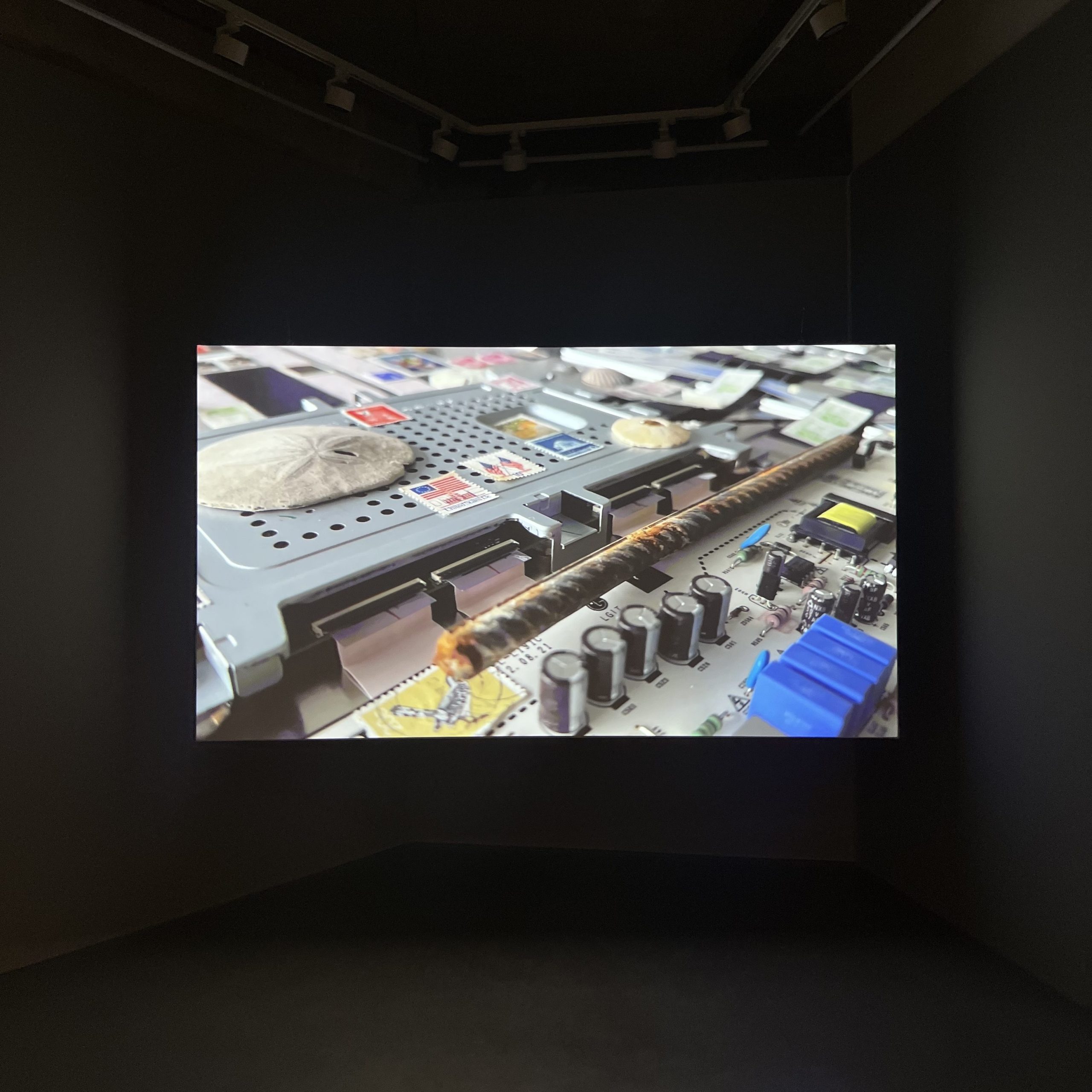
Though no order is prescribed, I began at 60 Three Colts Lane, a ground-floor space where works scatter glossy walls from the foyer into three enclaves. The film Travelling Camera (2025) is central to this part, displaying an aerial view of the circuit side of a 4K monitor; the camera pans over the board, a dense convection of wires and inverters that resemble the avenues of a cityscape. Tillmans disrupts this order with organic fragments: seashells, stamps, and rusted metal. The film demonstrates how the camera as a technology is integral to Tillmans’s process and to media history as a whole.
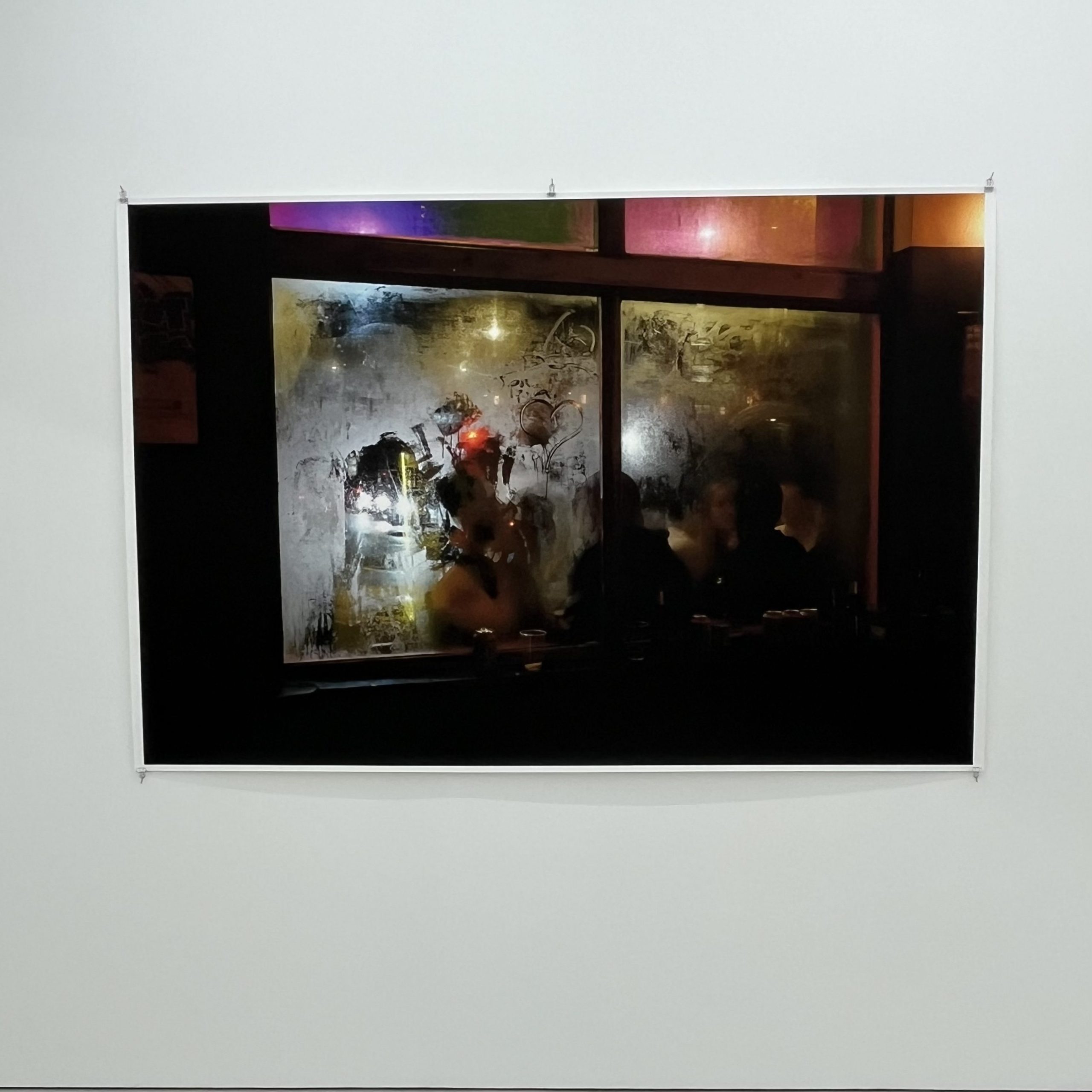
Tillmans’s studio at Herald Street introduces a new display architecture: wooden shadowboxes containing collages of photocopied media, texts, and photographs. As the arrangements interlink with Tillmans’s earlier constructions, we begin to see how the outside has been sliced into the artist’s compositions. Works such as The Glove That Fits (2024) show this clearly: through a foggy bar window we observe the shapes of people — standing, smoking — and how the obscured outside informs Tillmans’s lens, a reminder of the intricacies of the banal.
Studio M, the north star, where works are displayed among Paley’s team, is nestled in Boundary Estate’s iconic school. It sits just a flight above Rochelle Canteen — the kind of place where one could imagine Paley and Tillmans sharing a mid-day meal. This part of the exhibition revolves around another video, Wild Carrot (2025), accompanied by Tillmans’s playing of a kalimba. The video explores the extent of the camera’s ability to describe objects and to form opinions over time.
Across these three sites, Build From Here is a gesture toward the discontinuity of process and place. What emerges is a collection of moments with space in-between. By removing the boundaries of typical gallery shows, Tillmans explores distance as an active agent of meaning.
The exhibition is on display from 3 October to 20 December 2025.
For more information please visit the Maureen Paley site.
All images courtesy of Art observed.
~ J. Gataaura