



Here, Jones’s Pop art moves between object and subject with dexterity. His work comments on contemporary culture while reflecting an era fascinated by caricatured images of femininity. It is easy to accuse Jones of simply objectifying women, yet there is more at stake in his work. Sexual identity, role-playing and fetishism are brought into public view, forcing a consideration of staged femininity and its social purpose.
In Red Refrigerator (2018), the female body is placed directly into a domestic object: a working fridge. Perhaps here, Jones is recalling an era in which women were confined to domestic life and seen culturally as objects of the home. Sexuality is not presented as private, but as something shaped by purpose or expectation. The work is difficult because it seems to repeat and expose objectification, a tension that has brought Jones considerable criticism. Still, the artist has rejected the idea that he simply turns women into objects, insisting instead that the woman is the subject of his work, while the sculpture is the object.
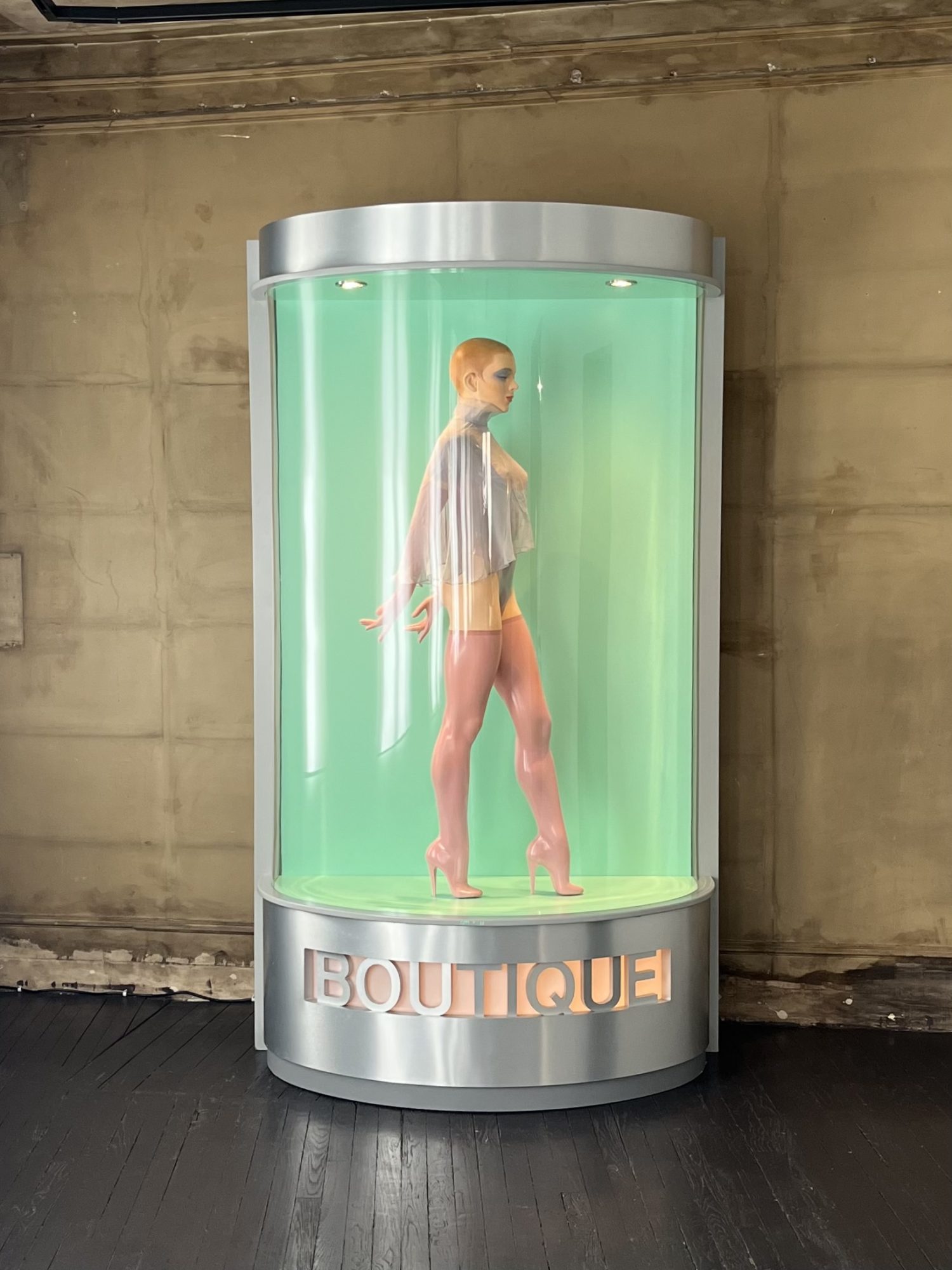
This ambiguity carries into the surrounding design works, rooted in Art Deco and Art Nouveau. Decadent in material and form, they evoke an early twentieth-century culture of luxury and ornament. Carlo Bugatti’s Curule throne chair, circa 1902, makes no excuses: the chair demands space. Inspired by the ancient Roman seat of its namesake, it acts as an artwork, almost sculptural in its intrigue: high-shine ebony, tassels, and metal inlay.
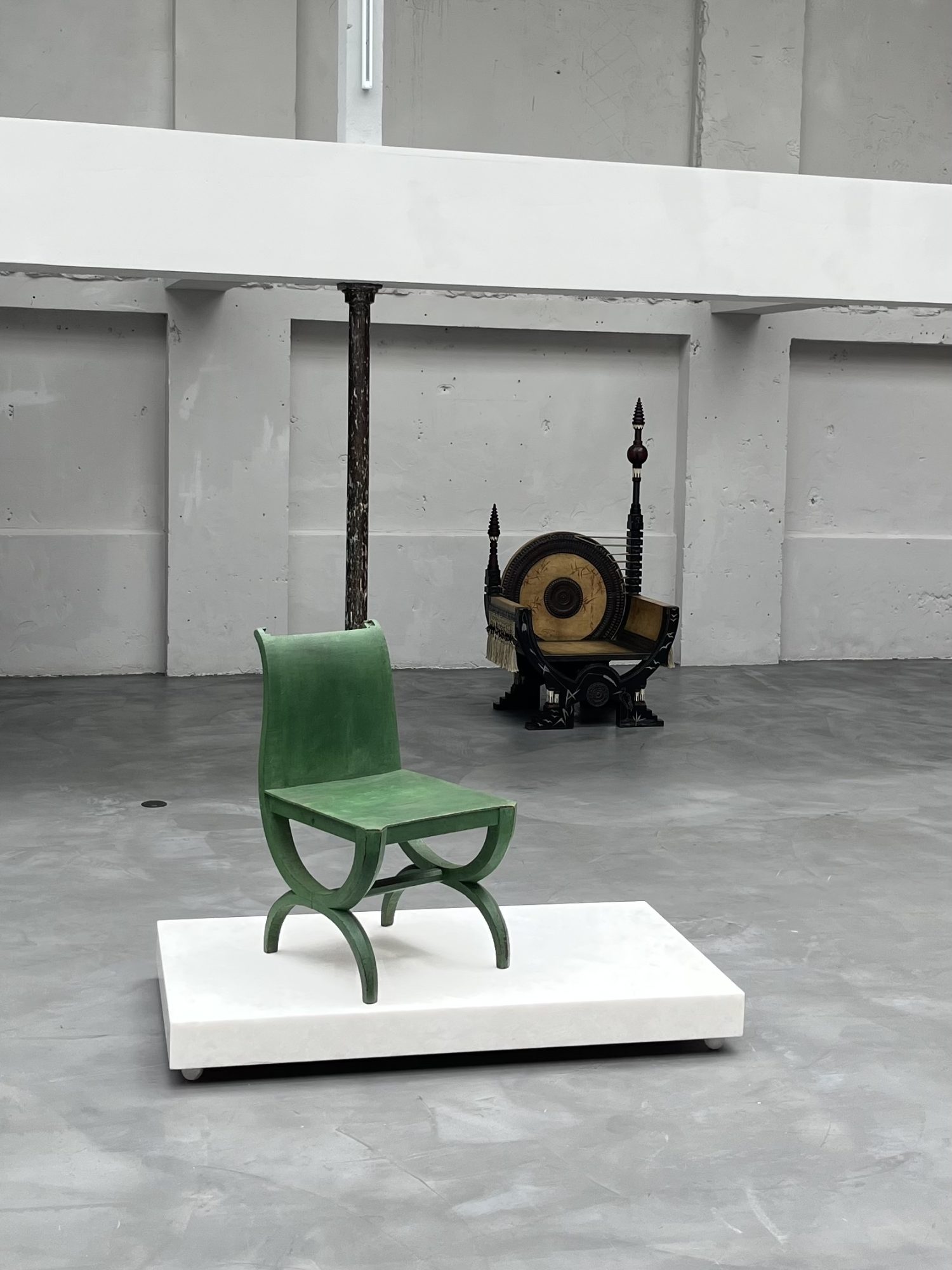
Nearby, the organic language of Art Nouveau is set against the sharper geometry of Pierre Legrain, whose work, by contrast, appears deceptively simple; the Rothschild Chair (1920), for example, is severe in its simplicity, an alternative indulgence in material and form.
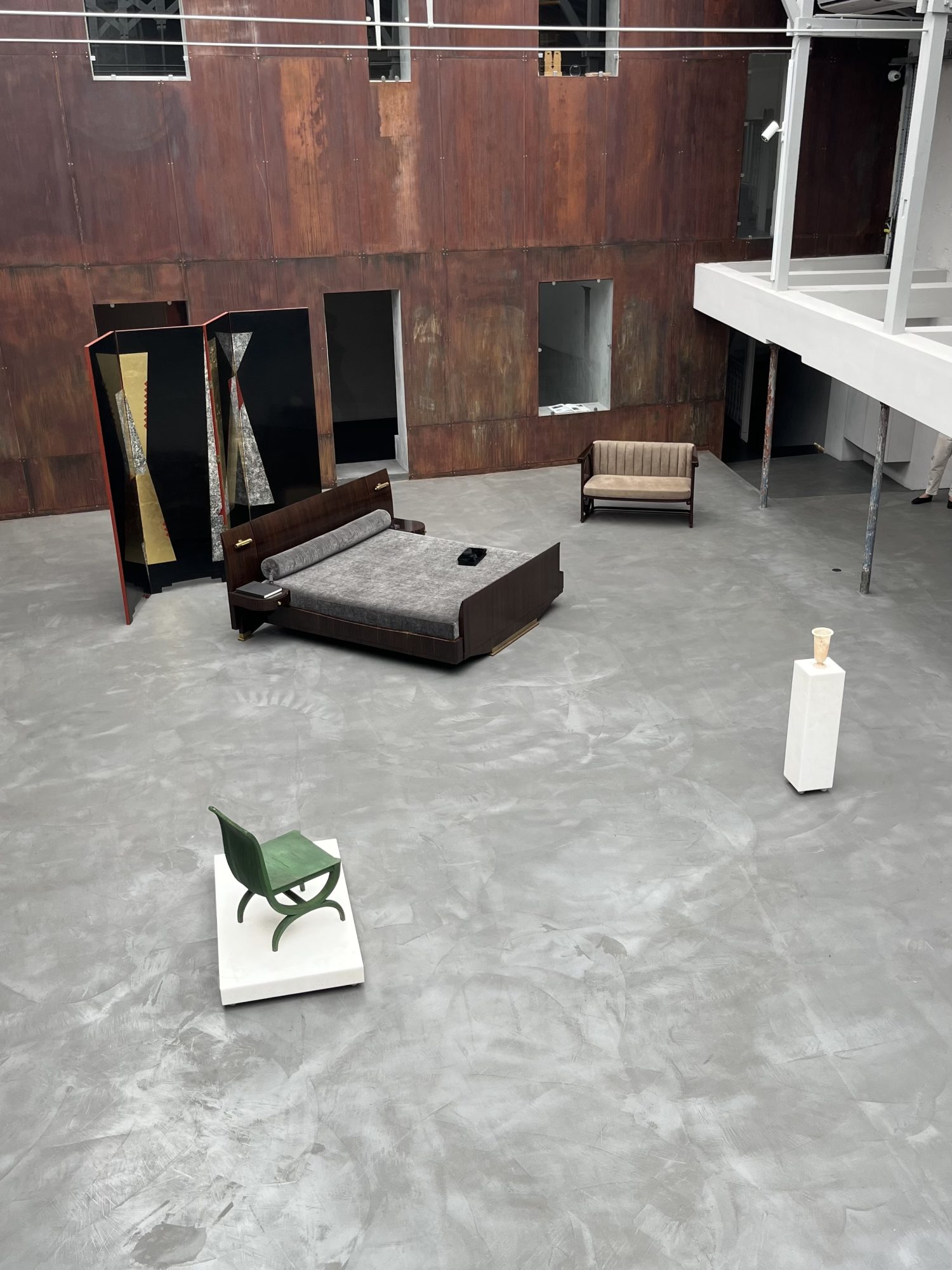
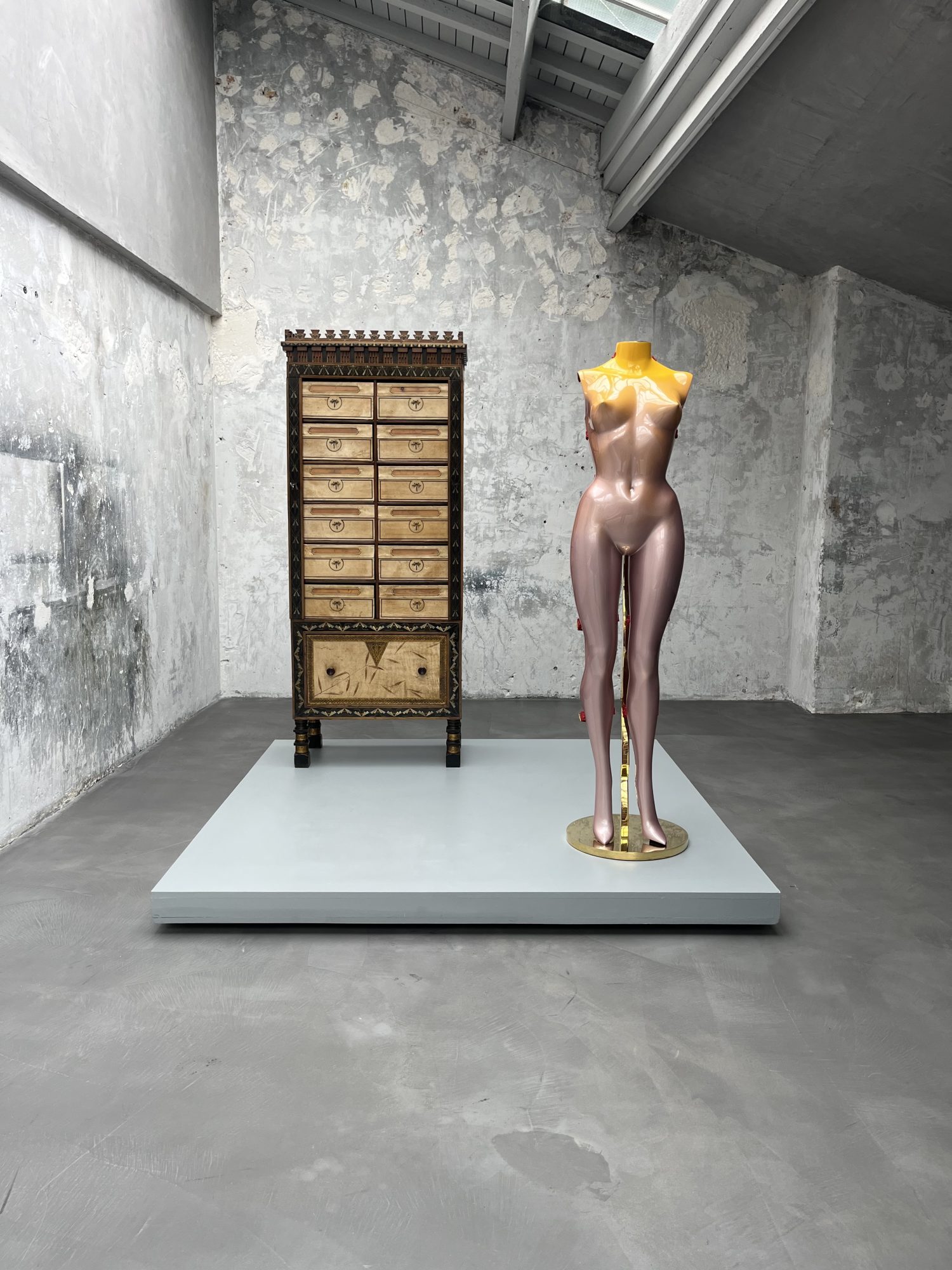
Forms and Temptations turns on the tension between use and display. The design works evoke a fantasy of the future: polished, excessive, and shaped by technological and social change. Furniture becomes less a practical object than a vision of what modern life might look like after this transformation has settled. Jones approaches a similar uncertainty from a later moment, testing the limits of glamour by binding the body to the machine. Across the exhibition, decadence is more than decorative; it becomes a way of imagining what comes after change. Seen now, those fantasies are harder to read as ornament alone.
For more information please visit the exhibition page on the Sceners Gallery website.
All images courtesy of Art observed.
~ J. Gataaura
Pages: 1 2