



Art Observed begins at the Arsenale with India, China, Uzbekistan, Chile and Italy, before moving to Spain and the United States in the Giardini, and finally Iceland’s shipyard setting. At the Arsenale, exhibitions inhabit the halls and workshops of Venice’s former shipbuilding complex.
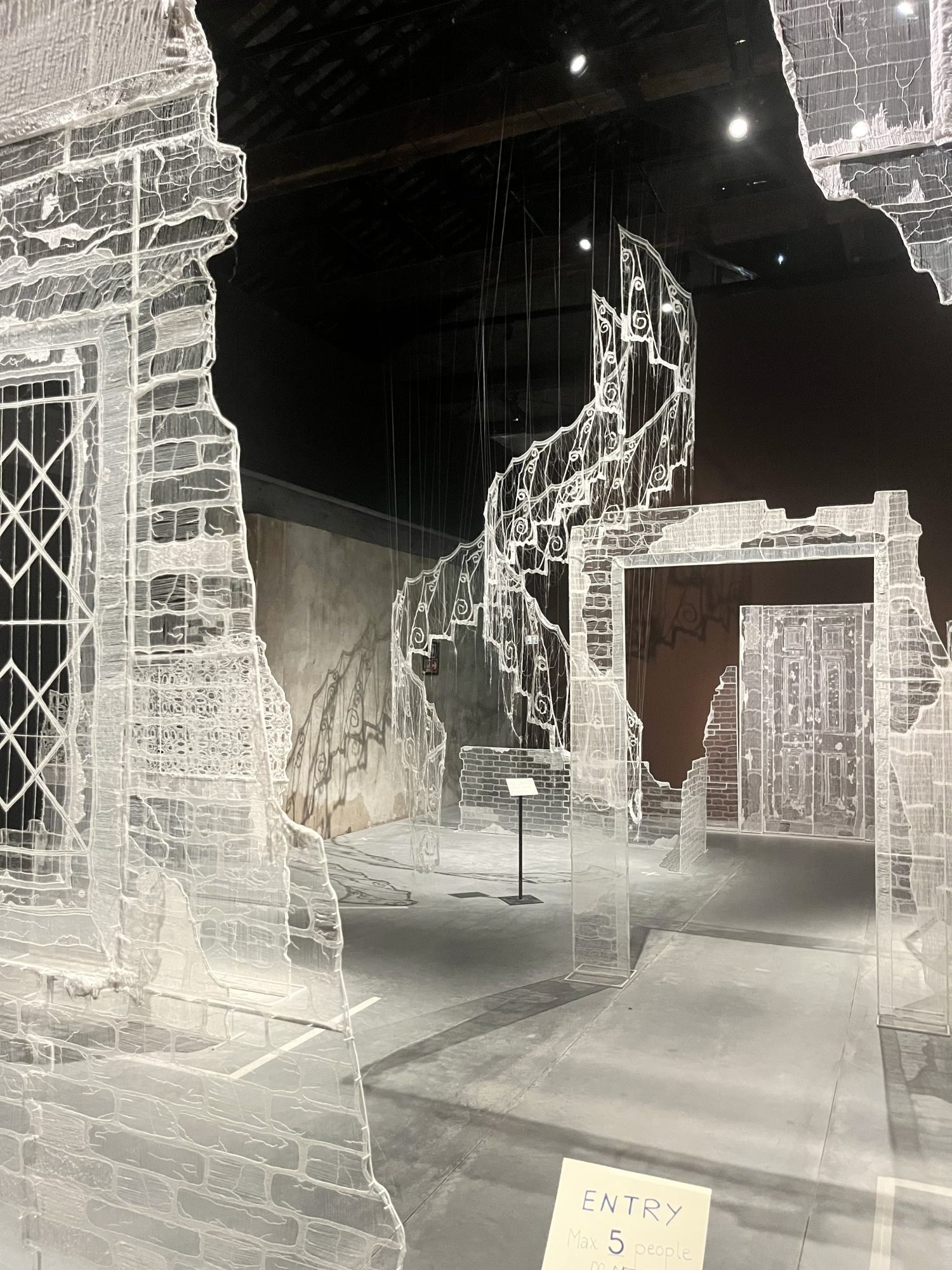
In India’s Geographies of Distance: Remembering Home, curated by Amin Jaffer, Sumakshi Singh reconstructs her demolished family home in Delhi. Permanent Address reimagines brickwork and hinges in gossamer lacework held by steel frames. The walls become transparent, the walkways tracing the old house and allowing visitors to pass between fragile panes of thread.
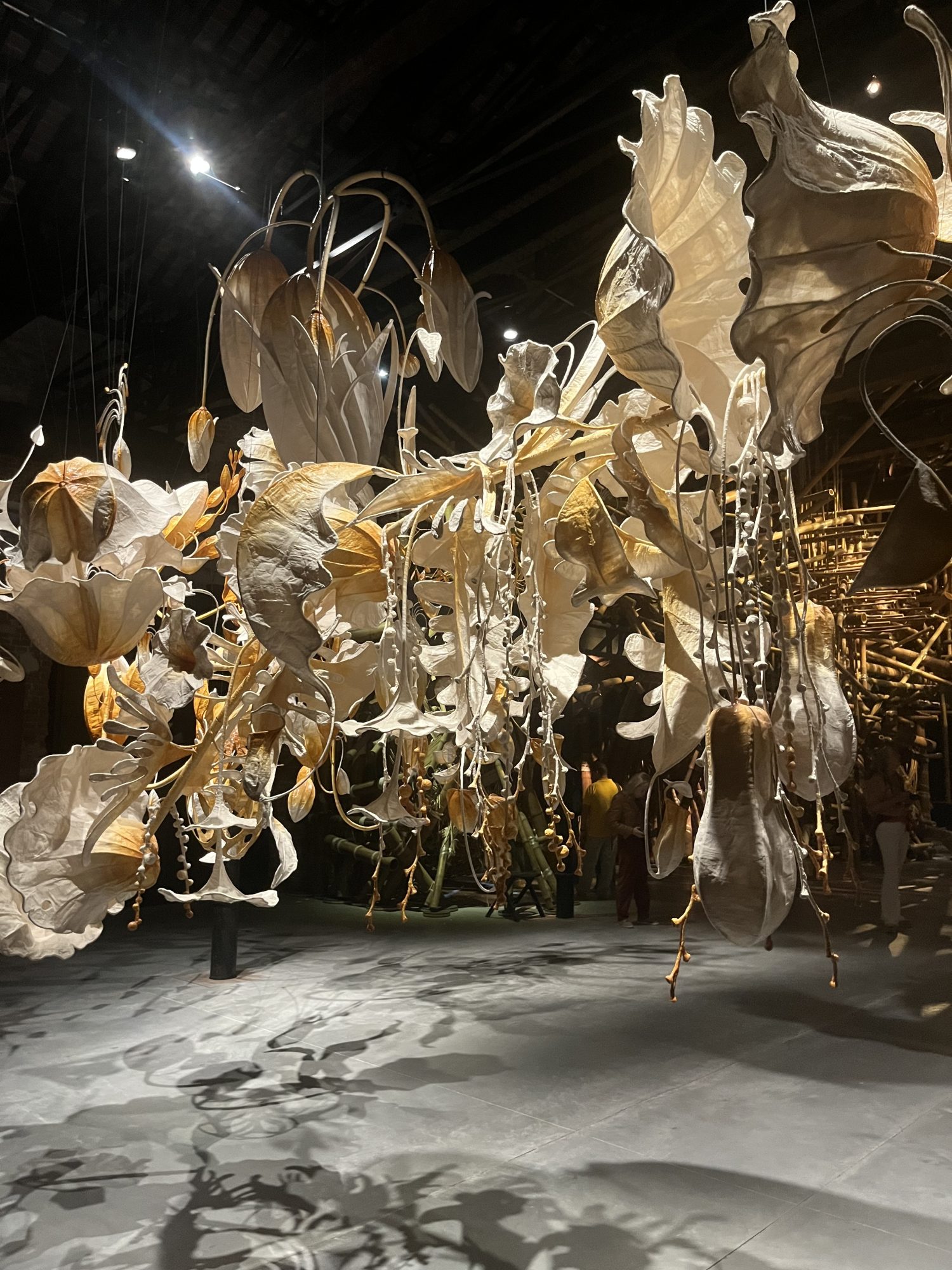
Ranjani Shettar’s Under the same sky presents flower-like forms made from handwoven cotton, lacquer and steel. Asim Waqif’s Chaal introduces a meshwork of bamboo resembling urban scaffolding. Above, on the mezzanine, Skarma Sonam Tashi’s papier-mâché dwellings recall Ladakh.
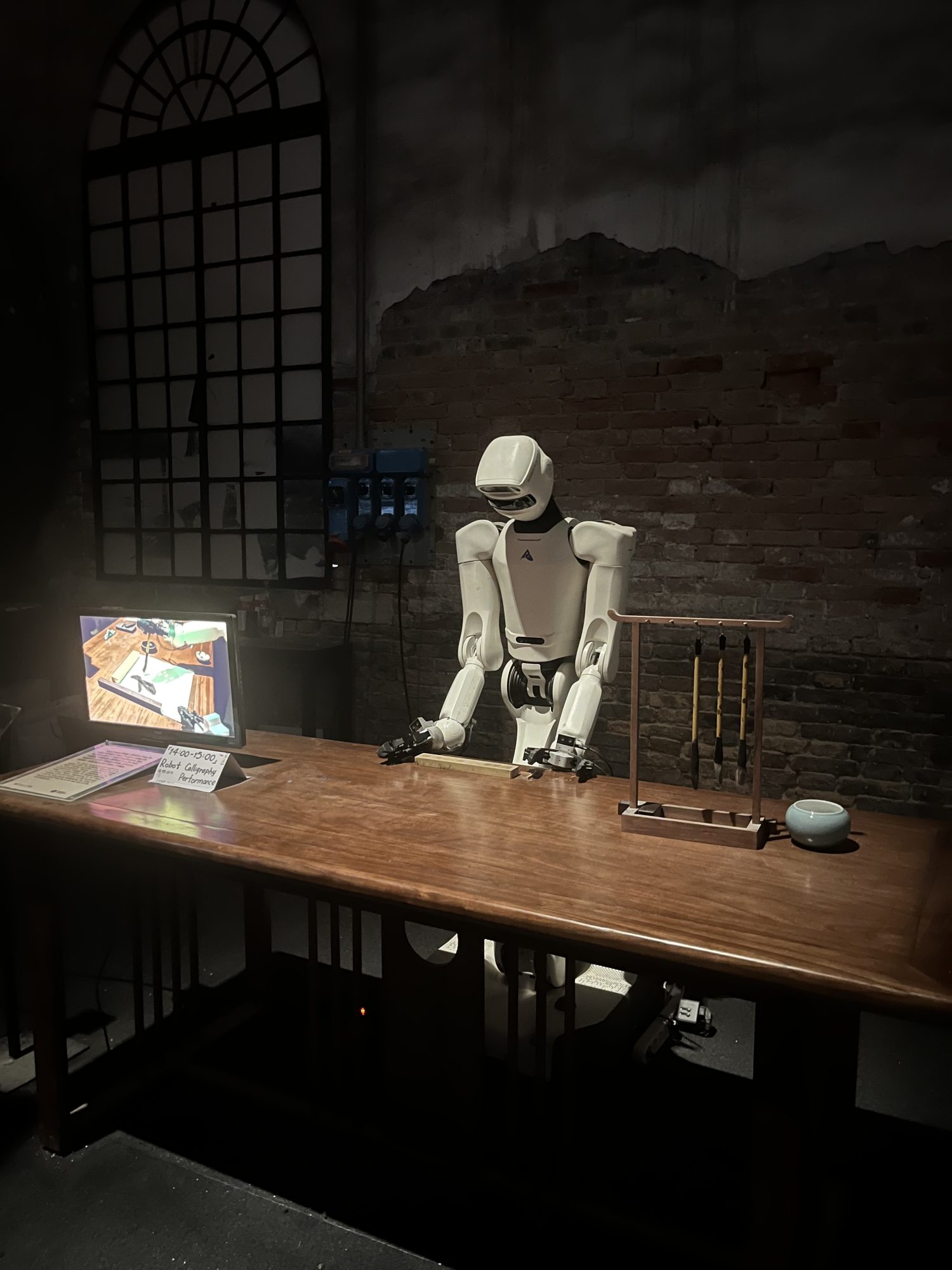
China’s Dream Stream, curated by Yu Xuhong, takes its name from the eleventh-century scholar Shen Kuo’s essays on science and the arts. Wang Dongling’s Free and Easy Wandering spreads across a wall more than six metres high, its broad sweeps of ink gathering into tangled lines. A humanoid robot repeats the calligraphic gestures of the artist.
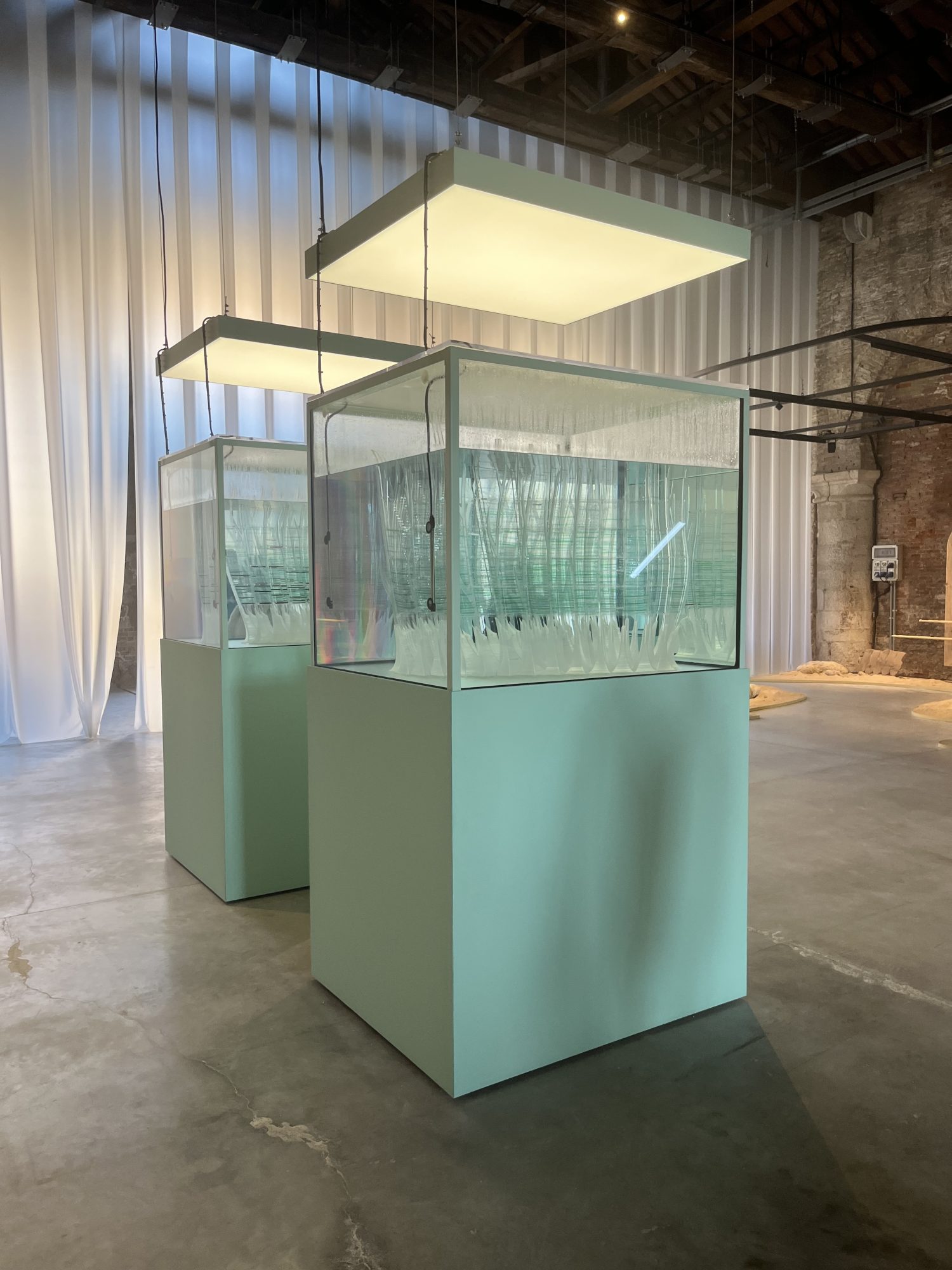
Uzbekistan’s The Aural Sea brings together salt, carved wood and textiles. Zi Kakhramonova’s Lost Form Archive holds sea creatures within a salt labyrinth. Zulfiya Spowart’s Untitled (The Cradle) has a warmer, more domestic feel, with wood carvings and textile sculptures gathered around a traditional beshik cradle.
Chile is represented by Norton Maza’s Inter-Reality, curated by Marisa Caichiolo and Dermis Pérez León. A large object resembling a crashed spacecraft rests on a rocky mass, small openings puncturing its exterior to reveal hidden dioramas.
At Italy’s pavilion, Chiara Camoni’s Con te con tutto, curated by Cecilia Canziani, gathers twenty-four clay figures in an industrial hall. Coils and small terracotta pieces form the bodies of mythical-looking creatures, adorned with branches, shells, stones and fragments of plastic.
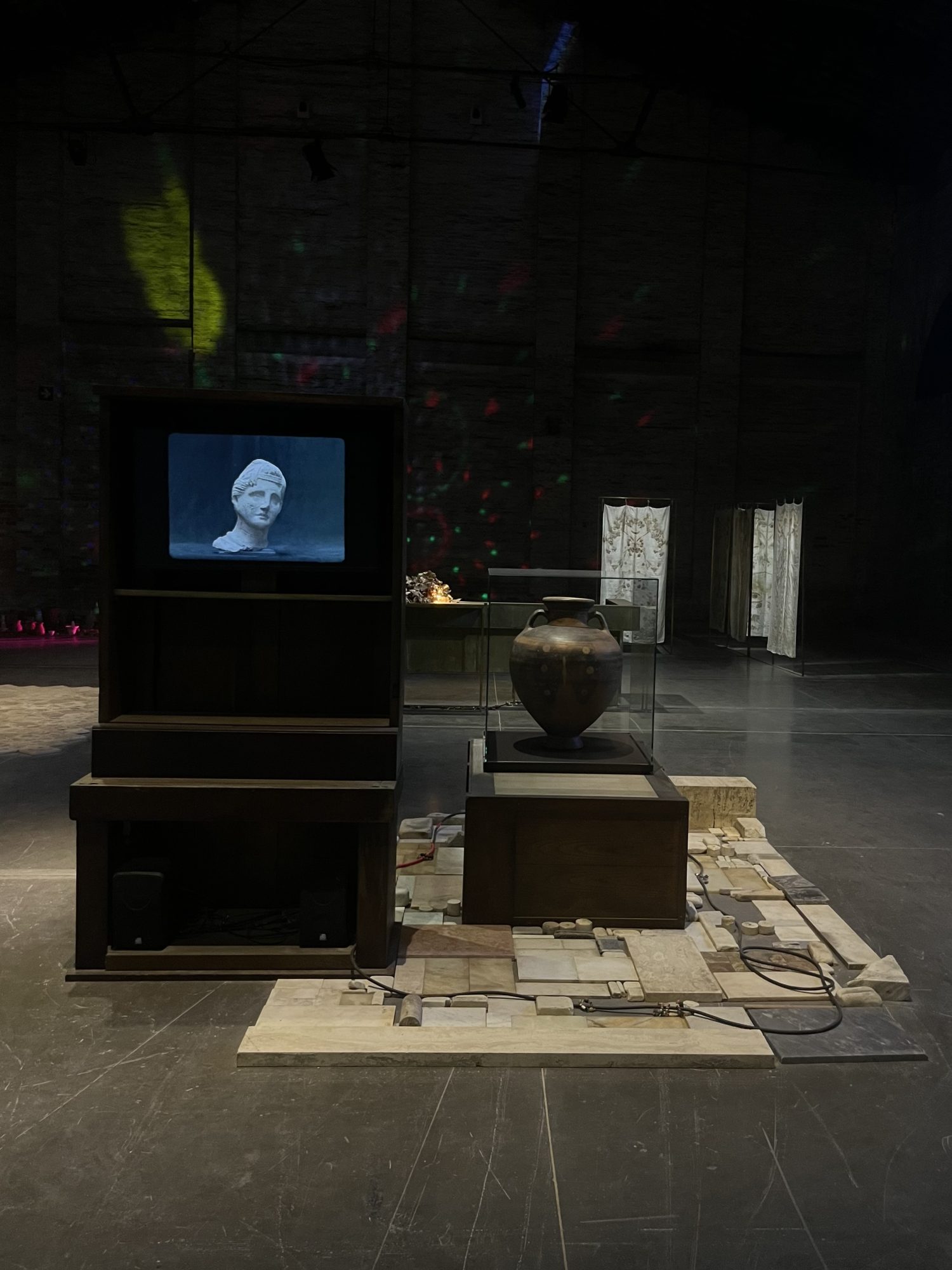
The next hall opens into more natural light. Cabinets, old televisions, antique objects and furniture sit among reclining sculptures, giving the space the appearance of a recently abandoned town.
Moving to the Giardini, the exhibitions occupy permanent national buildings, some dating back more than a century. Each has its own entrance and proportions, framing the works differently from the shared industrial spaces of the Arsenale.
Oriol Vilanova’s Los restos covers Spain’s pavilion with postcards collected over more than twenty years. Curated by Carles Guerra, the installation follows the walls in closely ordered rows, continuing around doorways into adjoining rooms. The space has something of a shrine to passing correspondence, giving these small, once widely circulated objects an extraordinary amount of room.
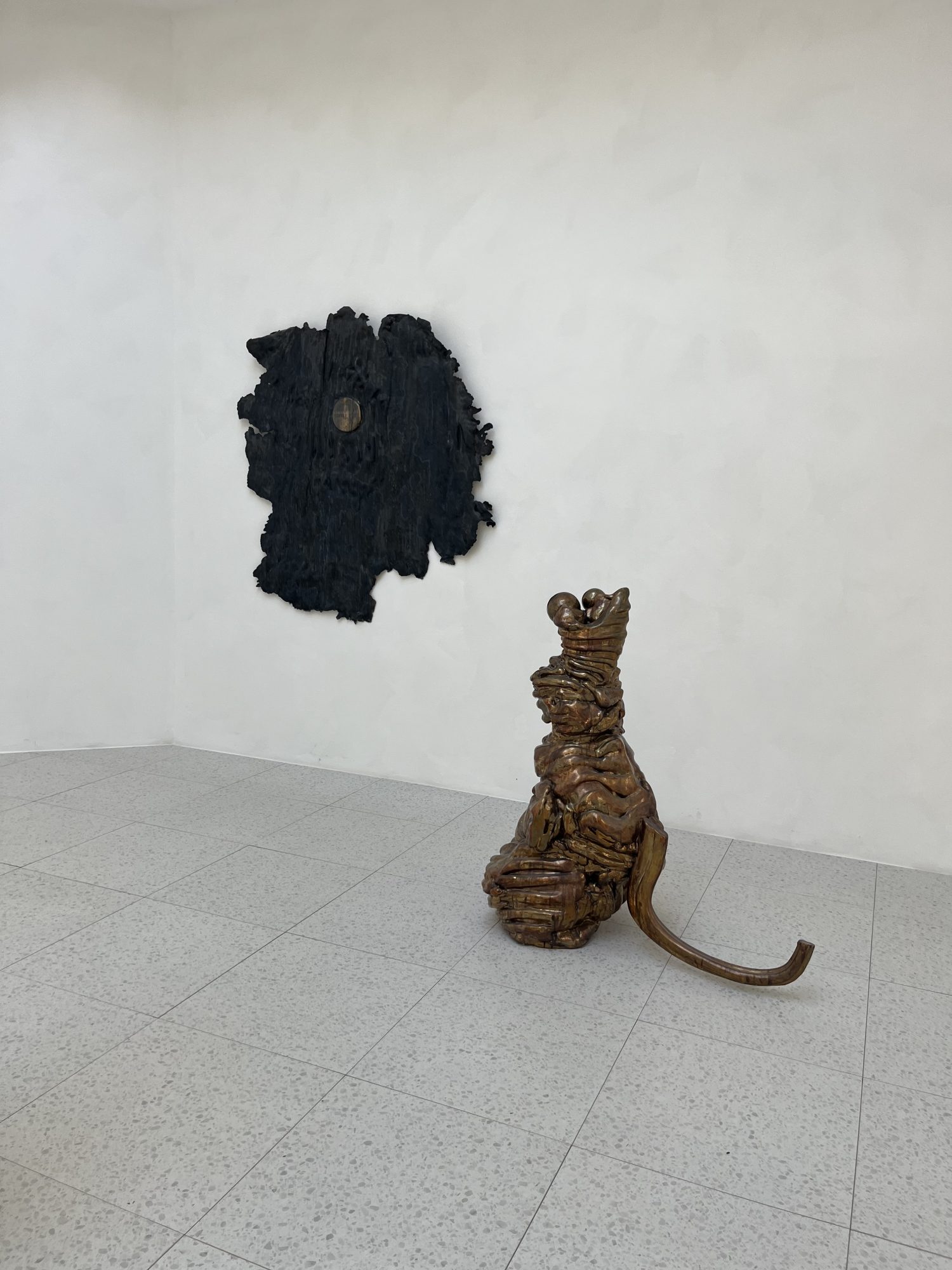
Alma Allen’s Call Me the Breeze, curated by Jeffrey Uslip, brings bronze, stone and walnut burl sculptures to the United States Pavilion. Their smooth bodies taper and curl, sometimes resembling limbs. A tall figure stands beneath the rotunda; elsewhere, a bronze form bends into a broad curve.
Away from the main exhibition grounds, the former Cantieri Cucchini shipyard provides the setting for Iceland’s pavilion. Ásta Fanney Sigurðardóttir’s Pocket Universe extends through interconnected rooms and onto a boat moored outside. Blue and white surfaces and yellow buoys link the interior to the waterfront.
Curated by Margrét Áskelsdóttir and Unnar Örn Auðarson, the exhibition combines luminous spheres, handwritten poems, wool sculptures and film. Sigurðardóttir appears on screen as Creature Zero, wearing a white wool costume with a circular headpiece designed by Sól Hansdóttir.
Following the 2024 edition, Foreigners Everywhere, curated by Adriano Pedrosa, In Minor Keys places particular emphasis on how art is received. Across these pavilions, the attention given to materials and making offers visitors space for contemplation.
For more information please visit the La Biennale di Venezia.
All images courtesy of Art Observed.
~ J. Gataaura
Pages: 1 2