Global contemporary art events and news observed from New York City. Suggestion? Email us.

Archive for the 'Go See' Category

Go See: Carsten Höller’s “Reindeers and Spheres” at the Gagosian Gallery, Los Angeles, Through February 14th

Tuesday, January 13th, 2009


Soma Series (2) (detail) by Carsten Höller, via Gagosian Gallery

Reindeers and Spheres by Carsten Höller, now on view at the Gagosian Gallery in Los Angeles, presents an intriguing mix of photographic collages, sculpture, and installation that provoke the structure of learned behavior in order to question what is considered rational. “The real material I am working with is people’s experiences”, the artist said of his work. There is no cohesive underlying meaning; everything is left to the interpretation of the viewer. The exhibition is Höller’s first show in Los Angeles.

Carsten Höller Reindeers and Spheres
Gagosian Gallery
456 North Camden Drive
Beverly Hills, CA 90210
through February 14, 2009
Press Release: Carsten Höller Reindeers and Spheres
Press: Carsten Höller Exhibition, LA [Wallpaper]
Carsten Höller’s Double Club Project in London[Gagosian Gallery News]
Carsten Höller: Reindeers and Spheres [LA Times]

(more…)

Go See: Yoshitomo Nara, at Blum & Poe, Los Angeles, through January 31, 2008

Saturday, January 10th, 2009


Installation view of Yoshitomo Nara at Blum and Poe, Los Angeles, via Blum and Poe

Yoshitomo Nara’s sixth solo show with Blum & Poe features a new series of paintings and drawings, as well as a large scale sculptural installation of a prairie wagon that is as Old West as it is Modern. The wagon’s interior features a number of items: drawings, stuffed animals, and found or specially selected objects–designed to evoke innocence and nostalgia, although the subtle hint of menace usually found in much of Nara’s work is absent here.

The other pieces of the installation by the Japanese pop artist also weave in allusions to the old American West and Manifest Destiny: two paintings resembling billboards feature young girls, one playing a guitar, the other depicted alone surrounded by the words “So…how can you tell me you are lonely?” The installation reflects Nara’s and Japan’s post-war fascination with American pop culture as well as Nara’s childhood as an only child of blue collar parents, often left to his own creative devices due to his parents’ long work shifts.

Acrylic paintings in an adjacent room are typical of Nara’s oeuvre, featuring children with large eyes, more often than not alone. The eyes convey a wide array of ambiguous emotions, including fear, warmth, defiance, elation, and boredom, often in combination. The children’s eyes in the most recent paintings take on a more haunting, glassy yet somehow inviting appearance than in previous pieces due to the creative application of different colors, textures and materials. The color departs  a bit more from the pastels that have become Nara’s trademark, while the texture of the pieces differs markedly from the oil, pencil, and crayon-like pieces he has become known for, putting a new twist on a very intriguing artist who has become a star in his own country, much like his contemporary Takashi Murakami.

YOSHITOMO NARA
through January 31, 2009
Blum and Poe
2754 La Cienega, Los Angeles, CA

Exhibition page: Yoshitomo Nara at Blum & Poe
Press release: Yoshitomo Nara at Blum & Poe
Yoshitomo Nara at Marianne Boesky Gallery
Yoshitomo Nara – Artnet Profile [Artnet]
A critical essay on Yoshitomo Nara [AssemblyLanguage]

(more…)

GO SEE: ANISH KAPOOR, DRAWINGS/ INSTALLATIONS AT REGEN PROJECTS, LA, THROUGH FEBRUARY 28TH

Friday, January 9th, 2009

Anish Kapoor – ‘Installation View at Regen Projects’, LA, via Regent Projects

Drawings and Installations, a show by Anish Kapoor, is on view at the Regen Projects in LA, until February 28th. The show deviates from the usual sculptures that Kapoor is best known for. Using drawings and installations, Kapoor manages to fill entire rooms with simple yet large objects to create a sense of scarceness yet serenity. Anish Kapoor is an Indian-born British Installation Artist, best known for his large sculptures, which often simulate simple curves with cavities and bends. These traits can be found in the installations at the Regen Projects exhibition. The large concave white disc disorients the viewer through its glossy finish, reflecting the room’s light and other objects – namely the black item placed opposite. The choice to exhibit the installations in white rooms, accents this.


Focus: Anish Kapoor: Regan Projects, LA

(more…)

Go See: 'Focus: Jasper Johns' at the Museum of Modern Art in New York through February 16th, 2009

Monday, January 5th, 2009


–>
Jasper Johns’ ‘Flag’ via MoMA

The Museum of Modern Art now has on view a survey of the work of Jasper Johns. The exhibition presents a focus on Johns’ reworking and repetition of ideas and motifs, and celebrates the Museum’s recent acquisition of thirteen new works on paper done by Johns in 2001. These untitled works are based around Johns’ ‘Catenary’ theme, so named for the curve of a string between two points, a figure prominent in most of the works. Johns received leftover, rejected prints from the printshop of two aquatints, ‘Untitled (Positive)’ and ‘Untitled (Negative).’ He used those prints to rework the images, collaging, painting, and drawing over the prints.

Focus: Jasper Johns [MoMA]
–>
MoMA Shows Off: 13 Works On Paper by Jasper Johns [SFGate]
–>
The Museum of Modern Art Presents Focus: Jasper Johns [Artdaily]

(more…)

Go See: Jim Dine ‘Hot Dream (52 Books)’ at PaceWildenstein in New York, through February 7th, 2009

Monday, January 5th, 2009


Installation view of Jim Dine’s ‘Hot Dream (52 Books)’ via PaceWildenstein

On view at PaceWildenstein’s West 25th Street location is a new multi-media show by Pop artist Jim Dine.  The exhibition includes books, sculpture, photographs, poetry, and collage, and reportedly is born of the artist’s desire to produce one book a week for a year. In the installation, Dine explores his consciousness and memory with a profuse juxtaposition of his poetry, both spoken and written, old photographs and mementos, along with sculptures and books.

Jim Dine: Hot Dream (52 Books) Exhibition Detail [PaceWildenstein]
Hot Dream (52 Books) [Steidl]
Jim Dine: Poet Singing (Getty Villa Exhibitions) [Getty Museum]

(more…)

Go See: Andy Warhol's Still-Life Polaroids at Paul Kasmin Gallery, New York Through January 10th

Sunday, January 4th, 2009

Knives (1981) Polaroid Photography by Andy Warhol, via Paul Kasmin Gallery

A selection of 70 Still-Life Polaroids by Andy Warhol are currently on display at the Paul Kasmin Gallery in New York. The works depict a unique assortment of objects taken by Warhol between 1977 and 1983 and photographed as subjects for Warhol’s drawings, silkscreens, and paintings. The rarity of Polaroid film tells of a specific moment in Warhol’s practice as well as in the history of photography.

Andy Warhol (1928-1987) is famous for his contributions to Pop Art, an art movement that emerged in the 1950s and remained popular over the next two decades.  Photography was an integral part of Warhol’s artwork.  He often referred to his Polaroid Big Shot camera that he purchased in 1970 as his “Pencil and Paper.”

The exhibition captures a variety of subject matter including ballet shoes, eggs, bananas, knives, guns, and disorderly arrangements of shoes and perfume bottles as well as other commercial products such as his iconic soup can and Brillo boxes.

Andy Warhol Still-Life Polaroids
–>
Paul Kasmin Gallery
–>
511 27th Street New York, New York
–>
through January 10, 2009
–>
Press Release: Andy Warhol Still-Life Polaroids
–>
Press: Andy Warhol’s Still-Life Polaroids at Paul Kasmin Gallery [NY Daily News]
–>

(more…)

Go See: ‘Sonne, Mond und Sterne,’ by Fischli and Weiss, at Spruth Magers Gallery, Berlin, through January 21st, 2009

Saturday, December 27th, 2008


Installation view, Sonne, Mond und Sterne (2008) by Peter Fischli and David Weiss, via Wallpaper

Named after a nursery rhyme in German, Sonne, Mond und Sterne (Sun, Moon and Stars) is the most recent installation by Swiss artists Peter Fischli and David Weiss, currently on display at Spruth Magers Gallery in Berlin. Fischli and Weiss, known for installations that are equal parts academic and playful, have been working together for almost 30 years and are arguably the foremost Swiss contemporary artists.  Sonne, Mond und Sterne is the result of media conglomerate Ringier AG commissioning a work of art for their annual report, and is devised from 800 pages of advertisements torn from magazines, arranged to depict a ‘visual encyclopedia of late capitalism,’ a ‘psychogram of a certain moment of society,’ according to Peter Fischli.

The 800 pages originally appeared in Ringier’s annual report in book form, giving them a certain linearity which is not present when the advertisements are presented in installation form: its aesthetic and sociological insight is not overtly normative, and begs interpretation without necessarily explicitly imposing a narrative.

Fischli and Weiss’s oeuvre revolves around examining and revisiting things that would not give most people pause, things that are taken for granted in our daily existence, elevating them to something more beautiful by transforming the way in which they are portrayed, viewed and analyzed. They live and work in Zurich, Switzerland, and have represented their country at the Venice Biennale. Their installations, sculptures and films belong to the most esteemed collections, including the Tate Modern in London and New York’s Guggenheim Museum.

SONNE, MOND UND STERNE
Spruth Mager Gallery
Berlin, Germany
through January 31st, 2009
Exhibition Page: Sonne, Mond und Sterne at Spruth Magers
Press Release: Sonne, Mond und Sterne
Fischli/Weiss exhibition, Berlin [Wallpaper]
Other: Fischli and Weiss at Matthew Marks Gallery
A film by Fischli and Weiss: The Way of Things [MedienKunstNetz]

(more…)

Go See: Cy Twombly retrospective, Guggenheim Bilbao, through February 15, 2009

Wednesday, December 24th, 2008


–>
Untitled (Peonias series) by Cy Twombly, on display at the Guggenheim Bilbao, Spain

100 of Cy Twombly’s works, including paintings, drawings and sculptures are on display at the Guggenheim Museum in Bilbao, marking the most comprehensive show the artist has had in thus far in Spain and highlighting the tremendous influence Cy Twombly has had on postwar art. Curated by Carmen Gimenez, Guggenheim Bilbao’s curator of 20th Century art, the exhibition is a joint effort between that museum and the Tate Modern, and is arranged in roughly chronological order, featuring some well known Twombly pieces.

Nine Discourses on Commodus (1963), a recent acquisition belonging to the Guggenheim Bilbao’s permanent collection, is a nine piece polyptych that is also a central piece in the exhibition. Meant to be viewed together, the panels are a meditation on Commodus, a Roman Emperor and son of Marcus Aurelius, reflecting Twombly’s career-long interest in antiquity and mythology. Ferragosto (1961), a five piece set which was actually the first series of paintings conceived as such by Twombly. The series, which unlike Commodus can be viewed as separate pieces unto themselves, was previously spread across the collections of several museums and private collections; the display at the Guggenheim is thus a unique opportunity to see them all at once. Quattro Stagioni (1993-5), a series currently housed at the Tate Modern in London which revolves around seasonal themes, symbols and colors, is another important series on display.

Many of the works are on loan from renowned arts institutions, including the Tate Modern in London, the Centre Georges Pompidou in Paris as well as from the Museum of Modern Art in New York, the Menil Collection of Houston and the National Gallery of Art in Washington, D.C., among others. The exhibit occupies the entire second floor, and a gallery on the first floor of the landmark museum designed by Frank Gehry, a setting which is a work of art itself and can be seen to interact with the works in the exhibit.

CY TWOMBLY
–>
Guggenheim Museum
–>
Bilbao, Bizkaia, Spain
–>
through February 15, 2009

Artist Page: Cy Twombly at the Gagosian Gallery
–>
Exhibit page: Cy Twombly at the Guggenheim Museum Bilbao
–>
Guggenheim Museum in Bilbao Celebrates Cy Twombly’s 80th Birthday with Exhibition [ArtDaily]
–>
Previously on ArtObserved: GO SEE: CY TWOMBLY AT TATE MODERN, UK, THROUGH SEPTEMBER 14

(more…)

Go See: Raymond Pettibon ‘Cutting Room Floor Show: Part II’ at Regen Projects, Los Angeles Through January 24th, 2009

Monday, December 22nd, 2008


Installation view of Raymond Pettibon’s ‘Cutting Room Floor Show: Part II’ via SuperTouch

Raymond Pettibon is well known for his stark black-and-white ink drawings, with rough comic-like images and often ambiguous captions. But Pettibon’s current show at Regen Projects II in Los Angeles is awash with color and full of layers in a reinvention of the artist’s familiar vocabulary of politics, pop culture, nature, and sexuality. This exhibition of new works complements the gallery’s retrospective of Pettibon’s work from the 70s and 80s earlier this fall. The artist’s latest oeuvre stands in stark contrast with those simpler, sparer works. The notoriously prolific artist has plastered the walls with dozens of pieces, as well as painting onto the wall to incorporate the paintings and collages on paper into a larger installation.

Raymond Pettibon – Cutting Room Floor Show: Part II [Regen Projects]
Raymond Pettibon’s ‘Cutting Room Floor Show: Part II’ at Regen Projects [SuperTouch]
Raymond Pettibon at Regen Projects (Part II) [Art21]

(more…)

Go See: Piplotti Rist ‘Pour Your Body Out (7354 Cubic Meters)’ at the Museum Of Mordern Art New York, through February 2, 2009

Friday, December 19th, 2008


Installation view of Pipilotti Rist’s ‘Pour Your Body Out (7354 Cubic Meters)’ via Artnet

The Museum of Modern Art in New York commissioned Swiss artist Pipilotti Rist to create a site-specific installation in the museum’s second-floor Marron Atrium. Rist filled the 7345 cubic meter atrium with  seven twenty-five-foot-high video projections with a large circular eye-shaped sofa in the center of the floor available for reposing visitors.  Rist is well-known for her video works that deal with issues of the body, gender, and sexuality.  Many of the images of ‘Pour Your Body Out (7354)’ present a lush amalgamation of femininity: gigantic pink tulips, glistening apples, a pool of menstrual blood seeping from a woman’s crotch.

Pipilotti Rist: Pour Your Body Out (7354 Cubic Meters) [MoMA]
Pipilotti Rist Turns MoMA Into a Gigantic Vagina Eye [NY Magazine]
Tiptoe by the Tulips (or Stretch by the Apples) [NY Times]
(more…)

Go See: Jake and Dinos Chapman ‘Memento Moronika’ at Kesterngessellschaft, Hanover, Germany, through January 3rd, 2009

Wednesday, December 17th, 2008

Jake and Dinos Chapman – Hell Sixty-Five Million Years BC via Artdaily.

Now at Hanover’s Kestnergesellschaft is an exhibition of the British brothers Jake and Dinos Chapman, two of the most prominent Young British Artists brought to fame by collector Charles Saatchi.  The Chapmans’ often provocative art engages with the themes of humanity’s darker side of violence, war, and immorality.  “Memento Moronika” is a collection of several different groups of works, some of which are rather comical and seemingly naïve.  The sculptures “Hell Sixty-Five Million Years BC” (2004-2005) or “Two Legs Bad, Four Legs Good” (2007), dinosaurs composed of toilet paper rolls, cardboard, and poster paint, conjure up a child’s vision of prehistoric warfare, fall square within the thematics of the artists’ overall oeuvre. The title “Hell Sixty-Five Million Years BC” refers to the Chapman’s earlier work, “Hell,” an installation featuring thousands of miniature Nazi soldiers carrying various atrocities, (“Hell” was, fittingly, destroyed in a fire in 2004). Though the newer work treats the topic more lightly, the Chapmans’ nonetheless are still dealing with issues of humanity’s monstrous capacities.

Jake and Dinos Chapman Press Release [Kestner gesellschaft]
Jake and Dinos Chapman – Memento Moronika [Artdaily]

(more…)

Go See: Marlene Dumas at the Museum of Modern Art New York, through February 16, 2009

Wednesday, December 17th, 2008

Marlene Dumas: Measuring Your Own Grave captures three decades of the South African artist’s expressionistic paintings and drawings at her first ever retrospective in the United States at the Museum of Modern Art. Featuring around 70 paintings and 35 drawings, the artist merges painterly aesthetics with political and social themes telling of the complexities of human existence. With often jarringly morbid colors, stained brush stroked canvases, Marlene Dumas depicts lurid yet melancholic scenes of pregnant women, murdered children, and victims of suicide and executions often with personal references.

Marlene Dumas: Measuring Your Own Grave
The Museum of Modern Art
December 14, 2008- February 16, 2003

Museum Website: The Museum of Modern Art
Exhibition Page: Marlene Dumas: Measuring Your Own GraveThe Body Politic: Gorgeous and Grotesque [New York Times]
Unpretty Pictures
[New Yorker]
Opening: Marlene Dumas Measuring Your Grave
[The Art Newspaper]
Mid-career Survey of Painter Marlene Dumas is the first to be Presented in the United States
[Artdaily]

(more…)

Don’t Miss: JG Reads, a film by Rirkrit Tiravanija, at Gavin Brown’s Enterprise, New York, through December 20, 2008

Monday, December 15th, 2008


Still from JG Reads, a film by Rirkrit Tiravanija, via Gavin Brown’s  enterprise

John Giorno–poet, musician, performance artist, and collaborator with William S. Burroughs and Andy Warhol–is the protagonist of a film by Rirkrit Tiravanija, currently showing at Gavin Brown’s enterprise.  Giorno, who was the subject of Warhol’s first film (Sleep, 1963), is considered a fixture of the New York creative community.  His studio was an experimentation hub for the likes of Robert Rauschenberg, Roy Lichtenstein, John Cage, and other groundbreaking postwar artists.  The film, which runs for 10 hours, incorporates five decades of John Giorno’s music, poetry, and memoirs from a very interesting life, aiming to capture what the gallery’s press release refers to as a “New York that now exists only as an idea.”

JG READS by Rirkrit Tiravanija
through December 20, 2008
Gavin Brown’s enterprise
620 Greenwich St, New York, NY
Open Tues – Sat, 10am through 6pm

Gallery: Gavin Brown’s enterprise
Exhibit site: JG Reads
JG Reads Press Release
Video: JG Reads

Go See: Anish Kapoor at the Deutsche Guggenheim, Berlin, November 30, 2008 – February 1, 2009

Sunday, December 14th, 2008


Memory
by Anish Kappor on display now at the Deutsche Guggenheim via Deutsche Guggenheim

Anish Kapoor – Memory
Deutsche Guggenheim Museum
, Unter den Linden 13/15 10117 Berlin
November 30, 2008 – February 1, 2009

Considered one of the most talented and influential sculptors of his generation, Anish Kapoor recently unveiled his new installation Memory (2008) at the Deutsche Guggenheim.  Born in Bombay, India in 1954, Anish Kapoor lived and worked in London through the 1970’s and quickly rose to prominence as a sculptor during that time.  Since then, Kapoor has gained international acclaim and has exhibited extensively worldwide at venues such as the Tate Gallery and the Hayward Gallery in London, Haus der Kunst in Munich, Reina Sofia in Madrid and Kunsthale Basel and more.  Memory is part of a program established by the Deutsche Guggenheim in 1998, which consists of a series of projects committed to prominent and innovative contemporary artists such as John Baldessari, Hanne Darboven, William Kentridge, Hiroshi Sugimoto, Bill Viola, and Phoebe Washburn.

Anish Kapoor Memory [Deutsche Guggenheim]
Anish Kapoor: Memory
[Guggenheim]
Anish Kapoor Memory
[ Press Release]
Video: Anish Kapoor: Memory / Deutsche Guggenheim, Berlin / Interview [vernissage.tv]
Kapoor Installation Pictures
[Flikr]

more images and story after the jump…

(more…)

Go See: Eric Fischl ‘Ten Breaths’ at Mary Boone Gallery, Chelsea, New York, through December 20, 2008

Saturday, December 6th, 2008


Ten Breaths: Tumbling Woman
and Ten Breaths: Falling Angel by Eric Fischl as part of his exhibition Ten Breaths via Eric Fischl.

On display now at the Chelsea location of Mary Boone Gallery is a series of recent sculptures by Eric Fischl. The collection of figurative works consist of three life size figural groups and two diametric single figures. The three life size bronze casts are based off of photographs the artist took of Brazilian dance troops and is is typical of Fischl’s work which aims to subtly express the frailness and internal conflict which characterizes humans. Pictured above is Ten Breaths: Tumbling Woman a variation of the artist’s 2001 work Tumbling Woman, a similar bronze sculpture made to commemorate the lives lost on 9/11. The sculpture was displayed at Rockfeller Center for one week in September 2002 before it was removed after public outcry. Many viewers found the piece to be in poor taste as it was a graphic reminder of people falling from the World Trade Center. The variation is on display now at Mary Boone below the figural sculpture Ten Breaths: Falling Angel, a glass cast of an angel mounted on the ceiling of the gallery.

Eric Fischl Press Release [Mary Boone Gallery]

more images and info after the jump… (more…)

Go See: Gerhard Richter Retrospective at the National Gallery of Scotland, through January 4, 2009

Thursday, December 4th, 2008


Familie am Meer, or Family at Sea in English, a 1964 painting by Gerhard Richter via the Guardian.

The National Gallery of Scotland is hosting a major retrospective of German artist Gerhard Richter. Over 60 works are included in the exhibition all on loan from private collections and includes early work that has rarely been seen. The retrospective touches on all of the varied periods of the artist who is known for his mastery of both abstract and figurative painting. The retrospective follows his exhibition 4900 Colours: Version II at the Serpentine Gallery, London, covered by Art Observed here.  Following his retrospective the National Portrait Gallery, London will host Gerhard Richter Portraits February 2009.  The current exhibition is part of the Bank of Scotland totalART series. Over £400,000 has been invested in the series making it the largest sponsorship of modern art in Scotland.

This is high on the Richter scale [Guardian UK]
Exhibition preview: Gerhard Richter, Edinburgh
[Guadrian UK]
Gerhard Richter at the National Gallery Complex, Edinburgh [Telegraph]
Richter: Paintings from Private Collections at National Gallery of Scotland
[Artdaily]

(more…)

Go See: Rachel Whiteread at The Boston Museum of Fine Arts, through January 25th, 2009

Friday, November 28th, 2008

Place (Village) 2006-08, via New York Times

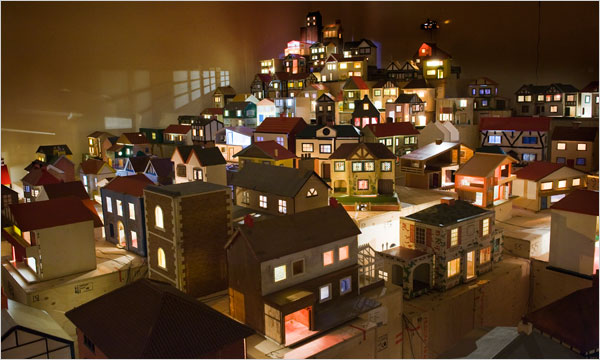
British artist Rachel Whiteread’s installation Place (Village) (2006-08) is currently on view for the first time in The United States at The Museum of Fine Arts in Boston.  This recent work is the centerpiece of an exhibition simply titled Rachel Whiteread which also features a selection of the artist’s earlier pieces including casts of doors, the insides of boxes, and wood flooring, as well as drawings and collages.


Museum of Fine Arts Press Release for Rachel Whiteread

A Talk with Rachel Whiteread
[Time]
Rachel Whiteread at MFA [Big Red & Shiny]
Rachel Whiteread – Hidden Corners of the Neighborhood [NYT]
Whiteread at MFA – It Takes a Village [HubArts]
Rachel Whiteread’s Dramatic Installation [ArtDaily]
Missed Oppurtunity at The MFA [Boston Globe]

More information and pictures after the jump… (more…)

Go See: Terence Koh ‘Flowers for Baudelaire,’ curated by Vito Schnabel, at 407 East 75th Street, New York, through January 2009

Wednesday, November 26th, 2008


Vito Schanbel, who curated the show along with Anna Wintour at the opening, via Park Ave Peerage.  Schanbel above is seen in shoes with no socks as the artist Terence Koh requested all guests take their shoes off upon entering the show.

Terence Koh’s most recent exhibition, “Flowers for Baudelaire,” is on display now and consists of 51 paintings of varying sizes created using titanium paint, corn syrup, and powdered sugar. At the show the artist used a fog machine to create added effect. The show was curated by Vito Schnabel, a close friend of Koh’s and the son of the artist Julian Schnabel. The exhbit and was held at the home of Oliver Sarkozy, the half-brother of France’s President Nicolas Sarkozy. The artist maintained that the works were edible at the opening, even licking a painting in example though few of the guests such as Anna Wintour, Cynthia Rowley and Salman Rushdie ventured to taste the works. Others in attendance for the opening and after party were artists Dash Snow and Agatha Snow, Museum of Modern Art curator Klaus Biesenbach, gallerist Jeffrey Deitch, music mogul Lyor Cohen and photographer Todd Eberle. The Upper East side space, formerly the studio of late photographer Richard Avedon, was painted entirely white -floors, walls, and ceiling- as part of the display.

The Paintings at Terence Koh’s New Show Are Possibly Edible [NY Magazine]
Koh Goes White: Hot Art [Bloomberg]
Now Licking | Terence Koh [The Moment]
Terence Koh Revealed [Hint Mag]
Uptown Baby [Vmagazine]
Palazzo Koh [Park Avenue Peerage]

(more…)

Go See: Cindy Sherman at Metro Pictures, New York, Through December 23, 2008

Saturday, November 22nd, 2008


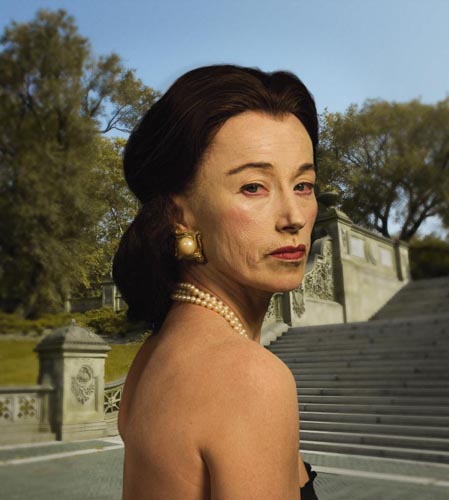
Cindy Sherman Untitled 2008 photograph via Metro Pictures.

Currently on display at Metro Pictures is Cindy Sherman’s first exhibition since 2004.  Like practically all of Sherman’s work, the photos have the artist acting as her own model.  The pieces are not traditional self-portraits however, as Sherman dons makeup, hairstyles, and wardrobe all conceived and executed by the artist herself.  The exhibition which, is untitled, has Sherman dressing as affluent women in elaborate gowns and jewelry, set against backgrounds of lavish homes and gardens.  To create the work the artist first photographed herself against a green screen and then then digitally merges the image with background photos shot separately.

Photographer Cindy Sherman Sports Latest Disguise [NY Magazine]
Cindy Sherman: Transformer, playing dress-up is actually a profession
[Village Voice]
Cindy Sherman Channels the End of an Era [The Huffington Post]
Cindy Sherman: Press Release [Metro Pictures]
(more…)

Go See: KAWS at Gering Lopez Gallery, New York, through December 23rd

Thursday, November 13th, 2008


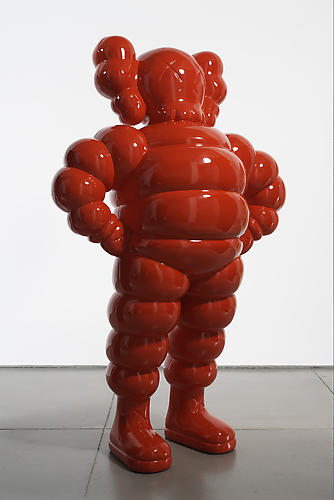
‘Chum,’ (2008) by KAWS, via Gering Lopez Gallery

The work of Brooklyn-based artist KAWS, who began his career as a graffiti artist and is now known for channeling modern pop and street culture into his art, is on display at Gering Lopez Gallery, on Manhattan’s East 57th Street. The exhibit features KAWS’ latest sculptures and paintings, including a collection of 33 candy-colored bronze sculptures of the artist’s head. ‘Chum,’ a sculpture, is a characteristically KAWS interpretation of the Michelin Man carved in red fiberglass–the sculpture is also rendered in five other unique colors. Other works on display include large acrylic paintings with bold colors and cartoon-esque forms, including several likenesses of SpongeBob Squarepants, a favorite subject of KAWS and a theme the artist explored earlier this year in an exhibition at Galerie Emmanuel Perrotin, as covered by Art Observed here.

KAWS
Through December 23rd, 2008
Hours: Tues-Sat, 10am-6pm
Gering Lopez Gallery
730 East 57th Street, New York, NY

Exhibition page: KAWS at Gering Lopez Gallery
Press Release: KAWS at Gering Lopez Gallery
Artist Bio: KAWS
Official Site: KAWS
Fine Art Two-fer [New York Post]
KAWS at Gering Lopez [The World’s Best Ever]

(more…)

AO on Site: Richard Prince’s Canal Zone, Gagosian Gallery, Saturday, November 8th, Chelsea, New York

Thursday, November 13th, 2008
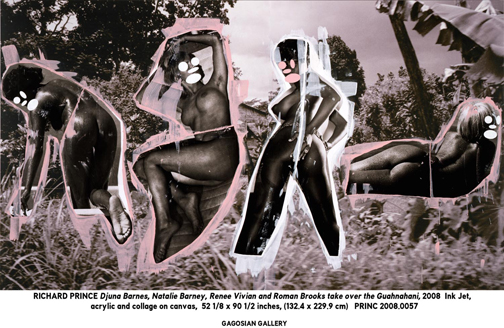
Djuna Barnes, Natalie Barney, Renee Vivian and Roman Brooks take over the Guahnahani” with permission from Gagosian Gallery

Canal Zone, a new series of collages by artist Richard Prince, opened November 8, 2008 at the Gagosian Gallery. Prince inspired by his birthplace, The Panama Canal, draws a narrative that carries contentious topics of race, colonialism, and separatism. In the artwork, Djuna Barnes, Natalie Barney, Renee Vivian and Roman Brooks take over the Guahnahani, nude women stretch and bend into erotic poses. Many of the names of the paintings feature hotels in the island of St. Barth which the artist relates to the work in the following quote:

“The story was basically about a guy who lands in St Barth, gets off the plane, is immediately told that there’s been a nuclear holocaust in the rest of the world, and he looks at his family and says ‘We can’t go back.'”

Their figures cut from magazines, then pasted against a jungle backdrop are missing eyes, mouths, and noses that dehumanize and objectify the sensuous subjects. Using stereotypical images consisting of nude women, Rastafarian men, guitars, cars, and jungle landscapes Prince’s new works lay heavy within a perpetual bed of interpretation. Pending on size, these large-scale collage pieces range from $1 to $3 million dollars and will exhibit through December 20, 2008.

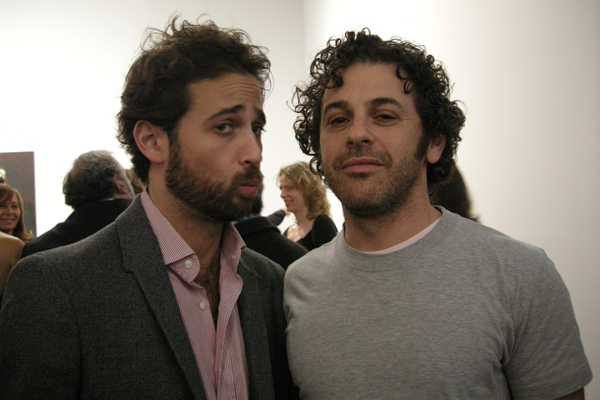
Sam Orlofsky and Tom Sachs at Richard Prince - Photo by ArtObserved

A Prince among men [GQ USA]
Richard Prince – Canal Zone
[Gagosian Gallery]
Richard Prince “Canal Zone” Exhibition Recap [Hypebeast]
Richard Prince: Canal Zone [Flavorpill]

more pictures from the show after the jump…

(more…)

Newslinks for Tuesday, November 11th, 2008

Tuesday, November 11th, 2008

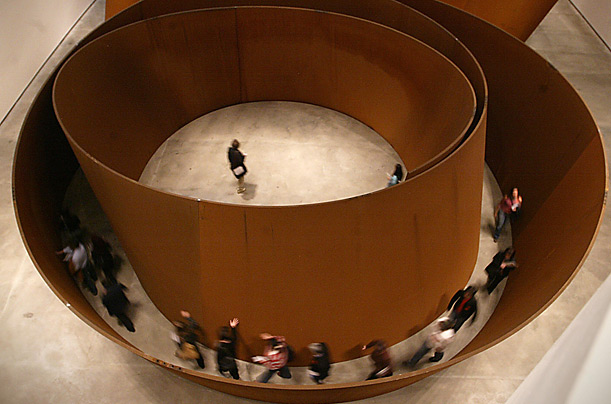
Richard Serra via Time

The Economist is long on Richard Serra: “slow-burning Mr Serra will be one of the artists whose work will continue to shine long after he is gone” [TheEconomist]
–>
The defensive financial strategies art auction houses take during a market downturn
[The Art Newspaper] and in related, financing for fine art is correspondingly receding [Portfolio]
–>
A look inside the highly specialized art storage business [Financial Times]
–>
The Tate Modern may have accidentally hung 2 Rothko’s sideways [TimesUK]

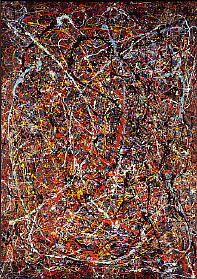
The Pollock in question via terisfind.com

Highly controversial supposed Jackson Pollock drip painting is for sale for $50 million in Toronto [CBC]
–>
London’s Colony Room, favored bar of Lucian Freud and Damien Hirst, may close [TimesUK]
–>
50 to 75 Modern and Contemporary German works of art including some by Rosemarie Trockel, Georg Baselitz and Candida Höfer donated to the Busch-Reisinger Museum at Harvard [Artdaily]
–>
Yvonne Force Villareal, sets up an APFlab (“Art Production Fund”) on Wooster street in Soho, New York [NYTimes]

The Bacchae: The Library Theatre, Manchester and on tour

The Independent (London, England) February 21, 1996 | JEFFREY WAINWRIGHT Euripides’ The Bacchae is strong meat, literally. Its dominant image is of dismemberment, animal and then human flesh seized alive and devoured in the furthest reach of frenzy available to human kind.

Now The Library is a nice place, a cosy cup of a theatre, designed less for Bacchanalia than for Spring and Port Wine. Other venues on Kaboodle’s itinerary may suit Euripides better, but interesting as it is to contemplate the startlingly different contexts of ancient Greek and modern theatre, the production does not resolve this fundamental incongruity. For this, the less traditional the performance space the better.

But for all the rawness at its heart, The Bacchae is in no sense a “primitive” play. It is the story of the coming of the disreputable but potent Dionysus to Thebes, determined to prove his lineage as a son of Zeus and claim the honour due to a god. Though despised as a foreigner by the Theban king, Pentheus, Dionysus has captivated the women of Thebes, who, led by Pentheus’ own mother Agave, are now the Bacchae, living in liquid abandon beyond the city walls. Dionysus, himself ambiguously gendered, is lord and liberator of women, and the rapture he engenders transports them from their appointed place into ecstasy. The play’s main conflict is therefore between this liberation and the pursed rectitude of Pentheus.

It appears to be a clash of immutable elements, but Euripides’ psychological subtlety lies in the way Dionysus is able to evoke a prurient interest in the activities of the women in his enemy, and so seduce him from his fixed masculinity. Discovered in his spying, Pentheus is sundered by the Bacchae, his own mother claiming his head as a trophy. The second psychological switch is Agave’s rediscovery of her former mind as the frenzy abates and the contrary face of the Dionysian rapture becomes apparent. go to web site facial hair styles

Happily, the complexity that surrounds Pentheus is presented with nuanced care by Lee Beagley. Softly spoken, he has no crude, tyrannical bluster about him, and he is drawn into his fatal female garments in a gentle swirl of reluctance and surprised pleasure. Kaboodle’s other long-time actor, Paula Simms, takes two of the vitally important “messenger” roles, and her narration, especially the first account of the Bacchae at large, is clearly and characterfully done. This scene also provides the best visual moment, in which the company create a huge beast from a cow’s skull and a vast red curtain, then hunt it down.

Otherwise, Lee Beagley’s staging and Bruce Gallup’s design are disappointing by Kaboodle’s previous standards. The eclecticism of the costumes is unfocused, and a cumbersome piece of revolving stage machinery resembling a sawn- off caboose clutters the action. Eugene Salleh makes a puckish Taras Bulba of Dionysus, but his voice is not sufficiently commanding. Despite the ritual elements, these plays require a tremendous amount of simple, informative speaking, and, Beagley and Simms apart, this is woefully underpowered here. The result is that this great and disturbing play is not nearly disturbing enough.

n On tour to Marlborough, Birmingham, Kendal and Leicester this month, then throughout F} {DD} 21:02:96 {XX} Arts {PP} 8 {HH} Music: Music from the Yellow Shark, Frank Zappa / Ensemble Modern Royal Festival Hall, London {BB} Phil Johnson {TT} The late Frank was sadly unable to appear for this ultimate valediction of his role as a serious composer, but if he had, he would, you think, have taken comfort in the extent to which his facial hair-styles seemed to live on in many members of the audience. The yellow shark of the title lay pinned up behind the stage like a scruffy talisman and an air of expectation lay over the whole of the first, non-Zappa, half of the performance. web site facial hair styles

Opening with three studies by Conlon Nancarrow, the Ensemble demonstrated immediately their masterly grasp of difficult repertoire, the two pianos chattering away as if in binary code while the percussion sectionswapped roles in a see-saw of rhythmic accents, like chopsticks rattling on a plate. Study No 6 was achingly beautiful, the strains of a Mexican lullaby somehow emerging through the convulsive pitter-patter. Varese’s Deserts followed, accompanied by a film by the video artist Bill Viola of underwater point-of-view shots, barren landscapes and, eventually, an interior scene in which a man moved slowly across a room. Meanwhile, the music – part live orchestra, part taped industrial sounds – reached a series of crescendos, matched at the end by a magnificent coup de film, when the man and his furniture were dashed to smithereens. It was difficult, it was pretentious, but it was also very well done, and it matched the accumulating tension and ecstatic release of the music marvellously. So how would Frank live up to that?

Brilliantly, of course. First assembled for a performance at the 1992 Frankfurt Festival, which was partly conducted by the composer, the music is a compendium of Zappa themes that he got up to speed on his trusty synclavier and then printed out as music for the orchestra to learn, the title emerging only as an afterthought. Beginning with a cheesy Star Wars-ish introduction, the Ensemble’s programme mixed and matched movements from the original performance (available almost complete on the excellent Rykodisc album). Echoes of Boulez and Henze, at times rather too plinkety- plonk for comfort, were evident, but much of the music was quite superb, and the closing “G-Spot Tornado” was a tour de force of sustained action and invention. Only in “Bebop Tango,” was there any real Mothers of Invention monkey-business (when the orchestra talked among themselves, loudly) and the concert ended in total adulation. The encore, though, was a bit of a disappointment; hoping maybe for “Peaches En Regalia”, what we got was the Star Wars intro again. But the Zappa-philes went home happy, as they knew they would.

JEFFREY WAINWRIGHT

Go See: Joan Miró, Painting and Anti-Painting, 1927-37 at MoMA, NYC through Jan. 12

Saturday, November 8th, 2008


–>
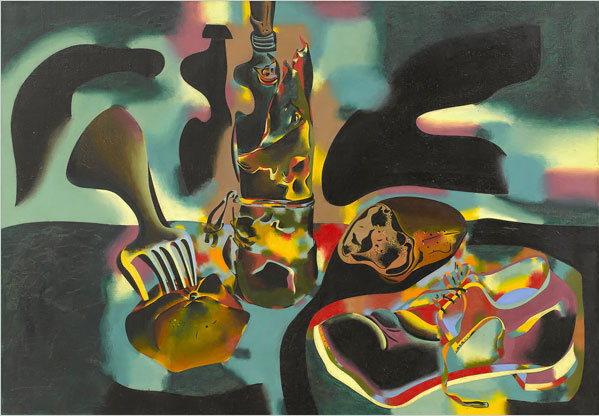
Still Life With Old Shoe
(1937), Joan Miró via NYTimes

Joan Miró: Painting and Anti-Painting 1927–1937 at MoMA is the first major museum exhibition to display the chronological process of Miró’s practices and ideologies used to attack conventions and disrupt market values in this vital decade. The exhibition uses Miró’s 1927 claim of “wanting to assassinate painting” as its launch point to explore his lineage in 12 groups, which includes 90 paintings, collages, objects, and drawings. The exhibition takes a step-by-step perspective of the reinvigoration and radicalization of Miró’s sustained series. Additionally the exhibition is symptomatic of the European reaction to the end of the roaring twenties and insemination of political tensions that would culminate in 1939. The exhibition begins with a group of works composed on unprimed canvas and concludes with a single painting from 1937: Still Life with Old Shoe and is culmination of works created in Paris, Montroig (a rural village on the coast of Catalonia), and Barcelona. The exhibition is organized by Anne Umland the Curator or the Department of Painting and Sculpture at the The Museum of Modern Art. It will be on view in The Joan and Preston Robert Tisch Gallery, sixth floor, from November 2, 2008, through January 12, 2009.

MoMA Opens Exhibition Focusing on the Transofrmative Dcade of Joan Miró’s Work [ArtDaily]
–>
Joan Miró: Painting and Anti-Painting, 1927-1937
[TheArtNewspaper]
–>
Angry Young Man
[TheNewYorker]
–>
Miró, Serial Murderer of Artistic Convensions
[NYTimes]
–>
Joan Miró: Painting and Anti-Painting 1927-1937
[Museum of Modern Art]
–>
Miró, Miró on the Wall [ArtNet]

(more…)

Go See: Tom Sachs, at Galerie Thaddaeus Ropac Paris, through November 22nd

Monday, November 3rd, 2008


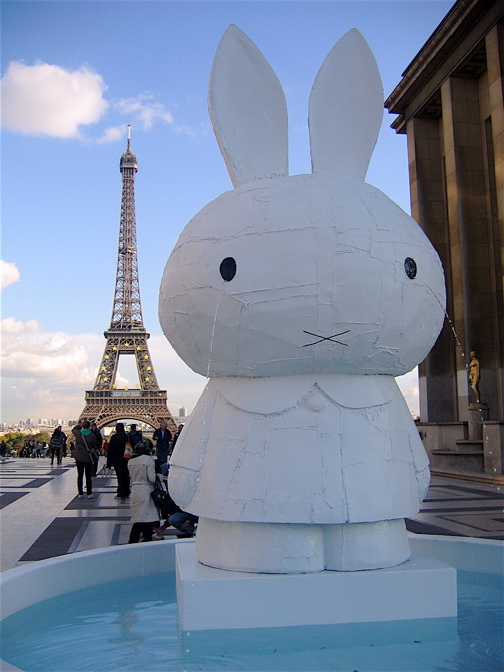
Crying Sanrio sculptures by Tom Sachs (to correspond with his show at Galerie Thaddaeus Ropac) at the Trocadero, Paris, via Supertouch

After a show at Lever House in New York earlier this year (previously covered by ArtObserved here), Tom Sachs’ crying sculptures based on Sanrio characters went on display in Paris. The three sculptures were available for public viewing through November 2nd at the Place du Trocadero, in the shadow of the Eiffel Tower, and were an off-site installation of Sachs’ show at the Galerie Thaddaeus Ropac.  Entitled “Miffy,” “Hello Kitty,” and “My Melody,” the sculptures appear to be made of foamcore, known to be Tom Sachs’ favorite material. They are actually made of bronze, and constructed to mimic foamcore and the cut and paste aesthetic found in many of the artist’s works.  The show will run until November 22nd, 2008, at the Galerie Thaddaeus Ropac.

TOM SACHS
through November 22, 2008
Galerie Thaddaeus Ropac
7 Rue Debelleyme
Paris, France

Artist page: Tom Sachs
Tom Sachs’ show at Galerie Thaddaeus Ropac
Press Release at Galerie Thaddaeus Ropac
PARIS///TOM SACHS’ CRYING KITTYS AT THE TOWER OF EIFFEL [Supertouch]
Tom Sachs Exhibition at The Eiffel Tower Paris [RawArt]

More pictures after the jump…

(more…)