Global contemporary art events and news observed from New York City. Suggestion? Email us.

Archive for the 'Art News' Category

Whitney 2008 Biennial Artists Announced

Wednesday, December 5th, 2007


Image via tfaoi.com

On November 16th the 2008 Biennial Artists were announced. The curatorial team stressed a broader take on the American Art scene, moving away from the post-punk sway exhibited in 2006. This expansion primarily pertains to the genres and mediums covered within the biennial, not the physical number of artists, as there were 100 artists selected in 2006 compared with 81 for 2008’s Biennial. Also unique to the upcoming show, is the use of the Armory space on Park and 67th, primarily for perfomance and interactive exhibitions.
Headliners include John Baldessari, Robert Bechtle, Mary Heilmann, Michael Smith and Sherrie Levine.

ArtNews
Whitney.org
NYTimes
Full list of artists after the jump. (more…)

Art Observed in Miami for Basel

Wednesday, December 5th, 2007


Courtesy of the Naked Eye

Art Observed has multiple members of our staff currently enroute to Miami for Art Basel 2007. We will be updating the site live for the duration of the week. Check in for our latest posts. If you have any information you would like to pass onto us please e-mail us.

Pinar Yolacan at Rivington Arms

Tuesday, December 4th, 2007


via Rivington Arms

Turkish born, Brooklyn based Pinar Yolacan’s second solo show opened this evening at Rivington Arms on the lower east side tonight. Yolacan’s work features portraits of steadfast, unwavering females clothed in couture made of…animal parts. Yes, skin, claws, intestines, stomachs, are all “sewn” into garments, the undulations of flesh becoming ruffles, ruched, and lace. This show is entitled “Maria”, its Afro-Brazilian subjects are all inhabitants of Ithaparica, Bahia, a small island found off of the northeastern coast of Brazil. Yolacan has dressed them in hand made costumes that are reminiscent of colonial dress as worn by Portuguese slave masters. On top of the dresses, she drapes various “garments” frozen animal parts, which thaw as she shoots. By the end of the shoot, the meat is close to rotten and discarded while the images are left as a memory of her constructed identities – Yolacan stated in a style.com interview, “When you put on the clothes of another culture, it changes how you stand, how you feel, the gestures you make.”

Live Flesh via Style.com

Images from the opening after the Jump

(more…)

Turner Prize 2007 Awarded

Tuesday, December 4th, 2007


A still from Mark Wallinger’s Sleeper, via artnet.

On December 3rd 2007 Tate Britain awarded Mark Wallinger the 2007 Turner Prize for his video, “Sleeper.” Since 1984, the prize has been awarded annually to a top British Contemporary Art Exhibition of the previous year and is generally regarded as one of the top art honors in Europe. Past winners include Damien Hirst, Gilbert & George and Anish Kapoor. The exhibition is on display through January 18th at Tate Liverpool.

Bloomberg Article
Mark Wallinger [Tate]

More Details on Wallinger after the Jump: (more…)

Newslinks for 12.4.2007

Tuesday, December 4th, 2007


Photo via The New York Times

Should Galleries be Funding Their Artists’ Museum Shows? [NYT]
Influential Collector Opposes Miami Art Museum’s Plans for Herzog & de Meuron Building [ArtInfo]
‘Who’ Buys Old Masters’ on Sotheby’s and Christies December Auctions [Economist]
Scotland’s Art Minister Chides Tate Judges Over Turner Prize Runner-Up Coley [Scotsman]
Hirst, Bono, Compiling Worldwide Contemporary Collection for Aids Charity Campaign [Independent]

Banksy Does New York

Tuesday, December 4th, 2007


Photos: Christian Coleman for ArtObserved
“Banksy Does New York,” the first New York gallery show for British-born street-artist Banksy, opened this Sunday, December 2nd, at Vanina Holasek Gallery on West 27th Street.

Just this October more than 50 Banksy works went to auction at Bonhams and Sotheyby’s, both in London. Nearly all the works sold for at least double their top estimate. (more…)

Newslinks for 12.3.07

Monday, December 3rd, 2007


–>
Photo via The New Museum

Nicolai Ourousoff, Architecture Critic, on The New Museum [NYT]
–>
Video from Inside The New Museum [Gawker]
–>
Jeff Wall at White Cube, London [Guardian]
–>
Gallery Built Inside of a Napa Valley Mountain [NYT]
–>
Slew of New Galleries in Berlin [NYT]
–>
Rules for Buying Art [NYT]
–>

Eye of the beholder: Sephora’s finances; Analysts, company disagree on its outlook.(Statistical Data Included)

Advertising Age March 19, 2001 | Tsui, Bonnie Shoppers demand freedom, and cosmetics retailer Sephora aims to please. The sale of high-end brands such as Christian Dior and Dolce & Gabbana alongside the likes of Clinique, Hard Candy and Burt’s Bees speaks volumes about the direction in which luxury retailing, particularly beauty products, may be headed. Yet despite the investment parent company LVMH Moet Hennessy Louis Vuitton has poured into Sephora’s U.S. expansion, will the “open-sell” concept prove successful enough to ring up the profits?

One of the largest retailers of perfumes and cosmetics in Europe, Sephora made its move to the U.S. in 1998 with Sephora USA. Self-proclaimed as “the future of beauty,” Sephora stores allow customers to roam freely and sample products on an open floor without the interference of the sales clerks usually found at traditional department-store cosmetics counters. The brand and its online affiliate [Sephora.com] are units of the Selective Distribution Group of Paris-based luxury giant LVMH.

Sephora now has 461 stores in 12 countries, compared with 57 stores in France in early 1998; 17 stores opened in the U.S. alone in 2000. LVMH is looking to derive a third of its revenue from U.S. operations and is intent on extending retail networks here-particularly with Sephora. But analysts are not so sure about Sephora’s profitable expansion as LVMH’s own net profit growth falls short of forecasts.

2001 OUTLOOK LVMH reported 2000 earnings March 7, announcing a 27% rise in operating income to $1.82 billion. But slower sales growth reflected weakening currency in key markets Japan and the U.S. Net profit growth was squeezed to 4%, far short of the expected 22%; net profit of $787 million was stunted by the costs of heavy promotion of the Sephora cosmetics chain in the U.S. Last year’s acquisitions binge, which included the purchase of struggling beauty e-tailer Eve.com’s assets, also pressured profits. The group, however, asserted it will achieve “double-digit growth in sales and operating income” in 2001. LVMH does not break out sales and financial performance by unit. Stating the company is not yet ready to issue marketing plans, Sephora did not wish to comment at press time.

“There are differing opinions on whether or not Sephora is financially successful,” said Karen Young, chief executive officer of The Young Group, a beauty consulting firm. “Some industry people think they’re not doing well-there’s been a lot of speculation about it, which makes you ask what’s going on.” Analysts remain equivocal about LVMH and Sephora’s performance. On March 6, Goldman Sachs cut its earnings per share and share price targets for LVMH, due to the cost of investment in auction businesses and weakness in the yen and the U.S. dollar (Japan and the U.S. make up LVMH’s biggest consumer markets). The investment banking and securities firm said it estimated higher losses at the group’s dot-com units, which includes eLuxury.com, as well as at its Sephora retail stores in the U.S. LVMH took Sephora under its wing in 1997. here sephora coupon code

LVMH group Chairman Bernard Arnault confronted analysts and other market watchers with a positive air. “The first half will be affected by morose American sentiment, but each time we have gone through a period of uncertainty, we have made progress in relation to competitors,” he said. The only sign of slowdown for 2001’s first two months was not in the company’s luxury goods, he added, but in champagne-not surprising now that the millennial hoopla has died down. in our site sephora coupon code

LVMH also stated it continues to focus on investment activities for Sephora, claiming “accelerated sales growth” as “new store openings continued in key markets.” Operating costs, however, were just shy of breakeven for the selective retailing unit, and LVMH acknowledged investments in the Sephora store chains did negatively impact results.

`TREMENDOUS WAVES’ Despite the question of its financial profitability, Sephora has made a huge impression as a retail concept in the world of cosmetics-particularly with luxury goods, where exclusivity and personal attention have always reigned.

Initially, retailers were reluctant to give up the individual sell stance on cosmetics, which requires customers to ask for assistance. Most believed once a salesperson was “helping” a customer, he or she would be more likely to buy more product. Some analysts have described Sephora’s approach as the “Barnes & Noble” of beauty and makeup. Sephora has been heavily visible in promotions, most recently masterminding the first-ever Beauty Runway Show in last month’s “7th on Sixth” Mercedes-Benz Fashion Week in New York.

“Almost anyone in the industry that you ask would say that they’re making tremendous waves, the ripple effects of which are still not obvious,” said Suzanne Grayson, president of Grayson Associates, a marketing consultancy in the cosmetics and toiletries industry. “It’s not just the fact that it’s a great retail store with a huge selection, it’s the environment that is totally different.” Ms. Grayson cites exposure to all price points of merchandise and the ability to help yourself as key points in Sephora’s plan. “When you say `open sell,’ this is it to the ultimate degree … though department stores are moving in the direction of open sell to a large degree in cosmetics. And though what they’re doing is not necessarily because of Sephora, it’s a justification of the fact that Sephora’s model works.” “They’ve been a wake-up call to more traditional department stores, [which have] lost tremendous market share in the last 10 years in terms of cosmetics,” agrees Ms. Young, the beauty consultancy CEO. “But the funny thing is … for the most part, when you go into these renovated department stores, the atmosphere doesn’t feel any different. It’s the same sales approach they’ve been using for 30 years.” Sephora’s arrival, Ms. Young notes, has changed the landscape of the cosmetics shopping experience. “It’s much more user-friendly than a department store. But from a marketing standpoint…the final execution is not as well thought-out as it should have been. It may have been too rushed, trying to put so much in place so quickly.” From a consumer perspective, she added, Sephora’s second tier-meaning consumer amenities and stock depth-is weaker than that of many larger department stores.

A NEW MODEL FOR LUXURY?

Once Sephora arrived, however, retailers such as Macy’s West reorganized their beauty sections to mimic Sephora stores. In August 1999, Sephora USA filed suit against Federated Department Stores and Macy’s West for intentionally copying the look of its stores. The suit was settled in June 2000; terms were not disclosed. But the question of whether this kind of open sell environment could work for other luxury products is an interesting one.

Ms. Young, for one, thinks it can’t. “For cosmetics, [the Sephora model] works to be young, fun and spontaneous because it’s the nature of the beast,” Ms. Young said. With higher price points, however, there are higher expectation levels for a kind of service and atmosphere customers don’t expect at mass retail stores.

“To Americans, luxury typically includes something more, that some editing has already been done. With other luxury goods, you don’t expect an endless array, you expect that someone has set a taste level, complete with refined atmosphere and service.” COMING AD PUSH Lloyd & Co., New York currently is working on creative development for Sephora’s coming 2001 campaigns. The agency’s first work was done for an April 2000 Sephora.com print, radio and online campaign titled “The most beauty online.” The New York flagship store and site launched in October 1999 with a $20 million campaign from Omnicom Group’s DDB Worldwide, New York.

Sephora.com, meanwhile, faces its own set of challenges. For January 2001, the site received 237,000 unique visitors, according to Jupiter Media Metrix. LVMH’s eLuxury received only 92,000 unique visitors that same month. The tracking firm said luxury sites have not yet reached one million unique visitors per month, and beauty product sites have not performed well-fragrances and cosmetics fall near the bottom of a ranking of unique visitors to retail Web sites.

As for Sephora’s financial future, the picture is unclear. “I’ve heard from analysts that they will probably make $160 million to $200 million this year in business,” Ms. Young said. “Clearly, Sephora is in an investment spending mode. Right now, we’re all hovering over the body, waiting to see if money is being made. It might take a while to find out.” Contributing: Alice Z. Cuneo Tsui, Bonnie

New Museum Debuts on the Bowery

Monday, December 3rd, 2007

The New Museum opening on Friday night was a muted affair, not very much excitement or fanfare in the air, however it was the third “opening” event in a series of four that occurred every evening from Wednesday until Saturday when the museum was finally officially open to the public for a Target sponsored 30 hour run after which the museum will assume normal hours from 12-6 Weds, 12-10 Thurs. and Fri. and 12-6 Sat. and Sun.

The Gray Ghost of the Bowery: An unsentimental valentine from the New Museum [Ny Mag]

Full Details after the jump: (more…)

Newslinks for 11.27.07

Tuesday, November 27th, 2007

via Ellen Page Wilson/Courtesy of Gavin Brown’s Enterprise

Urs Fischer razes Gavin Brown’s Enterprise [NYMag]
Gert and Uwe Tobias opening 11.28 at MoMA
[MoMA]
Hong Kong Art Fair a Bust? [NYT]
MTA to Commision Major Art Works for 2nd Ave Subway Line [NYP]

Breakdown the Baselites – NYMag's Guide to Miami

Tuesday, November 27th, 2007

–>
via FNEWS

In anticipation for this year’s Miami art fairs, New York Magazine‘s Alexandra Peers takes a closer look at the main groups of attendees who will swarm the city next week.   (more…)

30 hours of the New New Museum

Tuesday, November 27th, 2007

The time has come – New Museum is opening this weekend. To kick off the long-awaited relocation & redesign of the institution, Target is sponsoring the first 30 hours that the new New Museum will be open, beginning at 12pm Saturday, December 1 through 6pm the next day.  Yes, they will be open overnight. (more…)

A bit of gossip: Larry Gagosian vs. Adam Lindemann…

Sunday, November 25th, 2007

So our speculation last week as to why Gagosian bought another one of his own artists’ pieces at Sotheby’s was partly correct. An article in PageSix this weekend gives us the dirt on the original owner, collector Adam Lindemann, and why Gagosian had dropped him as a client years ago. (more…)

Thanksgiving weekend links

Saturday, November 24th, 2007
Rieko Sakurai via Supertouch 

Rieko Sakurai’s unsettling cultural hybrid paintings in Tokyo [Supertouch]
Guggenheim’s exterior to remain gray [NYP]
Corrections to NYT auction results? [CultureGrrl]
Zach Feuer buys Google ads [AFC]
Despite “Diving Bell…” Schnabel is a painter first and foremost [NYT]
Christie’s sets Chinese contemporary record in Hong Kong [Bloomberg]
‘ArtStar’ season 2 artist work to be shown at Basel [AFC]
Wangechi Mutu at Victoria Miro through January 19th [Hustler of Culture]

Charles Ray at Matthew Marks Gallery

Thursday, November 22nd, 2007


Installation view of Charles Ray via Matthew Marks

Peering inside Matthew Marks‘ West 22nd Street space at a distance, Charles Ray’s latest pieces—The New Beetle, Egg & Father Figure—appear plastic, as if made using molds. The soft and very particular light of the gallery reflects off of their form, rendering them smooth, shiny and inviting, despite Ray’s typical choice of provocative and somewhat repulsive subject matter. (more…)

Maccarone now officially home of Peter Paul Chocolates

Monday, November 19th, 2007

Christian K. Coleman for ArtObserved

Peter Paul Chocolates, the current name of Maccarone Gallery, has officially opened and is producing 1,000 chocolate sculptures every day from now until the end of the year. Paul McCarthy, the artist behind the boutique, has formed Peter Paul Chocolates into and LLC in anticipation of replicating the chocolate factory in other locations in the future.

McCarthy’s iconic “Santa with Butt Plug” sculpture that debuted at Art Basel earlier this year is transformed into a chocolate version at the shop. Measuring ten inches high and made with 14 ounces of Guittard chocolate, each Santa retails for $100. (more…)

Martin Puryear at Moma

Monday, November 19th, 2007

Photo ArtObserved

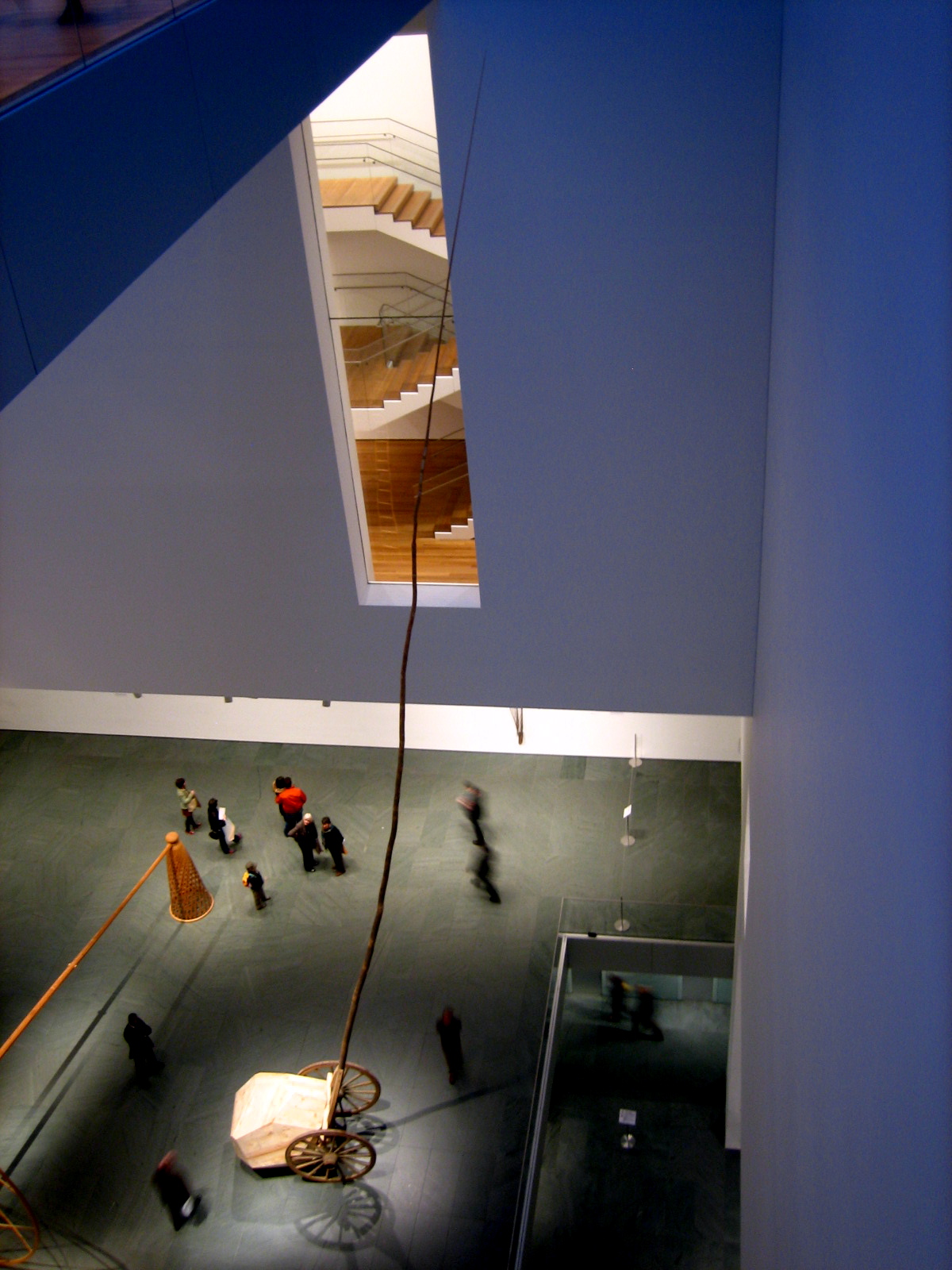
MoMA has been making several changes to their exhibitions, rotating certain pieces and pulling treasures out of their vault to keep things interesting.  If the $20 adult admission fee doesn’t faze you, then it might be worth it just to see the new pieces in the first floor atrium exhibition space.  The Twomblys have been relocated and the museum finally makes use of the high ceilings by installing Martin Puryear’s delicately soaring sculptures.  (more…)

Newslinks for 11.19.07

Monday, November 19th, 2007
Model for Jeff Koons’ parade balloon via World’s Best Ever

Jeff Koons’ rabbit to be Macy’s Thanksgiving Day parade balloon [WorldsBestEver]
Sotheby’s to hold inaugural Russian evening sale
[ArtDaily]
Tobias Meyer says Sotheby’s spurt was “hard work”, not luck [Bloomberg]
New York’s first Latin American art fair features just 35 galleries [NYT]
MoMA’s towering expansion includes residential units & hotel [CultureGrrl]
Art Production Fund’s 2008 beach towels now at Target & online [WorldsBestEver]
Museums court dealers’ financial backing for vested artists [NYT]
Larry Salander to sell townhome, Judge criticizes spending [Bloomberg]
Bank of America to sell paintings from corporate collection [Portfolio]
Richard Prince to exhibit new paintings at Eden Rock Hotel, St. Bart’s [ArtNet]
Financial markets may be down, but art market is definitely up [NYT]
Phillips de Pury delivers an uneventful ending to fall sales [NYT]
Whitney Biennial 2008 artists announced [Whitney]

Auction tidbits: Larry Go-Gos for Jeff Koons… again

Thursday, November 15th, 2007

via Sotheby’s

So if Larry Gagosian’s record-setting $11.8 million purchase of Jeff Koons‘ “Diamond (Blue)” at Christie’s on November 13th wasn’t enough, he also bought the artist’s “Hanging Heart (Magenta and Gold)” for $23.6 million the next night at Sotheby’s contemporary evening sale, breaking the record set the previous night and setting a new one. (more…)

Newslinks for 11.15.07

Thursday, November 15th, 2007

–>
via Robert Polidori for the New Yorker

New New Museum changes the LES skyline [New Yorker]
–>
Sotheby’s stock gets a boost from last night’s sales [Crain’s]
–>
Sotheby’s auction total highest ever [ArtDaily]
–>
New Museum’s webcam shots [AFC]

Neuromuscular disorders presenting as congenital bilateral vocal cord paralysis

The Annals of Otology, Rhinology & Laryngology October 1, 2001 | Lapena, Jose F Jr; Berkowitz, Robert G Congenital bilateral vocal cord paralysis (BVCP) can be associated with an underlying neuromuscular disorder, and may present before other features of the neuromuscular disorder become apparent. All infants less than 12 months of age presenting with BVCP between July 1987 and July 1999 at the Royal Children’s Hospital, Melbourne, in whom a neuromuscular disorder was subsequently diagnosed were followed. Three children in whom BVCP was diagnosed soon after birth and before recognition of an underlying neuromuscular disorder were identified. All presented with upper airway obstructive symptoms at birth, had a diagnosis of bilateral abductor vocal cord paralysis made at awake flexible laryngoscopy, and had no underlying structural laryngeal abnormality on microlaryngoscopy and bronchoscopy. Two children required a tracheostomy, and I child was weaned from nasopharyngeal continuous positive airway pressure after 3 weeks. Subsequent neuromuscular symptoms were recognized between 4 months and 7 years later, leading to diagnoses of facioscapulohumeral myopathy, spinal muscular atrophy, and congenital myasthenia gravis. In each case, the prognosis for recovery from symptoms related to BVCP reflected that of the underlying neuromuscular disorder. This experience suggests that congenital BVCP may be a feature of an unrecognized neuromuscular condition. This possibility should be considered particularly in the presence of associated neurodevelopmental or neuromuscular dysfunction, or in cases in which BVCP is progressive. arnoldchiarimalformation.org arnold chiari malformation

KEY WORDS – congenital bilateral vocal cord paralysis, neuromuscular disorder.

INTRODUCTION Significant upper airway obstruction presenting immediately after birth should raise the possibility of congenital bilateral vocal cord paralysis (BVCP). However, arriving at a diagnosis of congenital BVCP only marks the beginning of a long process for caregivers and physicians, and important questions such as the severity of the condition, the underlying cause, the prognosis for recovery, and the best therapeutic strategies need to be addressed.

The prognosis for recovery of vocal cord function depends on the underlying cause of the congenital BVCP.1 After excluding structural laryngeal abnormalities that limit vocal cord mobility, the causes of congenital BVCP that need to be considered are birth trauma or asphyxia, neuromuscular disorders, and central nervous system anomalies, most commonly the Arnold-Chiari malformation. Other structural neurologic abnormalities have also been described, including hydrocephalus unrelated to the Arnold-Chiari malformation, hypoplasia of cranial nerve motor neurons, and cerebral agenesis.2 In some cases, the cause of congenital BVCP may not be readily apparent.

In their review of the etiology of BVCP, Holinger et a12 found that in 71 of 114 cases of congenital BVCP, no cause was determined. Associated anomalies were also present in 32 of these children, which included neurologic, cardiac, and laryngeal abnormalities. Emery and Fearon3 found that in 10 of 19 children with congenital vocal cord paralysis, the cause was unknown, and 5 of these had other anomalies. As has been suggested,I it would appear that in a significant proportion of cases of congenital BVCP, no cause may be found.

The high proportion of idiopathic congenital vocal cord paralysis in these reports by Holinger et a12 and Emery and Fearon3 may be partly due to the lack of the sophisticated laboratory, electrophysiological, and imaging studies that are available today. However, a modern protocol for the investigation of congenital BVCP has yet to be established. A previous series of neonates evaluated by awake flexible laryngoscopy4 has highlighted the importance of this method in the investigation of congenital BVCP. Laryngeal electromyography findings in idiopathic congenital BVCP1 and animal studies of posterior cricoarytenoid muscle activity,5 as well as the identification of posterior cricoarytenoid motoneurons in the medulla,6,7 may further contribute toward our understanding of this condition.

Congenital BVCP itself has also been associated with manifest findings indicative of a more widespread neuromuscular disorder.8 As the primary cause of congenital BVCP, neuromuscular disorders include a range of conditions that affect the anterior horn cells, neuromuscular junction, and muscle. These disorders can present with BVCP in addition to weakness and hypotonia. However, the onset of BVCP may occur before or after other features of a neuromuscular disorder become apparent. While symptoms of BVCP may not always be present at birth, neither may the recognition of the neuromuscular disorder that in some cases may be preceded by BVCP. We present our experience with 3 children in whom BVCP was diagnosed soon after birth, and before recognition of an underlying neuromuscular disorder.

METHODS All infants less than 12 months of age presenting with BVCP from July 1987 to July 1999 at the Royal Children’s Hospital in whom a neuromuscular disorder was subsequently diagnosed were followed, and their case histories were reviewed. Children were included in the study if the diagnosis of BVCP was made before the recognition of an underlying neuromuscular disorder, although some patients may have had some evidence of a neuromuscular disorder that was unrecognized at the time of diagnosis of BVCP.

RESULTS Clinical details of 3 children with BVCP associated with a subsequently diagnosed neuromuscular disorder are listed in the Table. All presented with upper airway obstructive symptoms at birth, received a diagnosis of bilateral abductor vocal cord paralysis at awake flexible laryngoscopy, and had no underlying structural laryngeal abnormality seen on microlaryngoscopy and bronchoscopy. A tracheostomy was required in 1 child with complete BVCP and in another child with partial BVCP, on the third day and in the eighth month of life, respectively. The third child, who had complete BVCP at birth, was weaned from nasopharyngeal continuous positive airway pressure at 3 weeks. Subsequent neuromuscular symptoms were recognized in these children 4 months to 7 years later, and investigations led to the diagnoses of facioscapulohumeral myopathy, spinal muscular atrophy, and congenital myasthenia gravis. The prognosis for recovery from symptoms related to BVCP in each case reflects that of the underlying neuromuscular disorder.

DISCUSSION Three children with congenital BVCP are described, all of whom subsequently received diagnoses of neuromuscular disorders. Previous reports of vocal cord paralysis preceding the diagnosis of neuromuscular disorders in children have included cases of acute spinal muscular atrophy9 and subacute necrotizing encephalomyelopathy or Leigh disease. 10 The neuromuscular disorder may become readily apparent soon after diagnosis of BVCP, as in the case of patient 3, with congenital myasthenia, in whom medical therapy may have avoided the need for tracheostomy. A similar case has been reported of myasthenia gravis presenting with acute stridor due to BVCP in a 46-year-old man.II In contrast, the underlying neuromuscular disorder may not be fully appreciated for years, as in the case of patient 1, in whom a specific diagnosis of facioscapulohumeral myopathy was only made for progressively worsening neurologic developmental symptoms at age 7. Wu et a112 reported the case of a 53-year-old man in whom vocal cord paralysis necessitating a tracheostomy preceded any other neurologic and autonomic manifestations by 2 years, until extrapyramidal and cerebellar signs with autonomic failure led to magnetic resonance imaging diagnosis of severe brain stem and cerebellar atrophy. this web site arnold chiari malformation

In cases in which no recognizable cause for BVCP can be found, no prognostic indicators are available at the moment for recovery of vocal cord function. The severity of BVCP is usually gauged by the degree of upper airway obstruction present and the need for tracheostomy. Generally, if tracheostomy is not necessary in the neonatal period, progressive improvement in vocal cord function will occur without the need for subsequent intervention. Conversely, when tracheostomy is required in a neonate, tracheostomy dependence may persist for a number of years, and any subsequent improvement in vocal cord movement may take years and may be only partial.13 While this may be true for idiopathic congenital BVCP, an underlying neuromuscular disorder must be considered when the degree of vocal cord dysfunction increases with age. Patient 2, with partial vocal cord paralysis, developed tracheostomy dependence in the postneonatal period. The index of suspicion for an underlying neuromuscular disorder should be very high in this clinical situation.

Besides causing impairment of vocal cord function, a neuromuscular disorder may also affect respiratory muscle function. The clinical severity of BVCP may therefore be magnified by the presence of associated poor respiratory effort. Both mechanisms were involved in patient 2, with spinal muscular atrophy, the former explaining the initial need for tracheostomy, and the latter explaining the subsequent continuing tracheostomy dependence despite the presence of some purposeful vocal cord abduction.

The need for both structural and functional assessment of the neonatal upper airway, the importance of identifying an underlying cause for congenital BVCP, and the importance of recognizing the association between congenital BVCP and other congenital abnormalities remain the cornerstones of the current approach to the evaluation of the newborn with BVCP.13 Our experience suggests that congenital BVCP may be an early warning of an unrecognized neuromuscular condition. This possibility should be considered, particularly in the presence of associated neurodevelopmental or neuromuscular dysfunction, or when BVCP is progressive.

[Reference] REFERENCES [Reference] 1. Berkowitz RG. Laryngeal electromyography findings in idiopathic congenital bilateral vocal cord paralysis. Ann Otol Rhinol Laryngol 1996;105:207-12.

2. Holinger LD, Holinger PC, Holinger PH. Etiology of bilateral abductor vocal cord paralysis. A review of 389 cases. Ann Otol Rhinol Laryngol 1976;85:428-36.

3. Emery PJ, Fearon B. Vocal cord palsy in pediatric practice: a review of 71 cases. Int J Pediatr Otorhinolaryngol 1984;8: 147-54.

4. Berkowitz RG. Neonatal upper airway assessment by awake flexible laryngoscopy. Ann Otol Rhinol Laryngol 1998; 107:75-80.

[Reference] 5. Berkowitz RG, Sun Q-J, Chalmers J, Pilowsky PM. Respiratory activity of the rat posterior cricoarytenoid muscle. Ann Otol Rhinol Laryngol 1997;106:897-901.

6. Berkowitz RG, Sun Q-J, Chalmers J, Pilowsky P. Intracellular recording from posterior cricoarytenoid motoneurons in the rat. Ann Otol Rhinol Laryngol 1999; 108:1120-5.

7. Berkowitz RG, Sun Q-J, Chalmers J, Pilowsky P. Identification of posterior cricoarytenoid motoneurons in the rat. Ann Otol Rhinol Laryngol 1999; 108:1033-41.

8. Grundfast KM, Harley E. Vocal cord paralysis. Otolaryngol Clin North Am 1989;22:569-97.

[Reference] 9. Roulet E, Deonna T. Vocal cord paralysis as a presenting sign of acute spinal muscular atrophy SMA type 1. Arch Dis Child 1992;67:352.

10. Lin YC, Lee WT, Wang PJ, Shen YZ. Vocal cord paralysis and hypoventilation in a patient with suspected Leigh disease. Pediatr Neurol 1999;20:223-5.

11. Fairley JW, Hughes M. Acute stridor due to bilateral vocal fold paralysis as a presenting sign of myasthenia gravis. J [Reference] Laryngol Otol 1992;106:737-8.

12. Wu YR, Chen CM, Ro LS, Chen ST, Tang LM. Vocal cord paralysis as an initial sign of multiple system atrophy in the central nervous system. J Formos Med Assoc 1996;95:8046.

13. Berkowitz RG. Vocal cord paralysis. In: Cotton RT, Myers CM, eds. Practical pediatric otolaryngology. Philadelphia, Pa: Lippincott-Raven, 1999:613-24.

[Author Affiliation] From the Departments of Otolaryngology (both authors) and Paediatrics (Berkowitz), Royal Children’s Hospital, Melbourne, Australia. This research is supported by the Garnett Passe and Rodney Williams Memorial Foundation.

CORRESPONDENCE – Robert G. Berkowitz, MD, FRACS, Dept of Otolaryngology, Royal Children’s Hospital, Flemington Road, Parkville, Victoria, Australia 3052.

Lapena, Jose F Jr; Berkowitz, Robert G

Saatchi Online and Stuart to hold exhibitions in New York

Wednesday, November 14th, 2007

Eric Doeringer’s “Bootleg Series” via Saatchi

Saatchi Online and STUART will be holding their first exhibition in New York City at Sara Tecchia Roma Gallery in Chelsea. The group show will feature 11 New York area artists who are members of Saatchi Online. (more…)

Newslinks for 11.14.07

Wednesday, November 14th, 2007

Yue Minjun and one of his paintings via Doug Kanter for NYT

Review: NYT covers Yue Minjun at Queens Museum of Art [NYT]
Active bidding at Christie’s surprises art insiders [Bloomberg]
Record prices set at Christie’s contemporary/postwar sale
[Bloomberg]
Abu Dhabi to oversee acquisitions for Guggenheim branch [NYT]
Christie’s sales mostly bolstered by staked dealers [CultureGrrl]
Thomas Krens vague on terms for Abu Dhabi [NYSun]
Jeff Koons’ heart comes with a price [Luxist]

Jeff Koon’s “Diamond (Blue)” sells under estimate

Wednesday, November 14th, 2007

via ArtObserved

Thanks to dealer Larry Gagosian, artist Jeff Koons now has a new auction record. His “Diamond (Blue)” had a hammer price of $11.8 million (including buyer’s premium) at Christie’s postwar/contemporary sale. But the record still didn’t surpass the estimates Christie’s had stuck on the bling – both of them. (more…)

Newslinks for 11.13.07

Tuesday, November 13th, 2007

Touching up Banksy via Supertouch

Islington, London gives Banksy street work official protection [Supertouch]
Records set at Christie’s contemporary/postwar sale part one [Bloomberg]
LES neighbors upset by gallerist David Zwirner’s home expansion [AFC]
Richard Feigen lists overvalued artists on Bloomberg [CultureGrrl]
Changing Beijing’s arms factories to galleries [FT]
Abstract: Profiling dealer Jeffrey Deitch [New Yorker]

Newslinks for 11.09.07

Friday, November 9th, 2007

Partial view of Lever House installation via Michael Nagle for NYT

Lever House installation on view through February 16 [NYT]
Rosenbaum recaps Sotheby’s Pres & CEO investor conference call
[CultureGrrl]
Cannes-winning Schnabel film cannot compete for Oscar [Reuters]
Performa ’07 sparking “fresh interest” in art community [NYT]
Art Fag City briefly reviews Asian Contemporary Art Fair [AFC]
Bloch-Bauer heirs donate returned looted sculptures to Neue Galerie [NYT]
Gallerists creating a new art district in LES [NYSun]
Artists crossing commercial border with fashion collaborations [NYT]