Global contemporary art events and news observed from New York City. Suggestion? Email us.

Go See: Richard Serra 'Sculpture' at Gagosian Gallery London through December 20, 2008

Sunday, October 5th, 2008


–>
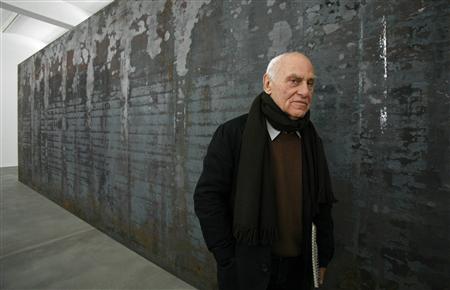
Artist Richard Serra poses for photographers beside one of his works entitled ‘Fernando Pessoa’ during the unveiling of his new exhibition at the Gagosian Gallery in London October 3, 2008 via Reuters

Richard Serra, widely regarded as the ‘greatest living sculpture’ has a two concurrent exhibitions at the Gagosian Galleries on Britannia Street and Davies Street in London. Simply titled, ‘Sculpture’, the Brittania Street exhibit displays three new large-scale steel installations and four smaller wall hanging pieces, while the Davies Street gallery houses new works on paper. This is the first time that Richard Serra has exhibited in London since Weight and Measure at Tate Gallery in 1992. The 70 year-old artist has not slowed down in the recent years with a critically acclaimed installation at the Grand Palais in Paris this summer, a “40 Years” retrospective at New York’s Museum of Modern Art in 2007, and the widely recognized “Matter of Time” installation at the Guggenheim Bilboa in 2005. The sculptures at the current Gagosian show weigh over 300 tons and will occupy the gallery space until December 20, 2008.

Interview with Richard Serra, Man of steel [GuardianUK]
–>
Serra Recalls 9/11, Shipyard as Steel Labyrinth Opens in London [Bloomberg]
–>
Richard Serra shows off his rings of steel [Economist]
–>
Serra brings giant steel sculptures to London [Reuters]
–>
Super slabs and steely nerves and Heavy metal: Richard Serra exhibition for London [GuardianUK]
–>
Richard Serra: Sculpture [Gagosian Gallery]

Previously:
–>
Go See: Richard Serra – Thinking on Your Feet [ArtObserved]

(more…)

AO On Site: Cecily Brown at Gagosian, New York City, Saturday, September 20, show on through October 25, 2008

Friday, September 26th, 2008


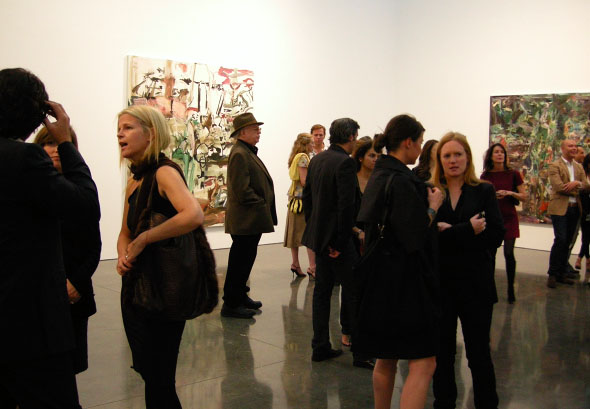
Yvonne Force Villareal from Art Production fund (left) and others attend the opening reception for Cecily Brown at Gagosian New York via Art Observed

Gagosian New York is currently showing a collection of new and recent work by British painter Cecily Brown. The exhibit, entitled Cecily Brown 2008, displays her signature style in which bold figures are covered in abstract layers. The displayed work mirrors Brown’s previous work in its attempt to expand abstract expressionism, combining the influence of Willem de Kooning with figurative influences Nicolas Poussin and Edouard Manet. The exhibit also includes a series of uncharacteristically small scale paintings which marks a unique transfiguration for the artist who is best known for her large-scale works. Art Observed was at the opening reception along artists John Currin, Francesco Clemente, and Hope Atherton, Art Production Fund’s Yvonne Force Villareal, Tim Hunt from the Warhol Foundation.

Cecily Brown Press Release [Gagosian]
Reading Between the Linens: Cecily Brown at Gagosian Gallery [NYSun]
Cecily Brown Exhibition
[NY Art Beat]
Galleries Awaken From Summer Slumber
[NYSun]

(more…)

Go See: Red October Chocolate Factory at Gagosian in Moscow, September 18 through October 25, 2008

Friday, September 19th, 2008


–>
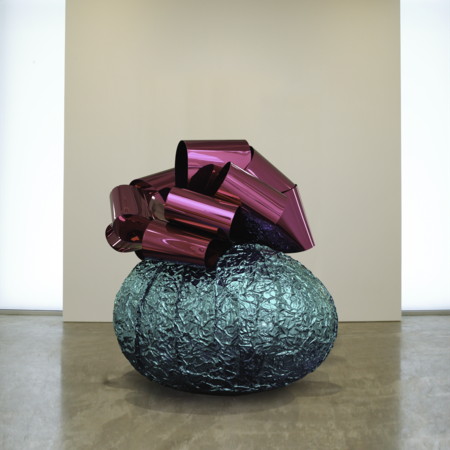
Baroque Egg with Bow
(2006), Jeff Koons via Gagosian

New York art magnate Larry Gagosian brings an eclectic mix of avant-garde art to Moscow in his new show, For What You Are about to Receive. Entitled in spirit of the Bolshevik revolution, “Red October” is the name given to the former chocolate factory in which Gagosian Gallery will showcase over 100 works by approximately 50 post-war artists. Never-seen works by Jeff Koons, Anish Kapoor, Cy Twombly, Richard Serra, and Edward Ruscha will be included in addition to works by Roy Lichtenstein, Alexander Calder, Alberto Giacometti, Takashi Murakami, Aaron Young, and Yayoi Kusama. A statement by the gallery maintains that the exhibition, “investigates the twin pillars of twentieth century art: the readymade and pure abstraction, reflecting on the sublime through a self-conscious engagement with material and process.” For What You Are about to Receive is Gagosian’s second showing in Moscow, following an auspicious exhibit at Barvikha Luxury Village one year earlier. The show also inaugurates “Red October” as a new contemporary arts center in Moscow, however, Gagosian denies inquiries about opening a permanent establishment in the city.

Gagosian Plans Moscow Show in Former Chocolate Factory [Artinfo]
–>
For What Your Are About to Receive
[Gagosian]
–>
Gagosian To Host Second Moscow
Exhibit [NYSun]
–>
Gagosian Gallery in Moscow
[Artnet]

(more…)

Don’t Miss the Opening: Taryn Simon’s ‘An American Index of the Hidden and Unfamiliar’ at Gagosian Gallery, Beverly Hills

Friday, September 12th, 2008


Contraband Room, United States Border and Customs Protection
via Wired

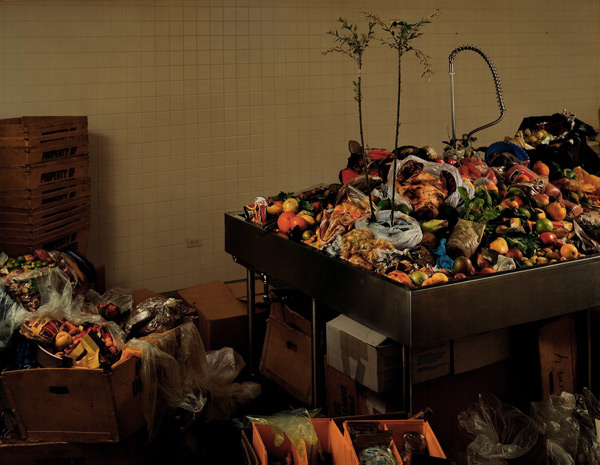
Opening September 13th, Taryn Simon unearths the unseen images behind America’s closed doors. Images of a cryopreservation unit in Clinton Township, Michigan; a nuclear waste encapsulation and storage facility in Southeastern Washington State; a mentally retarded white tiger in Eureka Springs, Arkansas; and a Braille copy of Playboy Magazine in New York City are just some of several vibrant recordings included in Simon’s calculated cross-country venture.  Referred to as “occult glamour” in her publication’s foreword, Simon’s photography is procured by a large format 4×5″ camera to take a single negative which mimics the formalized aesthetic of traditional portraiture.  At age 33, Simon has celebrated national and international success with previous exhibitions at The Whitney Museum of American Art, New York and Kunst-Werke Institute of Contemporary Art, Berlin among others.

Lens Crafters by Kathleen Kingsbury [TIME]
No More Secrets [The London Telegraph]
Access All Areas [Frieze]
Taryn Simon Official Website

(more…)

Go See: “Retrospective” group show at Gagosian, Chelsea, NY through August 22

Wednesday, July 23rd, 2008

Red, Andy Warhol, (1978) via Gagosian

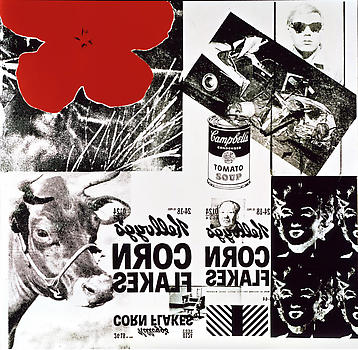
Gagosian’s spacious Chelsea gallery presents 13 contemporary artists in ‘Retrospective’: Chris Burden, Marcel Duchamp, Tom Friedman, Piero Golia, Douglas Gordon, Richard Hamilton, Jasper Johns, Roy Lichtenstein, Takashi Murakami, Piotr UklaÅ„ski, Andy Warhol, Martin Kippenberger, and Ed Ruscha. Keeping in company with several thematic group shows this summer, this one has been assembled by Andisheh Avini, Gagosian curator, and artist.

Press Release [Gagosian]
‘Retrospective’: Been There, Sold That [NYSun]
Some Shows For Escape, Some For Introspection [NYTimes]
View video of the Retrospective group show here [Gagosian]

(more…)

Go See: Lichtenstein at Gagosian, NY, through June 28

Tuesday, May 20th, 2008

Roy Lichtenstein via Gagosian Gallery

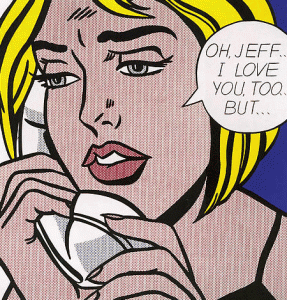
From May 12 through June, 28 Gagosian Gallery in New York is hosting the exhibition of Roy Lichtenstein, “Girls.” The works are a series of images of women, taken directly from newspaper and romance comic books from post-war in America.

Gagosian Gallery
–>
Roy Lichtenstein, “Girls”
[Time Out]
–>
Lichtenstein’s Primary Ladies [NY Sun]

(more…)

GO SEE: Anselm Kiefer at Gagosian, LA March 30 – April 27

Friday, April 11th, 2008


Palmsonntag via Gagosian

Gagosian Gallery in Los Angeles features the new exhibition of Anselm Kiefer in two parts from March 29 until April 26. It will be his first exhibition in Los Angeles in more than a decade. The Beverly Hills gallery will present recent paintings, sculptures, and innovative photo-collages.

Anselm Kiefer at Gagosian Gallery [Gagosian Gallery]
Anselm Kiefer’s exhibition [ArtDaily]

(more…)

Newslinks 03.09.08

Sunday, March 9th, 2008


–>
Gustav Klimnt, Beethoven Frieze via secession.at

Klimpt’s historic ‘Beethoven Frieze’ to be reconstructed at Tate Liverpool [NY Times]
–>
Old master stolen by Stasi (East German secret police) valued at $2 million [Bloomberg]
–>
The architectural intelligence of the New Museum
[Financial Times]
–>
Update: Goat farm video, other favorites, at Whitney Biennial [Bloomberg]
–>
Brooklyn and Manhattan street art gains fans, collectors [NY Times]
–>
A case against art for Trafalgar Square’s Fourth Plinth [Financial Times]
–>
Gagosian’s Uptown Gallery Expands, with a new director (former Picasso biographer) [Art Info]
–>

Bulgaria Summons National Security Council over New Strategy.

Sofia News Agency September 12, 2010 Bulgaria’s President Georgi Parvanov has summoned the National Security Council over the draft of a new National Security Strategy.

The meeting is scheduled for Friday, September 17, 2010, at 1:30 pm, the Presidency announced on Sunday. web site national security council

The meeting has only one issue on its agenda a discussion of the draft for Bulgaria’s National Security Strategy.

Interior Minister and Deputy PM Tsvetan Tsvetanov has been invited to report on this topic.

According to the National Security Council Act, the Council includes, in addition to the President, the Parliament Chair, the Prime Minister, the Ministers of Defense, Foreign Affairs, Interior, and Finance, the head of the State National Security Agency (DANS), the Head of Defense (i.e. formerly known as the head of the general staff of the army), and the chairs of all parliamentary groups. go to website national security council

Bulgaria’s President Parvanov and Defense Minister Anyu Angelov have been tangled in a conflict over the appointment of a new head of the Military Information Service, i.e. Bulgaria’s military intelligence. On Friday Bulgarian PM Borisov said he hoped the conflict will be resolved before the meeting of the National Security Council.A

Newslinks for 2.11.2008

Monday, February 11th, 2008


Tagged Murakami Billboard via Boing Boing

Murakami Billboard in Los Angeles tagged [Art Fag City] and subsequently kept by Murakami [Boing Boing]
Russian Art Prices continue to grow [FT]
London Auctions buoyed by Expressionists [NYSun]
Detailed Summary of LACMA and Eli Broad Controversy [NYT]
NYC Evening Museum Party Schedule [NYT]
Gagosian maintains Schnabel Oscar plans despite writers strike [NY Observer]
Proenza Schouler inspirated by Donald Judd on MARFA, Texas trip [Style]
Richter’s “Zwei Liebespaare” sells for £7.3M, exceeds expectations [Christies]
Art forced out of Britain by Tax Laws: 40% of work’s value [Times Online UK]
Auction houses are increasingly financiers versus exchange agents[Economist]

NEWSLINKS 2.8.08

Friday, February 8th, 2008


Kehinde Wiley’s St. Sebastian II (Columbus), 2006 via Columbus Museum of Art
Michael Jackson via MJsite

Michael Jackson planning collaboration with Kehinde Wiley?[PR Inside]
UK’s planned taxes on incoming art from non-domiciled residents could discourage wealthy donors and supporters [Financial Times]
London’s February auctions prove that despite shaky financial climate, demand is still high for Impressionist, Modern and Contemporary works [NYTimes]
Recap of Jeff Koons talk at the 92nd St. Y [Art Fag City]
Salander O’Reilly Gallery in NY goes bankrupt: Ownership of works held at gallery still yet to be determined [Bloomberg]
Ed Ruscha talks about new show “Ed Ruscha: Paintings” on view at Gagosian London [Gaurdian]
Banksy’s Kate Moss/ Marilyn Monroe portrait fetches $191,000 at Bonhams [Bloomberg]


GO SEE: ED RUSCHA AT GAGOSIAN GALLERY, LONDON, February 5 – March 15

Wednesday, February 6th, 2008


Ed Ruscha via US Department of Art & Technology

Ed Ruscha will exhibit five pairs of paintings at the Gagosian Gallery, Britannia Street in London from February 5 – March 15. Ruscha’s work often centers on ideas of American life and the urban landscape bringing issues of time, memory and perception into the forefront.
(more…)

NEWSLINKS 1.28.08

Monday, January 28th, 2008


–>
Former Dia Building via The Observer

Former Chelsea Dia Art Foundation building slated for apartment rentals and gallery space [The Observer]
–>
How to preserve Paul McCarthy’s chocolate Santa [C-Monster]
–>
Hudson Morgan covers Gagosian’s gallery festivities in Rome
[Men’s Vogue]
–>
Parisian home of Pierre-Auguste Renoir is for sale [The Wall Street Journal]
–>
The Times UK arts critic interviews Zhang Xiaogang [Times UK Online]
–>
Guardian Unlimited UK interviews Peter Doig [Guardian Unlimited]
–>
Suspect reports Saudi collector possibly behind Sao Paulo Picasso Theft [Art Forum]

Hastert Has Gall Bladder Surgery here gall bladder surgery

AP Online January 30, 2007 CHICAGO – Former House Speaker Dennis Hastert is recovering from surgery to remove his gall bladder, his office said Tuesday.

A short statement from the 65-year-old Republican’s office provided no details, and did not specify when the surgery took place, adding only that Hastert had the surgery at Rush University Medical Center in Chicago. It did not indicate whether he had been released.

A hospital spokesman could not immediately provide any information.

Hastert, who represents the 14th congressional district in Chicago’s western suburbs, is expected to make a full recovery and plans to resume his full schedule, the statement said.

Messages left for a Hastert spokesman were not immediately returned Tuesday afternoon.

Hastert was the longest-serving Republican speaker in history, holding the post from 1999 until earlier this month, when Democrats took control of the House. see here gall bladder surgery

Last July, Hastert spent several days in a suburban Maryland hospital after being treated for a skin infection.

Schnabel Show at Gagosian in Light of Oscar Buzz

Wednesday, January 23rd, 2008


–>
Julian Schnabel at Gagosian Gallery via Bloomberg.

The Gagosian Gallery will host an exhibit of large-scale digital paintings from the artist turned film director Julian Schnabel. The concept was conceived during the production of his latest film “The Diving Bell and The Butterfly”. The digital paintings are based on human X-rays that were scanned and enlarged on a canvas. The exhibit will begin on February 21st and will coincide with the Oscars scheduled for February 24th. The scheduling is not coincidental due to rumors that “The Diving Bell and The Butterfly” will be nominated for an Oscar.
–>

Gagosian gallery [Gagosian]
–>
Schnabel Show at Gagosian [Bloomberg]

Licensing Images for Use: The Royalty-Free Model.

Online September 1, 1998 | Berinstein, Paula A reader of my book, Finding Images Online, recently wrote to corn plain that a Web site I’d listed as royalty-free wasn’t free at all. The site’s owner was actually charging fees for images! I can understand the reader’s outrage. After all, “free” means “no charge,” or certainly ought to. Unfortunately, in the context of royalty-free, it doesn’t.

But royalty-free images are still well worth your attention. This column explains what royalty-free means and offers insight into how picture licensing works.

You may have purchased some of those nifty CD-ROM’s featuring royalty-free images or clip art for presentations, reports, and Web sites. Or you may have been tempted to. You usually can’t beat the prices, and while some pictures look canned many are attractive and can be used artistically. Such discs and similar online digital images are distributed under agreements that give the buyer more rights than with custom (one-of-a-kind) or stock photography (off-the-shelf pictures, charged for per use and by type of use). In fact, royalty-free licensing terms can appear so liberal that your rights as a buyer and publisher can seem unlimited-rights to use the image whenever, however, and wherever you like. However, such freedom is often as illusory as a free lunch. Royalty-free may also mean lower quality, non-exclusive rights to publish (which may not matter for your purpose), and some legal risk. This is not to say that royalty-free means “bad,” rather it’s a distinct business model appropriate for certain situati ons.

Disappointing? Sure. But when you consider what’s involved for the producers, sympathy is justified for creators and distributors. Comprehending licensing and fee issues requires familiarity with the image creation and distribution process, so let’s take a look at it. While this process somewhat resembles that for text, it involves more players and can be more complicated. Images involve different types of participants, and the economics of images diverge somewhat from those for text.

THE PLAYERS The participants affect the license acquisition process in two ways-cost and permissions. Creators and distributors want payment for their work, while models and trademark owners care about the use of their likeness and symbols and may reserve the right to grant permission. Even museums that own a depicted work get into the act. The more players, the more obstacles to obtaining a license. Fortunately, many vendors have streamlined the process by offering pre-cleared material, some of which falls in the category of “royalty-free.” The cooks contributing to the image broth are:

* Creator (photographer or artist) This person might be the rights holder, if only one exists. If the work was made for hire, the employer who commissioned the work holds the rights. It’s possible to have two creators-an artist and a photographer who snaps a picture of the artist’s work. The creator brings artistic skill, technical knowledge, and labor to the process and depends on fair payment for his or her efforts. Whether a photographer who takes a picture of an artistic work merits creator status depends on the individual case-the issue engenders much debate.

* Distributor (stock photography agency, library, photographer, museum, government agency, etc.) This entity may represent and collect royalties for the creator, may have purchased full rights to the work for a one-time fee to the creator, may commission works for hire, or may own the physical work but not sole rights to it. Distributors may also make public domain images available. Distributors must locate quality work, negotiate with creators, digitize and catalog images, administer sales and financial details, and so on. They expect fair compensation for all of this, even if only for costs incurred when duplicating and sending out public domain material. this web site public domain images

* Model (person in picture) Legal rights of privacy and publicity govern whether and how a person’s image can be used. In non-news photographs (news photos being those that educate or inform), depicted individuals can sue for invasion of privacy unless they’ve signed a model release waiving those rights. Famous people possess rights of publicity, which in certain circumstances let them control the use of their image. (Rights of privacy for public figures is one of the issues pervading the paparazzi hubbub.) A model may be paid for posing or may simply be concerned with how his or her likeness is used. The model’s pay does not enter into the image acquisition process, but his or her permission does. Creators and/or distributors often arrange for model releases, but buyers should be sure such releases exist and pay special attention to wording.

* Owner of trademarked property in the picture, or owner of the work of art depicted A photographer or a publisher can get into big trouble by, for example, snapping and distributing pictures of Coca Cola signs for non-news purposes. A property release protects the photographer and publisher from lawsuits. As with models, permission is the issue-not payment. Creators and/or distributors may or may not arrange for such permissions, so buyers need to follow up on this issue. In some cases, ownership of the item depicted, not trademarking, is the issue, as when a museum owns a work of art shown in a photograph.

THE ECONOMICS OF PHOTOGRAPHY You might be thinking that with all those cooks a-stirring, you’re going to have to pay through the nose to make sure each gets a fair cut. Not necessarily. What’s more likely than having to spend big bucks is that you’re going to spend some time tracking down rights-holders at various levels-but that depends on whom you purchase from.

The economics involved in image creation and distribution are changing. While photography has never been a career for the materialistic, mere survival is becoming even more difficult. To make money, a creator has to perform one or more of the following:

1. Do custom work for publications, advertising agencies, individuals, movie studios, etc. Custom work means one picture, one payment. Thus, a photographer must get good money for the job, lots of work, or both. Sometimes he can retain rights to the images so he can sell them elsewhere, and sometimes he can sell his out-takes, but often the commissioner desires exclusive rights. Fees for custom work vary. Both portrait and National Geographic photographers perform custom work.

2. Work on a payroll. Payroll photographers work on salary and retain no rights to their photographs.

3. Publish collections of his or her work in books, or perform fine-art photography. Neither of these options generates much income unless you’re Annie Liebovitz or team up with Madonna.

4. Do speculative work. Stock photography is almost always work done on spec. There are two types of stock photography-commercial and editorial. Commercial represents the market for advertising and promotional material, while editorial focuses on books, magazines, and educational materials. Commercial stock photography is a gamble–one requiring substantial time, investment, travel, and equipment. The way to make money is to offer works that will appeal to many people. In so doing, a photographer can sell the same work over and over, leveraging the labor and materials that went into its creation. The need to appeal to lots of people may sometimes, but not always, result in Muzak-like work.

5. Market his or her wares on the Web. This method bypasses employers and agencies and goes straight to buyers. However, as ONLINE readers know, maintaining an effective Web presence requires time, time, time.

To maximize income, not only can the photographer sell the same work to different people, but he can sell the same work more than once to the same person-for different uses. And he can charge more for uses that generate income for the buyer than for those that don’t. That’s why a picture that’s used for advertising costs more than one to be used in a non-profit organization’s newsletter.

However, whether the photographer or his representative charges for every separate use, or offers the buyer a one-time fee that covers multiple uses, depends on his business model. If he thinks he can get away with demanding payment for each distinct use, he’ll try that. If not, he may sell all rights for two to three times the price and be done with it. If he thinks such a practice will alienate buyers, he may opt for a more generous licensing model designed to attract more buyers. Or, if he’s going after a high-end market, he might set his prices high, target tightly, and not worry about a broad market made up of price-sensitive buyers. Many photographers mix and match business models.

Most photographers represent themselves (a practice that’s becoming more common thanks to the Web), while many contract with agencies that package, market, and distribute their work. It used to be that each sale by the agent resulted in a royalty for the photographer. With the advent of digital images, however, a new “clip art” model is emerging in which the CD-ROM publisher pays the photographer a one-time sum rather than a royalty each time someone licenses the picture. This model, which represents one definition of “royalty-free,” results in lower fees for buyers like you and me, but less income for the creator, unless the publisher aggressively markets the discs. Sometimes the photographer independently markets the same photos himself, leveraging his investment.

In addition to the one-shot, up-front fee, there are other definitions of royalty-free. Royalty-free may mean that no royalty is paid to the photographer if the buyer uses the picture in certain pre-defined ways. If the buyer wants to use a picture for some other purpose, a special higher license fee will apply, and the photographer receives a royalty. Royalty-free may also flat out mean the opposite. In some models, distributors of CD-ROMs pay photographers an up-front fee, then a royalty for each disc sold. (If my correspondent was confused before, let him try to figure all that out!) However, according to Rohn Engh, publisher of the industry newsletter Photo Stock Notes, the term “royalty-free” generally applies to the buyer, not the photographer. It means that the buyer doesn’t have to pay extra reuse royalties, as is the case with managed photos (those where usage is tracked). In other words, there are no more hoops to jump through as in traditional stock photography, where each use is negotiated separately.

WHAT DOES THIS MEAN FOR IMAGE BUYERS?

Why should you, the buyer, care about all this esoterica? Because it affects what you’ll pay, how you can use the images you purchase, and the quality of the images you acquire. It may also affect you legally. You should also be aware that you’re probably going to have to spend some money even to acquire public domain images, and I want you to know why.

Here are some cautions and truths about buying and using royalty-free images:

Caution: Royalty-free does not mean “no cost,” nor does it mean “public domain.” Truth: Royalty-free images generally carry reasonable prices. You can purchase a CD-ROM containing 100 images for anywhere from $35 to $250 per disc. Whether you find the $1.50 to $2.50 per image price reasonable, of course, depends on whether you use a substantial number of the images on the disc, or if those you do use are worth it for you. A single digital image may run you $10-$20 for low resolution (Publishers Depot charges $10 for a 300K file not for resale, PhotoDisc’s 600K 72dpi image costs $19.95), $70 for medium resolution (Publishers Depot charges $60 for a 12-18 megabyte file not for resale, PhotoDisc’s 10MB 300dpi image runs $69.95), or $130 for high resolution (PhotoDisc’s 28MB 300dpi image costs $129.95).

Caution: Royalty-free does not necessarily mean you can do anything you want with the picture. Check the license. You may be surprised to find that your purchase price affords you some rights, but not others. Double-check the model release if you plan to use the photo in a sensitive situation, such as drug abuse or mental retardation. Be wary of royalty-free companies with no track record. They may not possess the proper releases. (You may be able to identify such companies by looking at their packaging and advertising materials. According to Rohn Engh, established companies look it, “fly-by-nights” don’t.) Truth: Traditional stock agencies guarantee “managed rights” and exclusivity, but royalty-free agencies do not. Stock agencies track usage of their images to make sure your use doesn’t conflict with that of a competitor or other undesirable buyer. They will also, for a fee, guarantee that you are the only authorized user of a particular image and/or provide you with the photo’s history. web site public domain images

Caution: Royalty-free images from different vendors carry different rights. This is a real stinker, but not unfamiliar to those of us who deal with information vendors.

Truth: Royalty-free pricing depends on the quality, range, and breadth of images offered by the agency, and business model. Sometimes royalty-free images simply represent a different product line from traditional stock photos, not an inferior product. To check image quality, see if the specs tell what type of scanner has been used. Drum-scanned images usually represent higher technical quality than images produced with a flatbed scanner.

Caution: Royalty-free images claim to carry model releases, but you can still potentially violate a model’s rights if you use a picture in a negative or defamatory way.

Caution: Watch out for the term “moral rights” in image licenses. Even if you see no such terminology, be careful about using images of people in depictions of controversial issues like abortion and politics.

Truth: Despite the pitfalls, royalty-free agencies generally streamline the image licensing process for purchasers.

Caution: The quality of royalty-free images varies, just as does the quality of merchandise you buy in a discount store. (Discount merchandiser Sears sells great tools, does it not?) Caution: Don’t go by what customer service people tell you. Go by the printed license.

Truth: When you purchase photographs, don’t resent the money you are paying. Realize that you’re contributing to someone’s honest living.

Truth: Royalty-free can be fun. You can afford to spice up your presentations and promotional material, and you’ll have a ball exploring the offerings.

LOG ON TO IMAGES Now that you know a little about the ins and outs of royalty-free images, check out some of the great online resources listed in the sidebar with this column.

Finding Royalty-Free Images Paula Berinstein Here are some online resources for royalty-free images. Some offer single images, some CD-ROMs by theme, and others both. One last caveat–while most Web vendors make it clear where to find technical specs and ordering information, almost all hide their pricing well. Sometimes you have to go to the page for a particular CD to find the price. Sometimes the FAQ provides it. Almost never is the location logical, i.e., a link that says Pricing. I’m not sure why–their prices are nothing to be embarrassed about.

Berinstein, Paula

Newslinks for 12.14.2007

Friday, December 14th, 2007


“Athenian Moon Owl” by Joseph Beuys via Tate

More on Gagosian Opening Gallery in Rome [Artnet]
Even More on Gagosian in Rome [TAN]
Coverage of The Fanciest Sattelite Parties at Art Basel Miami Beach [NYT]
The Insider – Profile of Gallerist Melissa Bent [The Moment]
New MoMA Acquisitions Include Joseph Beuys Pieces [NYT]

Newslinks for 12.13.2007

Friday, December 14th, 2007


–>
Michael Craig-Martin, Self Portrait 1 via Bloomberg

Damien Hirst’s Mentor, Michael Craig-Martin, Makes a Comeback at Gagosian [Bloomberg]
–>
Richard Zeisler donates countless Masterpieces to Numerous American Art Institutions [NY Times]
–>
Hirst’s, “Mother and Child Divided” Sculpture, leaking in Oslo [FT]
–>
Species of Basel-ites per T Mag [T Magazine]
–>
Christie’s fails to hit their marks with Phillips Family Collection in London [Bloomberg]

Groupon and McClatchy Interactive Form National Partnership. go to web site groupon las vegas

Food & Beverage Close-Up July 2, 2010 Groupon announced that it has signed a national agreement with The McClatchy Company to distribute exclusive content to McClatchy’s websites located in 28 U.S. markets.

Groupon is a shopping website that offers daily deals on local goods, services and cultural events across the U.S., Canada, Europe and Latin America. The McClatchy Company is the third-largest newspaper company in the United States and owns and operates The Miami Herald, The Sacramento Bee, the Fort Worth Star-Telegram, The Kansas City Star, The Charlotte Observer, and The (Raleigh) News & Observer among others.

The groups said that visitors to McClatchy websites will see exclusive Groupon deals not available on Groupon.com. Groupon will broker each deal with its customary quality, editorial style and high standards of service. Daily Groupon deals will launch first in the Sacramento and Kansas City regions with other sites following over the next few months. grouponlasvegasnow.com groupon las vegas

For McClatchy, the agreement provides a key component in a local marketplace initiative designed to bring together consumers looking for bargains with merchants seeking to increase their sales.

For Groupon the agreement is part of a larger initiative to offer a new, incremental revenue stream to major publishers. According to Sean Smyth, Groupon’s VP of Business Development, Groupon enables publishers to seize consumer interest and generate buzz in their local markets by presenting readers with high-value, unique local market experiences.

“Groupon has pioneered and perfected the daily deal structure in markets of all sizes across the globe,” said Smyth. “As leaders and innovators in the space we continue to ask ourselves what’s next. Providing merchants with major alternative channels to run deals is vital. McClatchy is an ideal partnership that blends our respective strengths to provide consumers with unbeatable savings on great experiences in their local markets.” ((Comments on this story may be sent to newsdesk@closeupmedia.com))

Newslinks for 12.10.07

Monday, December 10th, 2007


Rubell Family Collection booth at Art Basel Miami Beach
Photo by Charlotte Southern via Bloomberg

Collector’s Guide 2008 [Forbes]
Who Bought What at Basel [NYMag]
New York Galleries Plan to Open Sundays [NYMag]
DIA sells 22nd Street building for $38.5 Million [ArtsJournal]
Art Basel considers Branching out to Beijing [FT]
Kinky Puppets to Basquiat, Miami Fair Staged Exhilarating Show [Bloomberg]
High Prices, Robust Sales, Hangers-On Dominate Miami Art Fair
[Bloomberg]
C-Monster Finds Echoes of Neckface in Artwork at Basel Miami [C-Monster]
Art Basel Diary [Radar via Gawker]
Video Footage of Art Basel Miami [NYTimes via Portfolio]
Gagosian May Open Office in China [NYMag via Portfolio]
Chelsea During Art Basel Miami Beach [Portfolio]

Newslinks for 12.7.07

Friday, December 7th, 2007


Michael Craig-Martin, Hearing Things, 2003 via Tate Modern

Christie’s Sale of Rubens, Old Masters, Shows Guarantee Risk [Bloomberg]
Craig-Martin, Damien Hirst’s Mentor, Makes Comeback at age 66 with Show at Gagosian, London [Bloomberg]
Guide to Art Fair Stereotypes [T]

Newslinks for 12.5.2007

Wednesday, December 5th, 2007


Tank Inspired Bronze wins Inaugural Kandinksy Prize for Russian Contemporary Art [Bloomberg]
Gagosian’s Take on the Russian Art Scene [Men’s Vogue]
Britain to invest $100 Million into Tate Organization [Xinhuanet]
LA Contemporary Art Fair to debut January 2008 [Espaces]
Gap Founder to Open Contemporary Art Museum in San Francisco’s Presidio [SF Chronicle]