


Emerging from the Young British Artists movement of the 1990s, Tracey Emin became one of the defining figures of contemporary British art. Known for her unwavering emotional candour and her ability to collapse institutional distinctions, her early work gained her a good amount of infamy and criticism. She has refused to slot neatly into the art-world ever since.
Raised in Margate, a location that continues to influence her practice, Emin transformed experiences of sexuality, grief, trauma and intimacy into her artistic language. A Second Life places a renewed emphasis on painting as the backbone of her career, positioning the recent works produced in the aftermath of bladder cancer treatment as central to this.
A Second Life is the condition: a title shaped by her illness, subsequent recovery and trauma. It evokes Yeats’ The Second Coming, in name and themes, yet remains painfully grounded in the material. Emin situates us behind the curtain of her experience, but still we are not intruding. In this, she is rejecting the “dignified silence” bestowed on “women’s issues” and lays her rawness bare.
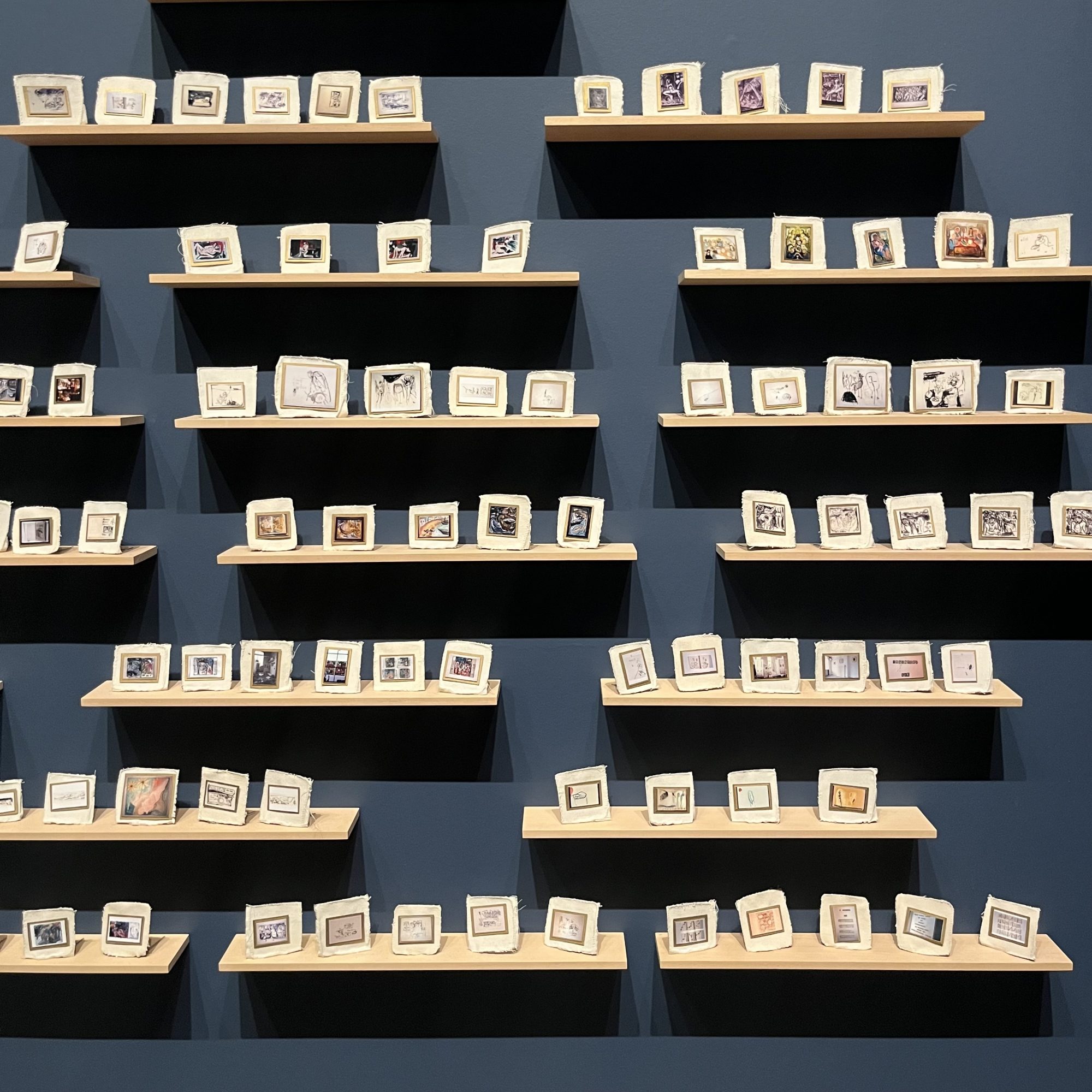
The exhibition opens with My Major Retrospective II, a series of 180 tiny photographs mounted onto stitched fabric. It is the second version of a work first shown in Emin’s debut solo exhibition at White Cube in 1993–1994; following an abortion in the 1990s, she destroyed many of the images from the original installation. The choice feels intentional, situating viewers at the beginning of her career while positioning painting as a defining, though often overlooked, medium within her practice.
From here, the exhibition moves into How It Feels (1996), the 22-minute video in which Emin recounts her experience of a traumatic abortion while standing outside the church that once housed her doctor’s clinic. Dressed in a pinstriped suit jacket and dark sunglasses, Emin is direct while conversing on themes such as class, power and institutional neglect. The video functions as an accusation, exposing the institutionalised silences that surround a woman’s pain.
The exhibition’s later rooms centre around large-scale paintings produced following Emin’s bladder cancer diagnosis, extending concerns already visible in her recent White Cube exhibition I Followed You to the End (2024). The paintings appear haunted; the smeared surfaces feel saturated with blood, exhaustion and bodily rupture, while contorted figures verge on disintegration. There is little refuge within these final sections, which emerge as a culmination of Emin’s sustained confrontation with female pain.
It is here that My Bed (1998) reappears, its starkness no longer functioning through shock alone, but as an intimate document of psychological collapse; the work becomes absorbed into the wider logic of Emin’s artistic language.
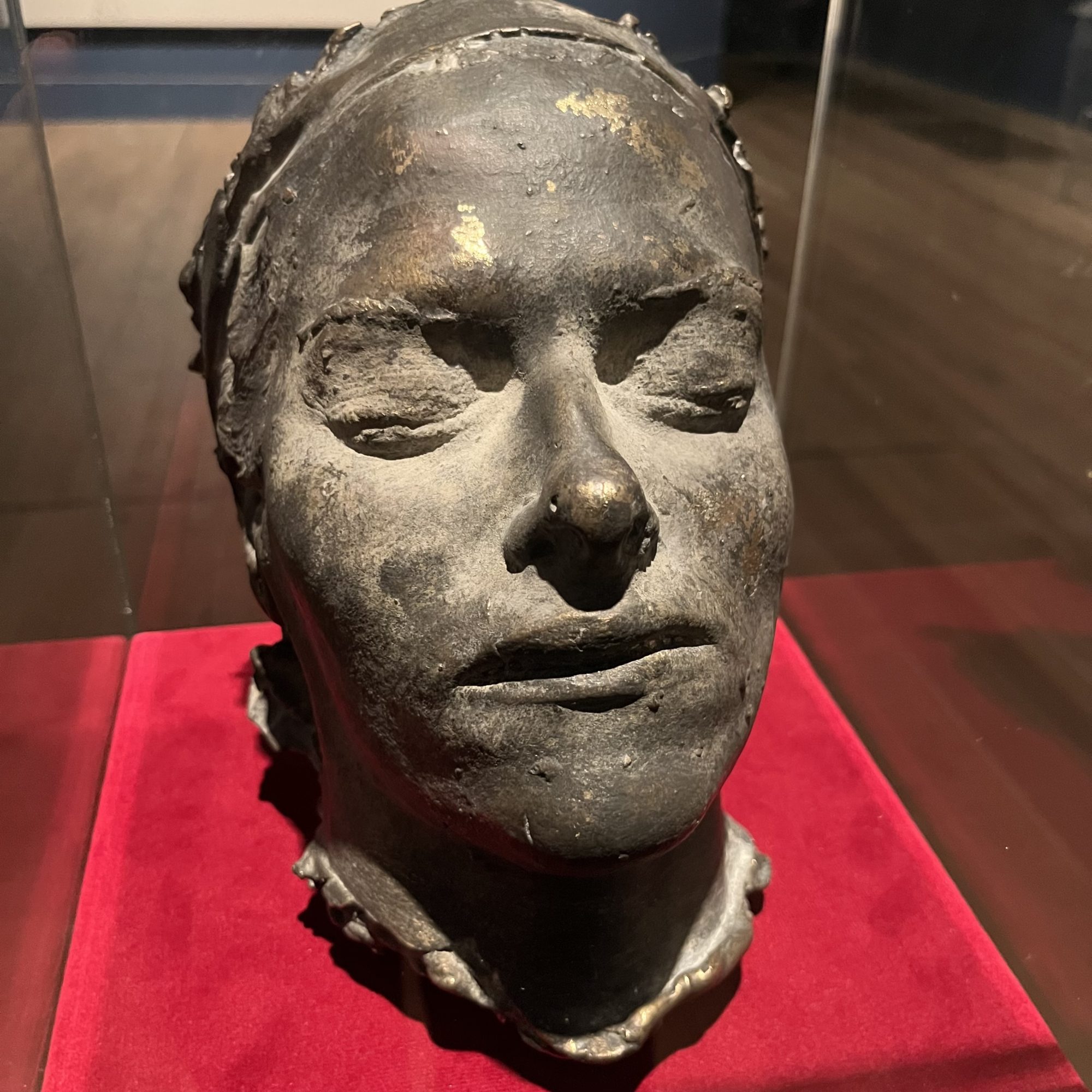
To close, Emin’s “death mask” sits spectral within its display case, backed by the 2023 painting I Watched Myself Die Then Come Alive; it is a resolution that feels devotional, a beacon of her endurance.
Yet still, after all this intimacy, the audience may leave feeling as though they have intruded. And perhaps it is precisely within this discomfort that we will find the point.
For more information please visit the exhibition page on the Tate Modern site.
All images courtesy of Art observed.
~ J. Gataaura
Pages: 1 2