–>
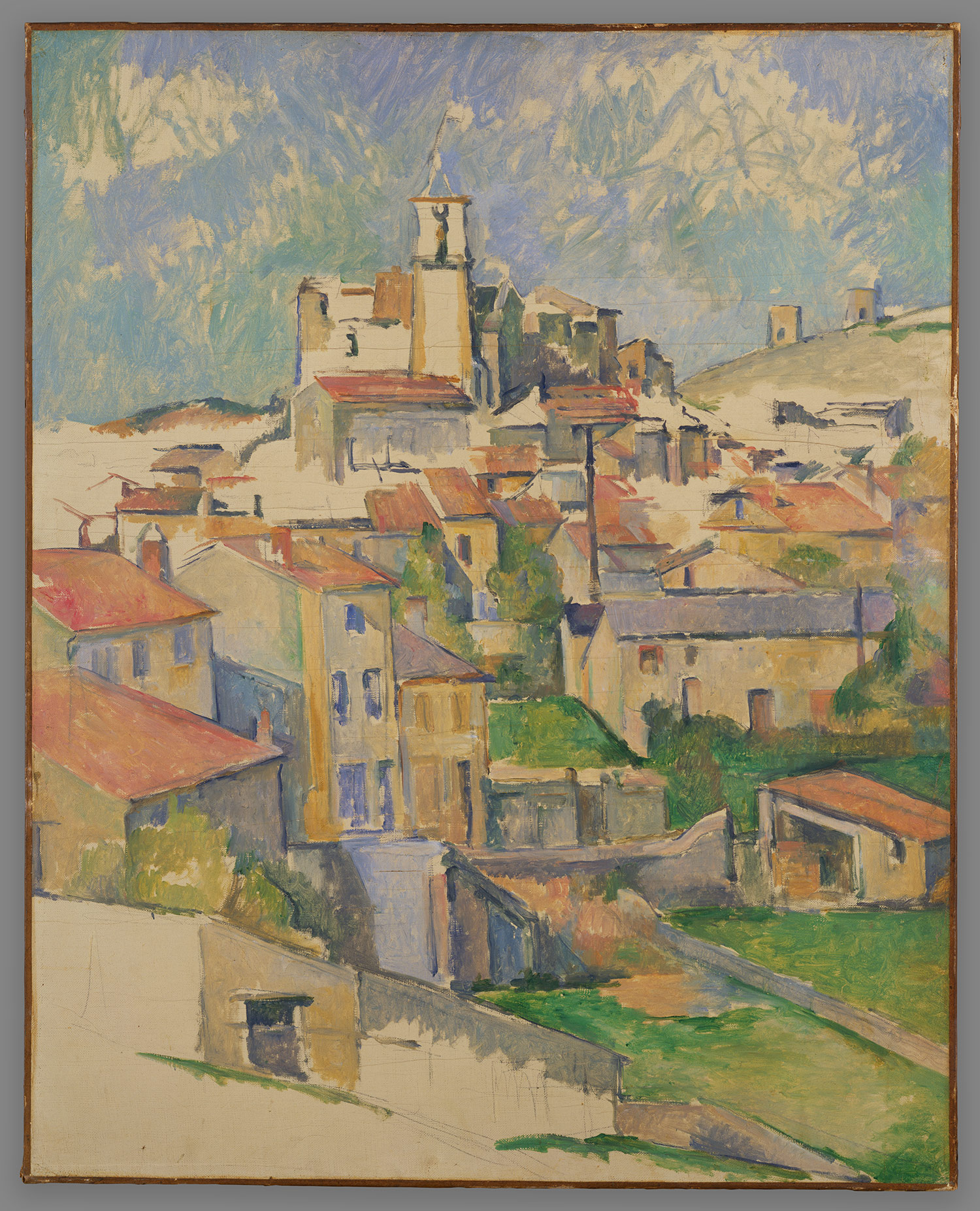
Paul Cézanne, “Gardanne (vue verticale)” (1886), showing as part of “Picasso/Cézanne” at Musée Granet. Via the Metropolitan Museum of Art.
Showing at Musée Granet are paintings by Picasso and Cézanne. Organized in collaboration with the Communauté du pays d’Aix and the Réunion des Musées Naitonaux, the show comprises more than a hundred paintings, drawings, watercolors, engravings, and sculptures. The exhibition closes on September 27.
Related links:
–>
Musée Granet – Aix-en-Provence
–>
Granet Museum Opens Exhibition Focusing on Subtle Links Between Picasso and Cézanne [Artdaily]
–>
Pablo Picasso’s Château de Vauvenargues [The Telegraph]
–>
Summer of Picasso [Wall Street Journal]
–>
Picasso’s “Le village de Vauvenargues” (1959), showing as part of “Picasso/Cézanne” at Musée Granet. Via atelier
More images and story after the jump…
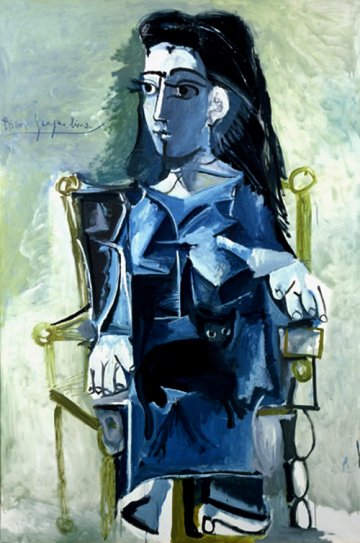
“Picasso/Cézanne” examines the extent to which the former was influenced by the latter. Accordingly, it is divided into four sections that map out Picasso’s evolution as an artist. The first, “Picasso looks at Cézanne,” analyzes the years between 1900 and 1917, during which Picasso developed a Cezannian Cubism — new methods and techniques of experimentation that Picasso derived from his study of Cézanne. The second, “Picasso collects Cézanne,” corresponds to the years during which Picasso’s growing collection of artwork revolved around his Cézanne masterpieces. “Shared themes, objects, forms, and features,” the third section of the show, houses the works into which Picasso began to interject forms used by Cézanne, including still-life with fruit, men smoking, women in armchairs, and more. Finally, the exhibition offers a peek into that time when “Picasso approaches Cézanne,” the significant years between 1959 and 1961 that Picasso spent painting in the castle of Vauvenargues, which is open to the public to complement the exhibition.
–>
Paul Cézanne, “Fruits, serviettes et boîte à lait” (c. 1880), at Musée Granet. Via Artdaily.
–>
Picasso’s “La Desserte” (1901), courtesy of the gallery.
–>
Cézanne, “Portrait de Gustave Geffroy” (1895-96), at Musée Granet. Via Pepperell.
–>
Picasso, “Buste de la fermiére” (1908), at Musée Granet. Via Wall Street Journal.
The “father of modern art,” Paul Cézanne is often credited with the beginnings of a transition between impressionism and cubism. Matisse and Picasso are said to have called him “the father of us all.” Picasso certainly studied Cézanne’s work to build his own technique, and Musée Granet explores that interaction of artist. “I’ll say I know Cézanne!” Picasso said. “He was my one and only master! Of course I have looked at his paintings… I have spent years studying them…”
–>
Cézanne, “Arlequin” (1888-90), at Musée Granet. Via expo-cézanne.
–>
Picasso, “Arlequin” (1917), at Musée Granet. Via Wall Street Journal.
–>
Cézanne, “Baigneuses” (c. 1890), at Musée Granet. Via Libération.
–>
Picasso, “Baigneuse” (1961), courtesy of the gallery.
–>
Cézanne, “Madame Cézanne en robe rayée” (1883-85), courtesy of the gallery.
–>
Picasso, “Jacqueline assise dans un fauteuil” (1964), at Musée Granet. Via egodesign.
–>
Cézanne, “L’homme à la pipe” (c. 1896), via The Telegraph.
–>
Picasso, “Le Fumeur” (1971), at Musée Granet.
– R. Fogel
Alexandria The following a …
The Washington Post May 30, 2002 The following are among crime reports received recently by the Alexandria Police Department. For further information, call 703-838- 4636.
THEFTS/BREAK-INS KING ST. 700 block, 8:30 p.m. May 15 to 12:30 a.m. May 16. A laptop computer was stolen from a business.
MOTOR VEHICLE THEFTS DUKE ST., 5300 block, 9 p.m. May 19 to 8 a.m. May 20. A red 2001 Honda CBR-600 motorcycle was stolen.
DUKE ST., 5300 block, 9:30 p.m. May 19 to 8 a.m. May 20. A yellow 2000 Ducati motorcycle was stolen.
FILLMORE AVE., 5000 block, 8:30 a.m. May 21 to 7:45 a.m. May 22. A dark green 1996 Honda Accord was stolen.
STRUTFIELD LANE, 4500 block, 8 p.m. May 15 to 6 p.m. May 16. A gold 1994 Dodge Intrepid was stolen.
VAN DORN ST. N., 700 block, 1:30 to 3:30 p.m. May 20. A red 2001 Yamaha motorcycle was stolen.
WHITING ST. S., 100 block, 6 p.m. May 19 to 11 a.m. May 20. A white 1995 Dodge Ram van was stolen.
The following were among crime reports received recently by the Arlington County Police Department. For further information, call 703- 228-4050.
REWARDS FOR INFORMATION Arlington County Crime Solvers, a nonprofit community organization, will pay up to $1,000 for information leading to an arrest in connection with these and any other felonies. Call the 24- hour hot line at 703-522-8477. Callers may remain anonymous. website 2000 jeep grand cherokee
ASSAULTS CULPEPER ST. S., 2200 block, 2:07 a.m. May 18. A male hit a police officer in the face as the officer tried to speak with him about a reported disturbance. The assailant then struggled with officers as they tried to handcuff him. One officer rolled down a flight of stairs with the male, who then reportedly bit the officer several times on the arm. The two officers were treated at a hospital. The assailant, who was also treated for injuries, was arrested and charged with two counts of maliciously wounding a police officer.
ATTEMPTED KIDNAPPINGS EIGHTH ST. S., 4000 block, 8:50 a.m. May 17. A male driving a red Volkswagen asked a 15-year-old girl, who was walking to school, to get into his car. She refused. The motorist drove away, then turned around and ordered the girl to get into the vehicle. When the victim told him she was with a schoolmate and an adult, he drove away. in our site 2000 jeep grand cherokee
ROBBERIES FOURTH ST. N., 4300 block, 12:52 a.m. May 19. Four men punched a 56-year-old man, hit him with a metal bar and searched his pockets. The victim shouted, and the assailants fled empty-handed.
THEFTS/BREAK-INS ARLINGTON BLVD. N., 2600 block, 7:30 a.m. to 3:50 p.m. May 20. A camera was stolen from an apartment entered by kicking in a front door. A second apartment was also entered by kicking in a front door. Nothing was reported missing.
ARLINGTON BLVD. N., 4300 block, 9:15 a.m. May 19. A man was found sleeping on a sofa in a church library. A rock and two broken window panes were later discovered in the library. Nothing was reported missing.
ARLINGTON RIDGE RD. S., 1500 block. License plates were stolen from a vehicle.
BEDFORD ST. N., 100 block. A license plate was stolen from a vehicle.
DANIEL ST. N., 800 block, 5:10 to 5:50 p.m. May 20. A residence was entered through a basement window, and drawers in a bedroom were searched. Nothing was reported missing.
FENWICK ST. N., 1-100 block, 10:25 to 10:45 a.m. May 20. Computers, an MP3 player and a jewelry box were taken from an apartment entered by kicking in a front door. The home was ransacked. A vacant apartment in the same building was also entered by kicking in a front door. Nothing was reported missing.
YORKTOWN BLVD. N., 4800 block, 8:30 p.m. May 19. Unsuccessful attempts were made to enter a residence by breaking a front-door window pane and damaging a side screen door. A black metal bar was found next to the door.
EIGHTH RD. S., 5100 block, 1 p.m. May 16 to 9:15 p.m. May 18. A TV and jewelry were stolen from a residence entered by cutting a screen and opening a window.
MOTOR VEHICLE THEFTS BARTON ST. N., 1200 block. A light blue 1996 Nissan Sentra was stolen.
COLUMBIA PIKE, S., 5500 block. A red 1991 Honda Accord was stolen.
GLEBE RD. S., 2900 block. A red and gray 2000 Jeep Grand Cherokee was stolen.
KEY BLVD. N., 2000 block. A dark blue 1991 Honda Accord was stolen.
WILSON BLVD. N., 4000 block. A dark blue 1999 Toyota Camry was stolen.
10TH ST. S., 5000 block. A beige 1994 Honda Accord was stolen.
— Sarah Lane
This entry was posted
on Sunday, July 26th, 2009 at 11:10 am and is filed under Go See.
You can follow any responses to this entry through the RSS 2.0 feed.
Both comments and pings are currently closed.