
Global contemporary art events and news observed from New York City. Suggestion? Email us.

Glenn Lowry Interviewed by Art Newspaper

Wednesday, April 29th, 2015

Against the backdrop of critical backlash over MoMA’s recent Björk exhibition, The Art Newspaper sits down with Glenn Lowry for a frank and lengthy interview, charting his vision for the museum, and his acknowledgement of issues of overcrowding often leveled on the museum.  “My background is as a historian of Islamic art, so of course I lament the loss of solitude,” Lowry says. “But I am also a pragmatist; solitude is probably gone regardless. Had our attendance grown by 25% or 30%, which is what we figured it would with the 2004 expansion, you would still have had those moments. Will the [next] expansion solve all those problems? No, it’s not going to solve everything, but it will enable us to show a great deal more of our collection and in many different ways.” (more…)
Will Self Challenges the New Tate Modern Expansion in The Guardian

Monday, November 24th, 2014

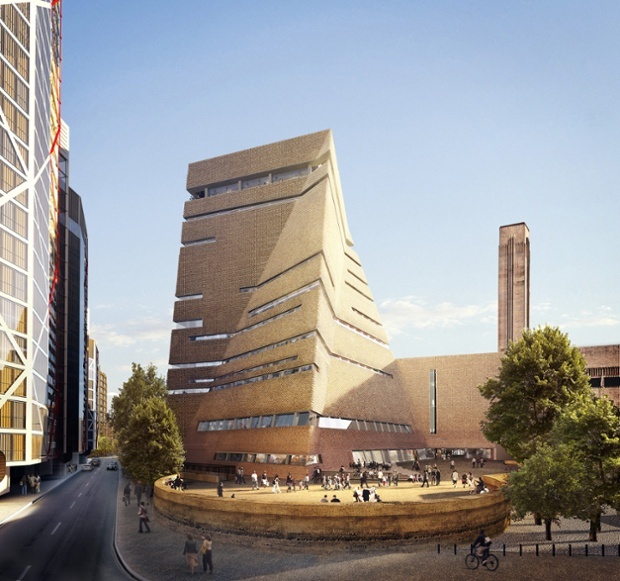
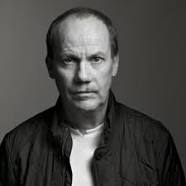
As construction gets underway for the new Tate Modern extension, Guardian writer Well Self asks if the new renovations to the museum is just another step in the ongoing transformation of the museum as an extension of influence by the hyper wealthy, and an indication of the financial impact the contemporary market has made on the museum’s curatorial practices. “The new Tate Modern will not be an art gallery per se, but a sort of life-size model of what an art gallery might be should our culture have need of one,” he writes.  “Since it doesn’t, but rather has a requirement for visitor attractions that reify the ever‑widening gulf between haves and have-nots, I’m absolutely certain it will prove an outrageous success” (more…)

Richard Prince Publishes Thoughts on the Auction Market

Wednesday, May 28th, 2014

Richard Prince has published a reflection on the state of the art auction market his website this month, noting the dissonance between his work and the astronomical sums paid on the secondary market for them, as well as his own feeling of disconnection from the works as they sell.  “The auctions might think they have something to do with what I make, but they don’t,” he says. “What they have is what they’ve always had… themselves.” (more…)

Rothko Vandal Publishes Op-Ed in The Guardian Apologizing, Restating his Principles

Friday, May 16th, 2014

Vladimir Umanets, the 2012 vandal of Mark Rothko’s mural Black on Maroon, has published an editorial in The Guardian, expressing regret for his actions but remaining committed to the principles of his conceptual practice Yellowism.  “It doesn’t matter how important one believes one’s ideas to be, nor how genuine one’s intentions are,” he writes.  “It is unacceptable to deface someone’s property without permission. What I did was selfish. My act has hurt many art enthusiasts and I deeply regret it.” (more…)

James Franco Weighs in on Shia LeBeouf’s Public Performance

Friday, February 21st, 2014

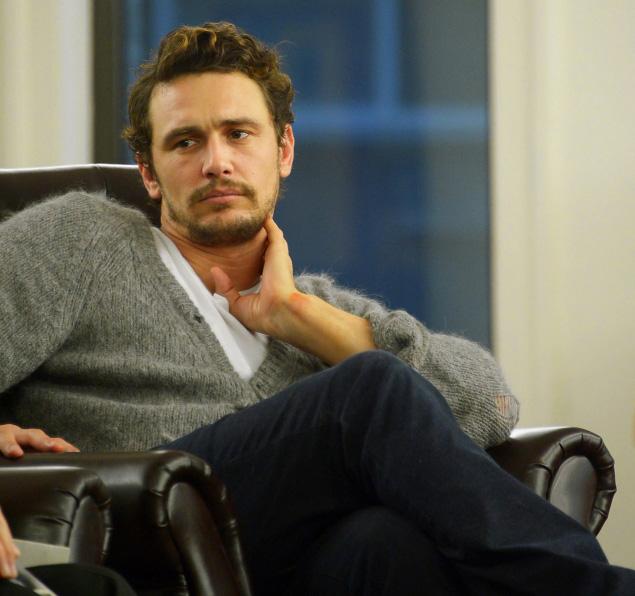
James Franco has written an op-ed piece in the New York Times this week, examining actor Shia Lebeouf’s recent performance piece in Los Angeles.  Noting LeBeouf’s performance as a potential attempt to take back his public persona from the entertainment industry.  “Any artist, regardless of his field, can experience distance between his true self and his public persona,” he writes. “But because film actors typically experience fame in greater measure, our personas can feel at the mercy of forces far beyond our control. Our rebellion against the hand that feeds us can instigate a frenzy of commentary that sets in motion a feedback loop: acting out, followed by negative publicity, followed by acting out in response to that publicity, followed by more publicity, and so on.” (more…)

Recent Forgeries Silence Opinions of Painting Experts

Tuesday, October 15th, 2013

The recent surge of art forgeries and lawsuits over the attribution of works has had a chilling effect on the willingness of experts to offer their opinions on the authenticity of disputed works.  Cases like the recent Knoedler Gallery forgery sales and the following lawsuit by gallerist Ann Freedman have kept experts from vocally speaking out on the authenticity of work, even if their opinion may prevent a forged sale.  “If people were able to exchange opinions freely, cases like this would come to light much more quickly and you wouldn’t have a magnitude like this. Word would get out.”  Says Jack Flam, the president of Robert Motherwell’s Dedalus Foundation. (more…)

Grayson Perry Calls Contemporary Art “Rubbish”

Saturday, September 21st, 2013

Speaking on the state of contemporary art, Grayson Perry has called the majority of contemporary art “rubbish.”  Speaking during the inaugural Radio 4 Reith Lecture, Perry began by discussing his own appeal as an artist.  “Although we live in an era where anything can be art, not everything is art.  I think the art world is happy to dig down into the lower regions of society for a bit of gritty reality, but what it’s frightened of is the middle classes with good taste, often. Maybe I appeal to too many of those people.”  He continued:  “At any one moment most of the art being made is awful.” (more…)

Moscow Biennale Curator Speaks on Russian Arts in Face of Government Crackdown

Monday, September 9th, 2013

Moscow Biennale Curator Catherine de Zegher has spoken on the current calls for a boycott of Russian art and art events, stating that she has no intent on a boycott or cancellation of the event to protest the current state of civil rights for Russian LGBT citizens.  “I’m not a big believer in provocation,” De Zegher says. “Art that is very provocative is like fast food almost. It flares up, then it’s finished. Of course I do believe in activist gestures, and movement and action, but I think art works in a different way.” (more…)

Museums Embrace the Experiential

Monday, August 12th, 2013

A recent article in the New York Times investigates the growing trend towards museum exhibitions and spaces that prioritize experience and interaction over the quiet reflection and observation of more traditional art environments.  Exploring various approaches, including interactive installations, games, parties, interactive displays and social networking, museums are seeking ways to reposition themselves in a broader creative economy. (more…)

New Study Paints an Intriguing Picture of Good vs. Bad Art

Thursday, August 8th, 2013

A report on behavioral economics in art, as summarized in The Economist, examines the link between the experience of viewing art, and its effects on the viewer’s desire to see more art.  Through repeated exposure in a blind study, subjects were found to grow more partial to works they had repeated experience with, particularly with works that were considered high quality versus works that are generally regarded as trite or “poor” (in this case, Thomas Kinkade). (more…)