Global contemporary art events and news observed from New York City. Suggestion? Email us.

Scientists Find Lead Pigment as Cause of Fading Van Gogh Works

Friday, March 6th, 2015

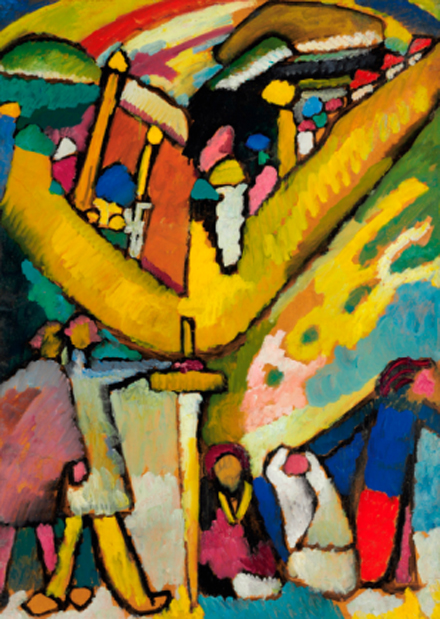
A recent chemistry study by scientists at the University of Antwerp has uncovered evidence showing that the paintings of Vincent Van Gogh have slowly but surely been changing colors over the course of a century due to a rare lead pigment used for red paints that gradually fades when exposed to light.  “Normally, the idea is these paintings are there for a hundred years, or five hundred years, and they’re static – nothing really changes,” says researcher Koen Janssens. “But the opposite is actually true when you look in detail.” (more…)

New York – Diana Thater: “Science, Fiction” at David Zwirner Through February 21st, 2015

Saturday, January 24th, 2015

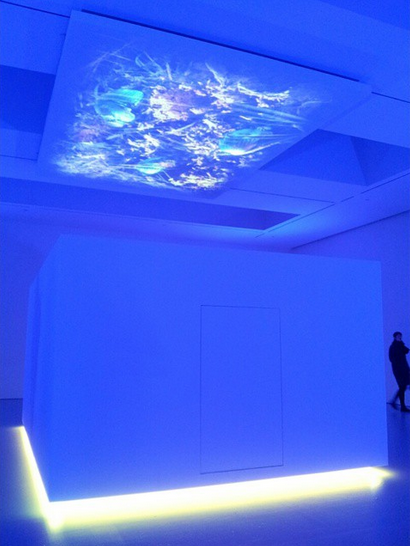
Diana Thater, Science, Fiction (2014), via Art Observed

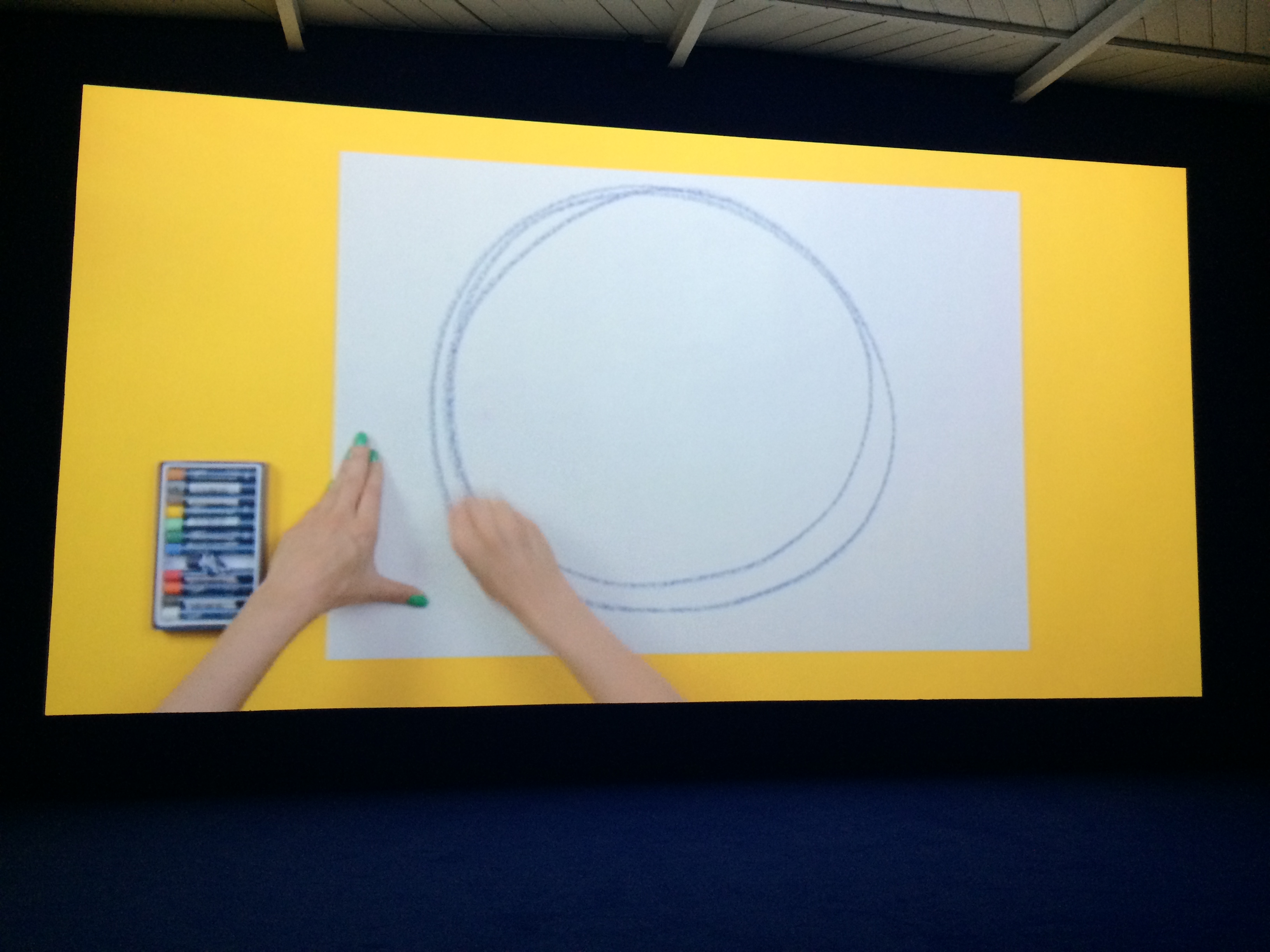
Diana Thater’s new exhibition on view at David Zwirner’s 19th Street Exhibition is an exercise in restraint.  Consisting of a pair of video compositions and a monumental structure in a light-saturated installation piece, the artist moves towards an experience of space, both in an immediate and more figurative sense, that engages the magnitude of human experience on both macro and micro scales. (more…)

New York – Hiroshi Sugimoto: “Still Life” at Pace, through June 28th 2014

Thursday, June 26th, 2014


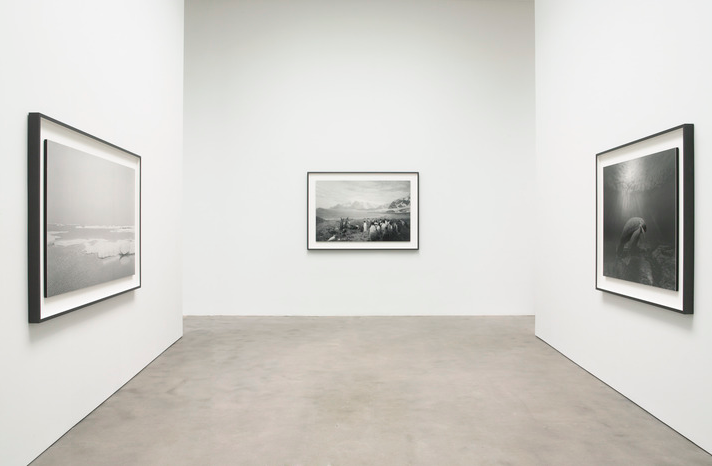
Hiroshi Sugimoto, Manatee (1994), All images courtesy Pace Gallery

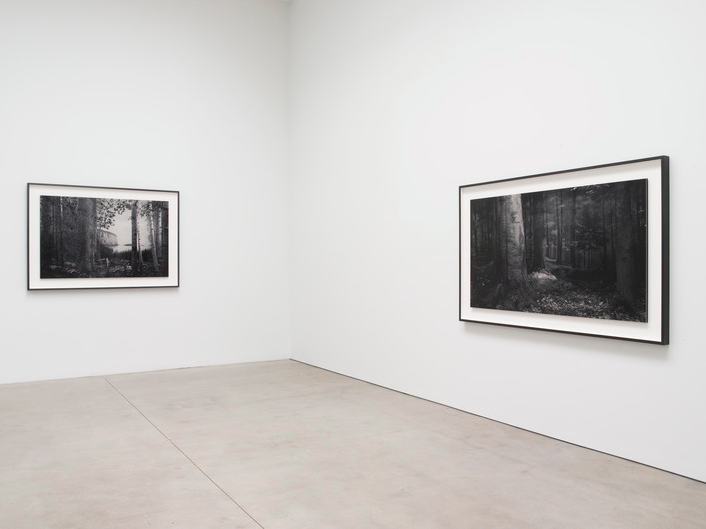
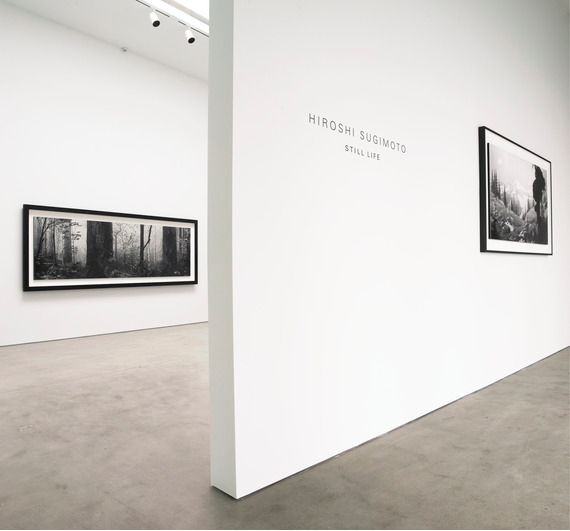
On view from May 9th until June 28th at Pace New York is an exhibition of seventeen large-format photographs by Japanese artist Hiroshi Sugimoto from his most recent body of work. Entitled Still Life, the display gives a prime example of Sugimoto’s mastery of formally composed and exacting photography and printing processes.  Sugimoto has worked in a variety of approaches to still-life and architectural photography over the past years including old American movie palaces, drive-ins, and other structured works. He also formed an architectural practice himself in Tokyo, after receiving many requests to design structures such as restaurants and art museums.


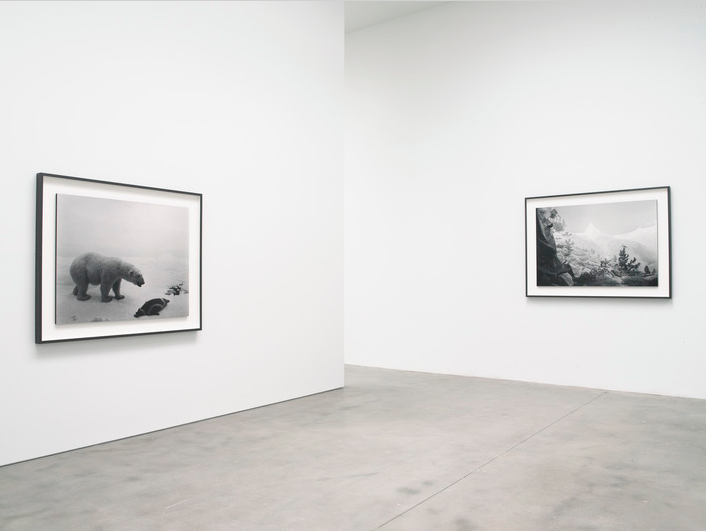
Hiroshi Sugimoto, Still Life (Installation View)

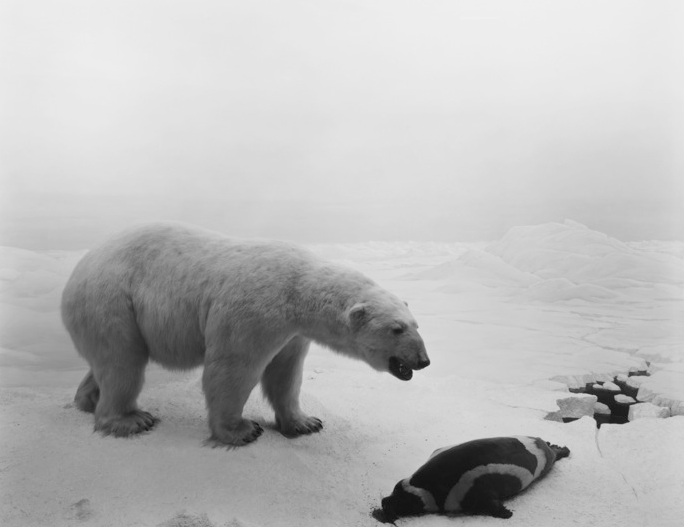
Sugimoto compares the medium of photography as a record-making process to the fossilization process in nature – a moment suspended in time. His Polar Bear (1976) was the first photograph from his Diorama series, and many of the earlier silver gelatin prints also depict animals.  The works are surreal, black and white images of dioramas he photographed in natural history museums, playing on the distorted perspective of “nature” that humans believe to be true. Although the photographs appear to be realistic nature landscapes, they are actually artifically constructed, staged recreations of natural environments on display in museums. Many of the works are representations of animals, but no humans appear in any of the images – in a way, depicting a divide between humans and the natural environment.


Hiroshi Sugimoto, Still Life (Installation View)

The result of Sugimoto’s pieces is at times quite jarring, particularly in works where the separation between recreated environment and museum space suddenly comes into focus.  In several scenes, a notable line can be detected where a museum diorama gives way to painted display, and animals suspended in mid-action are placed in close proximity to a painted counterpart.  The result is a sudden realization of the meticulous placement of each object in the image, not by Sugimoto, but rather the institution which is striving to frame the diorama as a moment of authentic animal behavior.  The diorama, in turn, becomes as much an aesthetic project as it is an archival one, turning the intersection of scientific research and creative impulses into a definitive focal point.


Hiroshi Sugimoto, Still Life (Installation View)

The exhibition Hiroshi Sugimoto: Still Life is accompanied by a fully illustrated catalogue,Hiroshi Sugimoto: Dioramas, and the display will remain on view at Pace New York through June 28, 2014.


Hiroshi Sugimoto, Polar Bear (1976)


Hiroshi Sugimoto, Still Life (Installation View)

—E. Baker

Related Links:
Exhibition Page [Pace]

New Study Shows How Naturally the Brain is Made to Perceive, Enjoy Art

Thursday, June 19th, 2014

A Wall Street Journal article notes a recent study showing that art stimulates areas of the brain involved in vision, pleasure, memory, recognition and emotions, evidence of how strongly and naturally inclined the brain is towards enjoying art.   (more…)

Replica of Van Gogh’s Ear Created from Relative’s Cells

Friday, June 6th, 2014

In a desire to combine art and science, artist Diemut Strebe has created a copy of Vincent van Gogh’s ear by using living cells of the great-great-grandson of Van Gogh’s brother.  The newly created ear is currently on display at The Centre for Art and Media in Karlsruhe, Germany, and is planned to be shown in New York next year.

(more…)

Researchers Catalog Air Conditions Via Classic Paintings

Wednesday, April 2nd, 2014

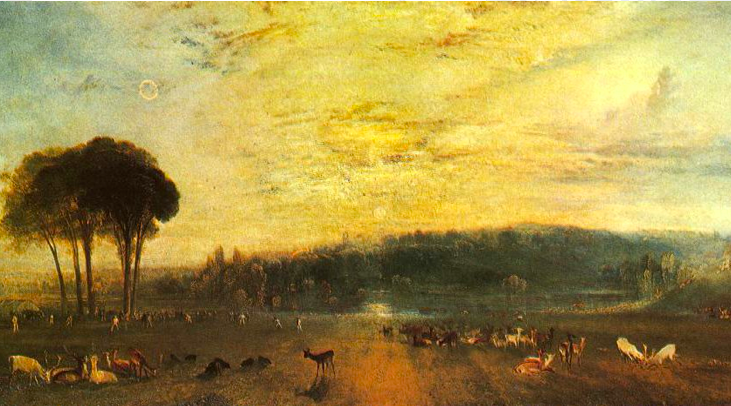
An ongoing art research project is working to identify air pollution in past centuries, using landscapes and other paintings for clues as to the era’s atmospheric makeup.  In one case, the eruption of the Tambora Volcano in Indonesia caused several years of bright red and oranges sunsets around the world, most notably documented in the paintings of J.M.W. Turner.  “From Turner you see that in this specific year he starts painting sunsets a little more reddish, compared to two or three years before,” says lead researcher Dr. Andreas Kazantzidis. (more…)

Paris – Camille Henrot: “Grosse Fatigue” at Kamel Mennour Through March 8th, 2014

Thursday, February 27th, 2014


Camille Henrot, Grosse Fatigue (2013), via Sophie Kitching for Art Observed

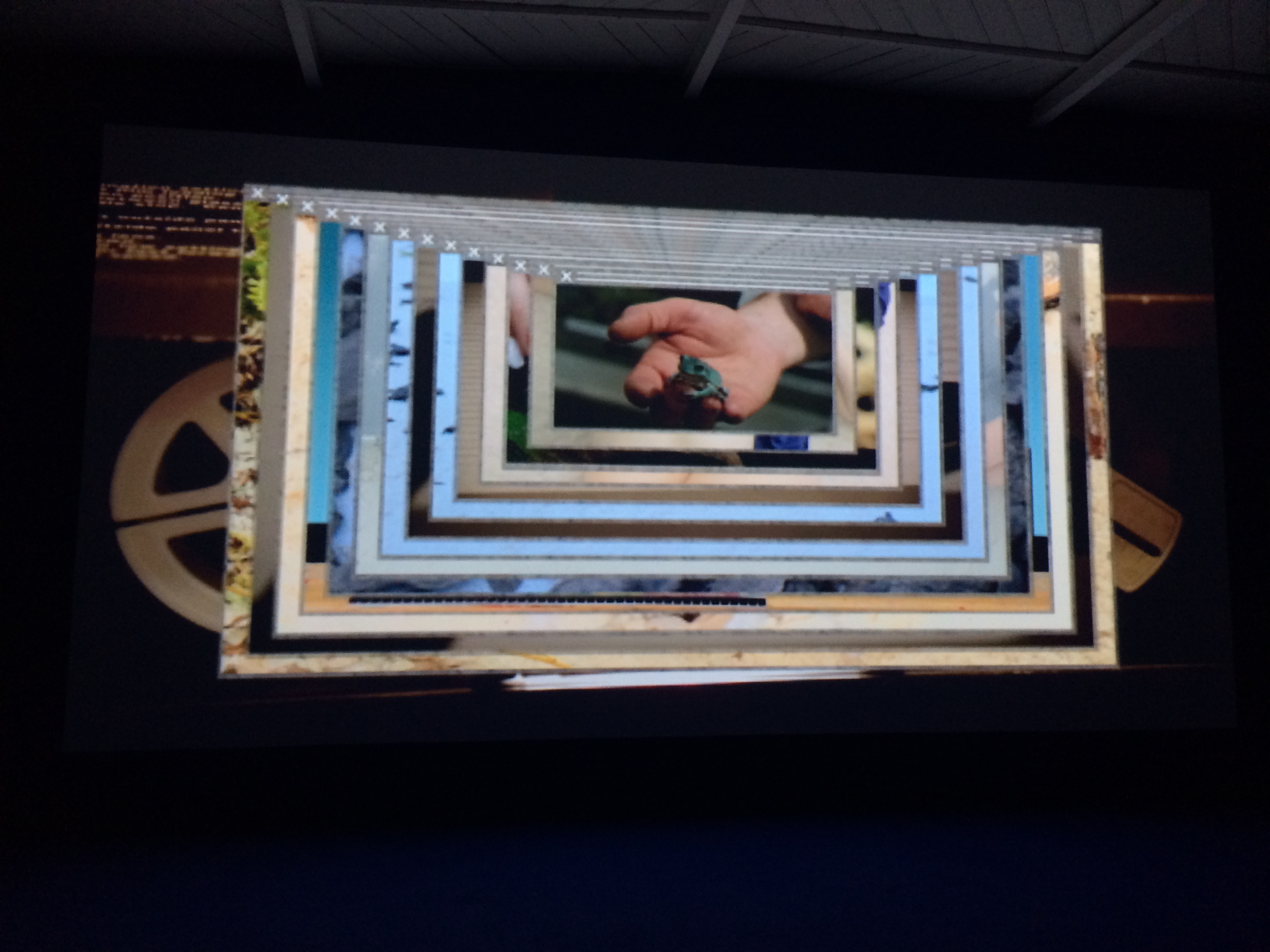
Camille Henrot’s Grosse Fatigue seeks an experience akin to the slow trawls of internet message boards, Wikipedia pages, and Google searches that mark the contemporary search for information, a compartmentalized seeking after discrete bits of data.  Running from image to image, many culled from the archives of the Smithsonian Institution in Washington, D.C., Henrot’s project offers a condensed experience of information overload, cramming the story of the earth’s creation into 13 minutes.


Camille Henrot, Grosse Fatigue (2013), via Sophie Kitching for Art Observed (more…)

London – Darren Almond: “To Leave a Light Impression” at White Cube Bermondsey, Through April 13th, 2014

Tuesday, February 25th, 2014


Darren Almond, Fullmoon at Volcanic Archipelago (2013)

Photographer Darren Almond is currently exhibiting a selection of works from both his “Fullmoon” and “Present Form” series, alongside a group of small bronze sculptures at White Cube’s location in the Bermondsey neighborhood of London. The works will remain on view through April 13, 2014. Over a period of 13 years, Almond has worked on a photographic series entitled Fullmoon picturing scenes from every continent, all taken under the light of a full moon. Utilizing long exposure times and well-placed cameras, the images capture details within the darkness that the human eye is normally unable to see, all while adding an eerily surreal atmosphere to the environments on view, stuck somewhere between the bright light of day and dark night. These works represent a continuing effort by Almond to follow themes of geology, myth, and history alongside his fascinations with time and light themselves.


Darren Almond, To Leave a Light Impression (2013), all photos via White Cube

(more…)

Researchers Study Age of Highest Creativity for Artists

Monday, January 6th, 2014

New research is indicating that most artists make their best, most valuable work at the age of 42.  Studying the work of 200 of the most prominent artists around the world, researchers found that the average age at which they produced their highest valued work at auction was usually made at two thirds into their life.  The number fits startlingly well with Fibonacci’s “golden ratio” of 0.6180, which has long been seen to guarantee proper proportions in the arts. (more…)

Smithsonian Director to Step Down Next Year

Saturday, September 21st, 2013

Smithsonian Institution director G. Wayne Clough has announced his intentions to step down as the head of the national museum and research network next year, providing the institution with time to find his successor.  “When I became secretary in 2008, I believed strongly that the Smithsonian had enormous untapped potential, especially in digital technology, to reach millions of people and serve as a resource for those who cannot visit Washington,” He said. “I am confident that with our initiatives under way in bioconservation, education, digitization and fund-raising, this is the right time to announce my plans for next fall so that an orderly transition can begin.” (more…)

Damin Hirst Previews Science Gallery

Wednesday, August 21st, 2013

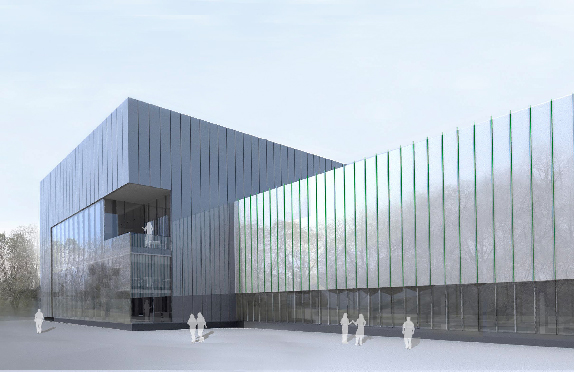
Damien Hirst’s Science Gallery and Studios has selected a design for construction, a 9,000 square meter space in Stroud, England that will make it the largest art production site in the world.  Designed by Bath-based firm Designscape, Science will feature numerous studios, spaces, and a formaldehyde room for Hirst’s famous preserved works.  The building is also distinguished by its shifting, colorful facade.  “The aim was to produce a wall that was intriguingly blue from one direction and green from the other,” says Designscape. “If you stand halfway down the elevation, you are not quite sure whether the building is blue or green.” (more…)

Rauschenberg Foundation to Launch Marfa Dialogues in New York

Wednesday, July 17th, 2013

The Robert Rauschenberg Foundation is leading a push to bring the Marfa Dialogues, a series of discussions and art events combining the arts and sciences in the small Texas arts community, to New York City, with the help of Cooper Union, the Brooklyn Academy of Music and Columbia University.  The first edition of Marfa Dialogues/NY will focus on climate change and the environment.  “When a number of different organizations align on a topic, it elevates the visibility,” says director of the Rauschenberg Foundation Christy MacLear. (more…)

Japanese Study Finds Mice Attentive to Art

Friday, July 5th, 2013

A recent study of laboratory mice at Keio University in Japan has sought to uncover whether the small animal could distinguish between various works of art by Kandinksy, Renoir, Picasso and Mondrian.  Using various rewards for the animal, the researchers discovered that mice were able to distinguish works as unique, and were also, in some cases, able to identify an artist’s work by their style of painting.   (more…)

Geneva – Wim Delvoye: “Oeuvres choisies (1988 – 2011)” at Galerie Guy Bärtschi Through March 15th 2013

Thursday, March 14th, 2013


Wim Delvoye, Oeuvres Choisies (1988-2011) (Installation View), via Galerie Guy Bartschi

This month, Galerie Guy Bärtschi in Geneva, Switzerland presented a solo show of works by Belgian neo-conceptual artist Wim Delvoye, running through March 15th, 2013.  Exploring a broad selection of the artist’s work, from his bold reinterpretations of classical symbolism to more contemporary iconography and satire, the show illustrated Delvoye’s broad practice, as applied towards the analysis of meaning and value in contemporary and classical art.


Wim Delvoye, Viae Crucis – Station XIV. Jesus Is Laid In The Tomb (2006), via Galerie Guy Bartschi (more…)