Global contemporary art events and news observed from New York City. Suggestion? Email us.

Los Angeles – “Eau de Cologne” at Sprüth Magers Through August 20th, 2016

Thursday, August 18th, 2016

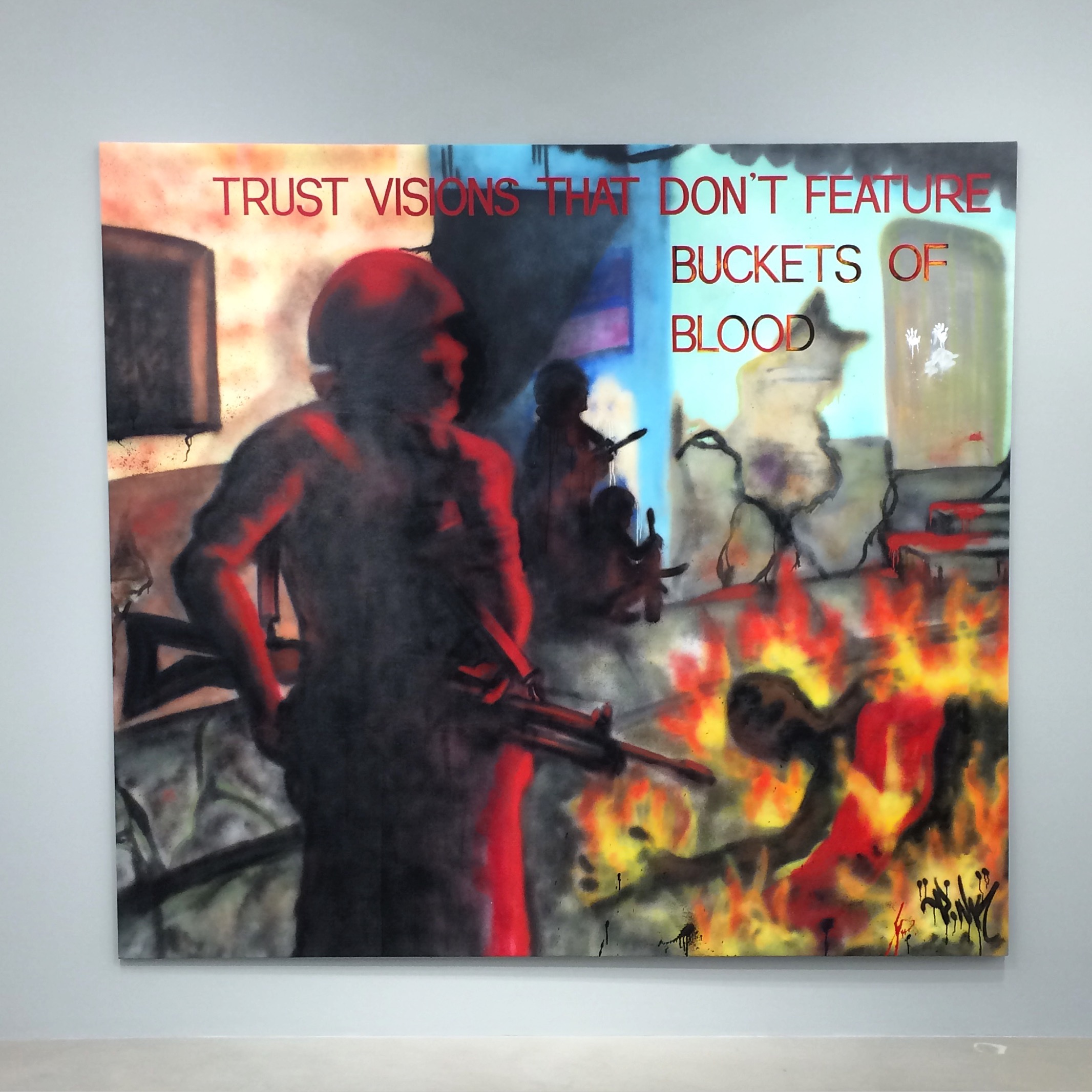
Jenny Holzer/Lady Pink, Trust visions that don't feature buckets of blood (1983-84), via Art Observed
Jenny Holzer/Lady Pink, Trust visions that don’t feature buckets of blood (1983-84), via Art Observed

Taking its own unique turn on the group exhibition, Sprüth Magers is currently showing a powerful two-floor exhibition devoted to the female artists on its roster, examining their shared interests in political and institutional critique, and explorations of the art object’s role in relation to the gallery.  Culling together a series of seminal works from Cindy Sherman, Jenny Holzer, Barbara Kruger, Louise Lawler and Rosemarie Trockel, the exhibition is a well-executed work of its in, ultimately welcoming unforeseen material and political connections among this group of artists. (more…)

New York – “Nice Weather” Curated by David Salle at Skarstedt Gallery Through April 16th, 2016

Wednesday, March 30th, 2016

Carroll Dunham, Mound A (1991-1992), via Art Observed

Flexing his curatorial muscle at both Skarstedt Gallery locations in New York, David Salle has compiled an intriguing collection of recent paintings by a vastly diverse group of artists, and examines their shared interests in the grounds of abstract painting: formal concerns of size, scale and focus, in combination with the compositional elements of color, contrast and hue. (more…)

London – “From Figuration” at Skarstedt Gallery Through March 23rd, 2013

Friday, March 22nd, 2013


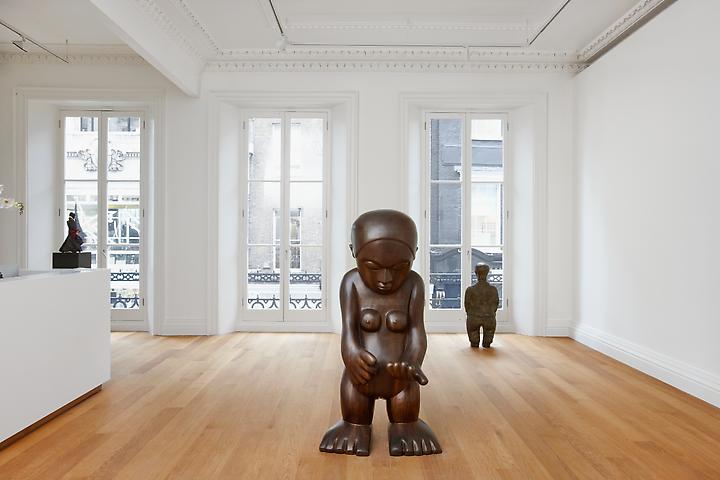
From Figuration (Installation View), via Skarstedt Gallery

Currently on view at Skarstedt Gallery’s London location is a compelling exploration of figurative sculpture, titled From Figuration.  Welcoming a host of high-profile names, including George Condo, Thomas Schütte, Jonathan Meese, Rosemarie Trockel, Rebecca Warren, and Paul McCarthy, the exhibition seeks to capture a broad range of approaches and themes expressed by this particular niche in the field of sculpture. (more…)

New York – “Rosemarie Trockel: A Cosmos” at the New Museum through January 20th, 2013

Friday, December 28th, 2012


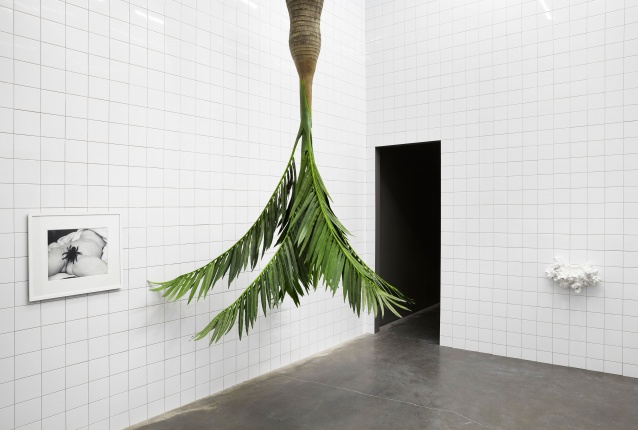
Rosemarie Trockel: A Cosmos, all images courtesy New Museum

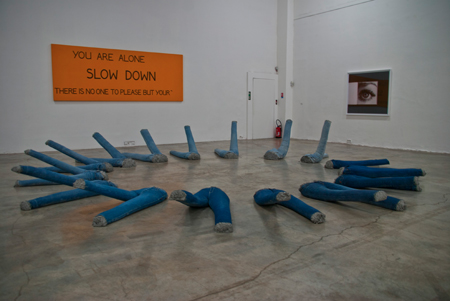
The New Museum, in collaboration with the Museo Nacional de Arte Reina Sofia, presents the illuminating and expansive world of Rosemarie Trockel. Lynn Cooke, former deputy director and chief curator at Reina Sofia, worked with Trockel to imagine a world that is very much Trockel’s without being Trockel-centric: her lumpy sculptures and smooth, linear woolworks are shown with a massive preserved lobster and other natural artifacts; her videos and installations abide just a level above the orangutan Tilda’s three paintings; 18th century naturalist Maria Sybilla Merian‘s precise watercolors hang near the self-taught Judith Scott‘s frenetically wrapped yarn sculptures. (more…)

AO On Site – London: Frieze London and Frieze Masters Summary and photoset, October 14th, 2012

Sunday, October 14th, 2012


Lynda Benglis sculptures and Hans Hurting paintings at Cheim & Read’s booth at Frieze Masters. All photos by Caroline Claisse for Art Observed unless otherwise noted

Frieze Masters and Frieze London concluded on October 14th, with both fairs reporting solid sales on the high end. This year, there was a distinct focus on curated booths and curatorial projects and less of an overt feeling of commercialization. Frieze Masters in particular focused on serious connoisseurship and an academic approach, both of which translated into a successful fair for dealers.

(more…)

Kassel: Quinquennial exhibition dOCUMENTA (13) opens in Kassel on June 9th, to run through September 16th, 2012

Monday, June 11th, 2012


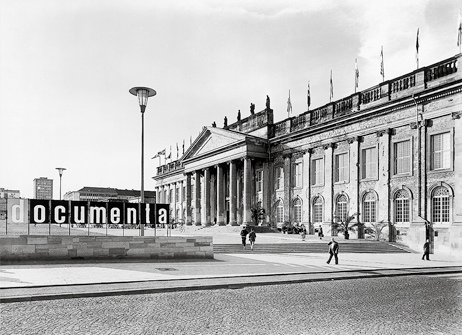
Fridericianum in Kassel via dOCUMENTA

Every five years, the city of Kassel in Germany plays host to dOCUMENTA, a colossal, 100-day long exhibition of contemporary art from all over the world.  Participating artists are provided at least two years to complete their work and the results are thus consistently thorough and complex.  This year is dOCUMENTA’s thirteenth edition and is expected to attract more than 750,000 visitors, nearly twice that of last year’s Venice Biennale.


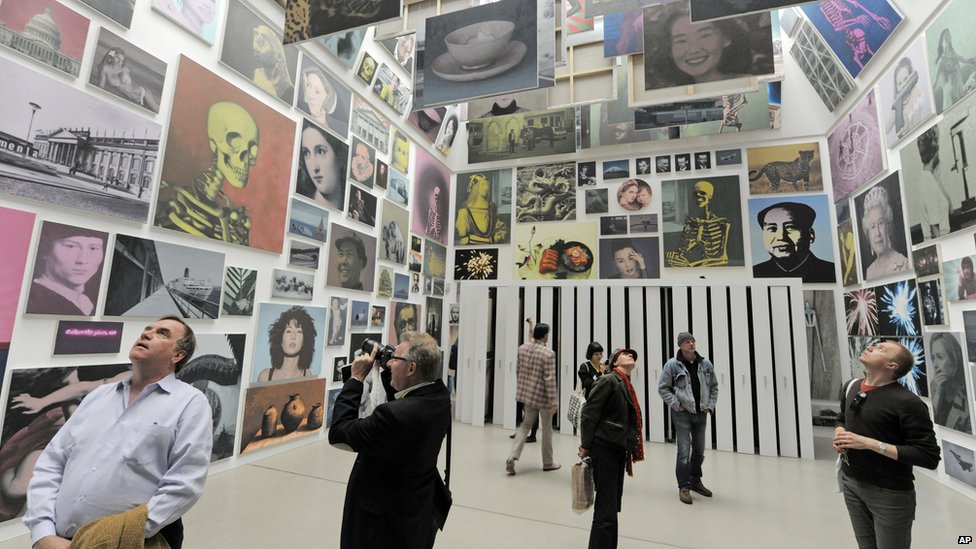
Yan Lei‘s  “Limited Art Project”, a room of works completed daily over the past year.  The room and the art hung on its walls will be sprayed over with car paint, retransforming every piece into a blank canvas.  This image is featured on BBC News’ Big Picture series.

(more…)

AO On Site – Paris: ‘Fresh Hell’ at the Palais de Tokyo through January 16th, 2011 featuring Maurizio Cattelan, Martin Creed, Isa Genzken, Dan Graham, Philip Guston, Martin Kippenberger, Nate Lowman, Sarah Lucas, Bruce Nauman & Frank Owen, Michelangelo Pistoletto, Rob Pruitt, Agathe Snow, Rudolf Stingel, Rosemarie Trockel and others

Thursday, January 13th, 2011


Installation image, all photos by Caroline Claisse for Art Observed unless otherwise noted

Currently on view at the Palais de Toyko is Fresh Hell, a group exhibition curated by British-born New York-based artist Adam McEwen.  Shedding a bit of dark humor on the city of Paris, McEwen brings together medieval sculpture and conceptual work from artists long forgotten as well as contemporary artists, pondering just what sort of position and creative endeavors an artist can make in today’s world. The works deal with morbidity, decay, and notions of ‘the end,’ making Death the principle theme.

More text and images after the jump…

(more…)

Go See – Switzerland: Rosemarie Trockel at Kunstmuseum Basel through September 5th, 2010

Saturday, July 10th, 2010


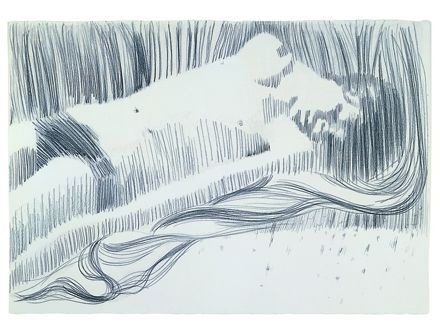
Preliminary Study (1989) by Rosemarie Trockel, via Kunstmuseum Basel

Currently showing at Kunstmuseum Basel, Switzerland through September 5th, 2010, is an exhibition of works by German artist Rosemarie Trockel. Trockel is an artist of contrasts. Her early “knitting pictures” are an example of such; they consist of logo-stamped wool stretched thin across a series of frames. The logos belong to large corporations or countries. For example, one logo uses the symbol of the Soviet Union superimposed on the colors of the United States’ flag. Besides the obvious intimations of a power struggle through the use of symbols, another contradiction can be noted. Knitting is traditionally a woman’s job, but the frames and the logos recall industrial production and manufacturing, or traditional male jobs. While these “knitting pictures” are not on display at the Kuntsmuseum, other equally suggestive works are. The Kunstmuseum in Basel is working with the Kunstmuseum in Bonn, Germany, to coordinate the exhibit.


Untitled (2000) by Rosemarie Trockel, via Kunstmuseum Basel

More text and images after the jump… (more…)

Newslinks for Tuesday, November 11th, 2008

Tuesday, November 11th, 2008

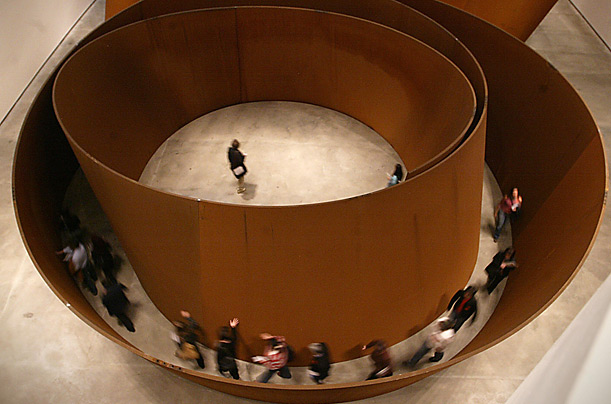
Richard Serra via Time

The Economist is long on Richard Serra: “slow-burning Mr Serra will be one of the artists whose work will continue to shine long after he is gone” [TheEconomist]
–>
The defensive financial strategies art auction houses take during a market downturn
[The Art Newspaper] and in related, financing for fine art is correspondingly receding [Portfolio]
–>
A look inside the highly specialized art storage business [Financial Times]
–>
The Tate Modern may have accidentally hung 2 Rothko’s sideways [TimesUK]

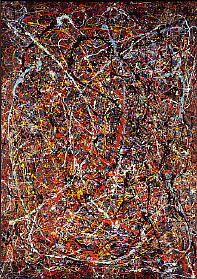
The Pollock in question via terisfind.com

Highly controversial supposed Jackson Pollock drip painting is for sale for $50 million in Toronto [CBC]
–>
London’s Colony Room, favored bar of Lucian Freud and Damien Hirst, may close [TimesUK]
–>
50 to 75 Modern and Contemporary German works of art including some by Rosemarie Trockel, Georg Baselitz and Candida Höfer donated to the Busch-Reisinger Museum at Harvard [Artdaily]
–>
Yvonne Force Villareal, sets up an APFlab (“Art Production Fund”) on Wooster street in Soho, New York [NYTimes]

The Bacchae: The Library Theatre, Manchester and on tour

The Independent (London, England) February 21, 1996 | JEFFREY WAINWRIGHT Euripides’ The Bacchae is strong meat, literally. Its dominant image is of dismemberment, animal and then human flesh seized alive and devoured in the furthest reach of frenzy available to human kind.

Now The Library is a nice place, a cosy cup of a theatre, designed less for Bacchanalia than for Spring and Port Wine. Other venues on Kaboodle’s itinerary may suit Euripides better, but interesting as it is to contemplate the startlingly different contexts of ancient Greek and modern theatre, the production does not resolve this fundamental incongruity. For this, the less traditional the performance space the better.

But for all the rawness at its heart, The Bacchae is in no sense a “primitive” play. It is the story of the coming of the disreputable but potent Dionysus to Thebes, determined to prove his lineage as a son of Zeus and claim the honour due to a god. Though despised as a foreigner by the Theban king, Pentheus, Dionysus has captivated the women of Thebes, who, led by Pentheus’ own mother Agave, are now the Bacchae, living in liquid abandon beyond the city walls. Dionysus, himself ambiguously gendered, is lord and liberator of women, and the rapture he engenders transports them from their appointed place into ecstasy. The play’s main conflict is therefore between this liberation and the pursed rectitude of Pentheus.

It appears to be a clash of immutable elements, but Euripides’ psychological subtlety lies in the way Dionysus is able to evoke a prurient interest in the activities of the women in his enemy, and so seduce him from his fixed masculinity. Discovered in his spying, Pentheus is sundered by the Bacchae, his own mother claiming his head as a trophy. The second psychological switch is Agave’s rediscovery of her former mind as the frenzy abates and the contrary face of the Dionysian rapture becomes apparent. go to web site facial hair styles

Happily, the complexity that surrounds Pentheus is presented with nuanced care by Lee Beagley. Softly spoken, he has no crude, tyrannical bluster about him, and he is drawn into his fatal female garments in a gentle swirl of reluctance and surprised pleasure. Kaboodle’s other long-time actor, Paula Simms, takes two of the vitally important “messenger” roles, and her narration, especially the first account of the Bacchae at large, is clearly and characterfully done. This scene also provides the best visual moment, in which the company create a huge beast from a cow’s skull and a vast red curtain, then hunt it down.

Otherwise, Lee Beagley’s staging and Bruce Gallup’s design are disappointing by Kaboodle’s previous standards. The eclecticism of the costumes is unfocused, and a cumbersome piece of revolving stage machinery resembling a sawn- off caboose clutters the action. Eugene Salleh makes a puckish Taras Bulba of Dionysus, but his voice is not sufficiently commanding. Despite the ritual elements, these plays require a tremendous amount of simple, informative speaking, and, Beagley and Simms apart, this is woefully underpowered here. The result is that this great and disturbing play is not nearly disturbing enough.

n On tour to Marlborough, Birmingham, Kendal and Leicester this month, then throughout F} {DD} 21:02:96 {XX} Arts {PP} 8 {HH} Music: Music from the Yellow Shark, Frank Zappa / Ensemble Modern Royal Festival Hall, London {BB} Phil Johnson {TT} The late Frank was sadly unable to appear for this ultimate valediction of his role as a serious composer, but if he had, he would, you think, have taken comfort in the extent to which his facial hair-styles seemed to live on in many members of the audience. The yellow shark of the title lay pinned up behind the stage like a scruffy talisman and an air of expectation lay over the whole of the first, non-Zappa, half of the performance. web site facial hair styles

Opening with three studies by Conlon Nancarrow, the Ensemble demonstrated immediately their masterly grasp of difficult repertoire, the two pianos chattering away as if in binary code while the percussion sectionswapped roles in a see-saw of rhythmic accents, like chopsticks rattling on a plate. Study No 6 was achingly beautiful, the strains of a Mexican lullaby somehow emerging through the convulsive pitter-patter. Varese’s Deserts followed, accompanied by a film by the video artist Bill Viola of underwater point-of-view shots, barren landscapes and, eventually, an interior scene in which a man moved slowly across a room. Meanwhile, the music – part live orchestra, part taped industrial sounds – reached a series of crescendos, matched at the end by a magnificent coup de film, when the man and his furniture were dashed to smithereens. It was difficult, it was pretentious, but it was also very well done, and it matched the accumulating tension and ecstatic release of the music marvellously. So how would Frank live up to that?

Brilliantly, of course. First assembled for a performance at the 1992 Frankfurt Festival, which was partly conducted by the composer, the music is a compendium of Zappa themes that he got up to speed on his trusty synclavier and then printed out as music for the orchestra to learn, the title emerging only as an afterthought. Beginning with a cheesy Star Wars-ish introduction, the Ensemble’s programme mixed and matched movements from the original performance (available almost complete on the excellent Rykodisc album). Echoes of Boulez and Henze, at times rather too plinkety- plonk for comfort, were evident, but much of the music was quite superb, and the closing “G-Spot Tornado” was a tour de force of sustained action and invention. Only in “Bebop Tango,” was there any real Mothers of Invention monkey-business (when the orchestra talked among themselves, loudly) and the concert ended in total adulation. The encore, though, was a bit of a disappointment; hoping maybe for “Peaches En Regalia”, what we got was the Star Wars intro again. But the Zappa-philes went home happy, as they knew they would.

JEFFREY WAINWRIGHT