Global contemporary art events and news observed from New York City. Suggestion? Email us.

Venice – Chris Ofili: “Poolside Magic” at Victoria Miro Through July 1st, 2017

Wednesday, May 10th, 2017

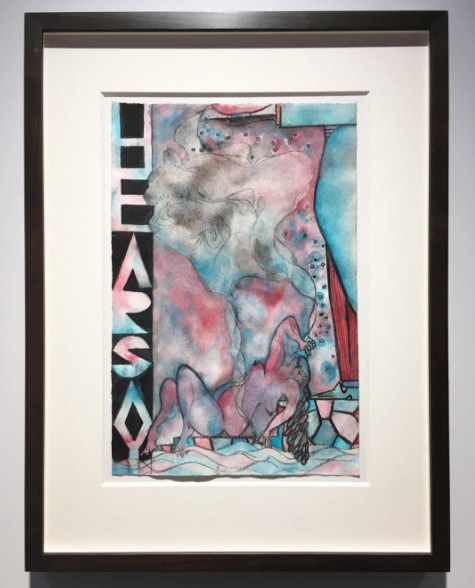
Chris Ofili, Hearsay 2 (2017), via Art Observed

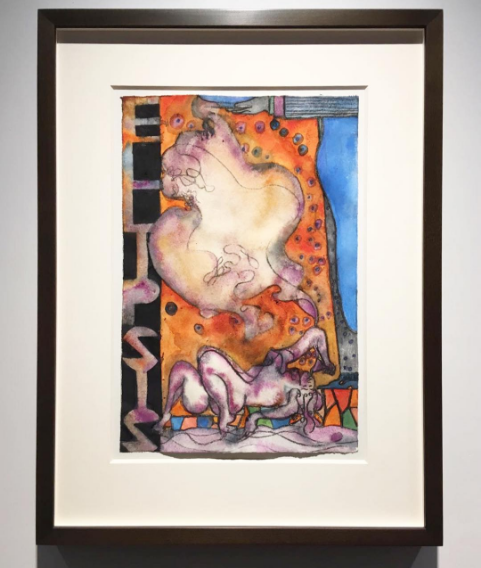
Chris Ofili’s Poolside Magic series, first begun in 2012, is a swirling body of watercolor and charcoal works, running through a visual system of theme and variation that the artist recently returned to this year, adding new details, text and visual threads that cements the artist’s work as an exchange with the continued threads of his own career as much as with the visual iconographies and scenes that he continues to repeat and revisit five years after his first series of works.  Capping his new entries in the series with an exhibition in Venice this week, Victoria Miro has planted its foot in the city of Venice permanently, a fittingly lyrical introduction for the gallery and its artists to the long tradition of Venice and its history of art.

Chris Ofili, Elipsis 1 (2017), via Art Observed

(more…)

London— Njideka Akunyili Crosby: “Portals” at Victoria Miro Through November 5th, 2016

Sunday, November 6th, 2016
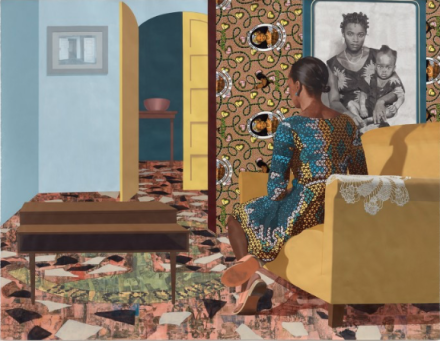
Njideka Akunyili Crosby, Mother and Child (2016), courtesy of Victoria Miro

Njideka Akunyili Crosby, Mother and Child (2016), courtesy of Victoria Miro

Currently on view at Victoria Miro, Portals is Njideka Akunyili Crosby’s first solo show in Britain. Drawing upon religious art, traditional modes of academic portrait painting, personal anecdotes, history, and cross-cultural exchange, her new series of large-scale paintings examine generalisations about African diaspora and notions of cultural identity. Born in Nigeria, Akunyili Crosby moved to the United States at the age of sixteen, and currently resides in Los Angeles. She is in many ways culturally tied to her homeland, a place she uses as a source of great inspiration, but her work is largely grounded in Western art history. With a keen interest in the ways society categorises individuals and cultures as a whole, she is aware of the groups she falls into. She has been noted by others, and in many ways identifies, as an African American woman, as a Nigerian woman, as an American woman, as a wife, and as an artist; she exists as an individual who inhabits many spheres, residing in a realm of constant flux and transformation.
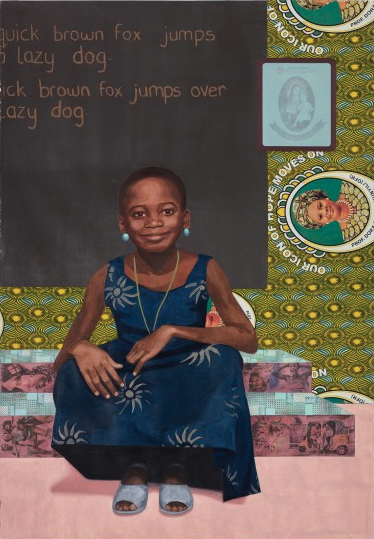
Njideka Akunyili Crosby, “The Beautyful Ones,” Series #5  (2016), courtesy of Victoria Miro

Njideka Akunyili Crosby, “The Beautyful Ones,” Series #5 (2016), courtesy of Victoria Miro

Her multi-layered and highly complex paintings are a way for her to contribute to this new crop of people, the new cultural identity of a body in transition— an immigrant occupying two identities, two distinct cultures. Her compositions are usually figurative, and are always very layered, both literally in terms of collage techniques and metaphorically by making reference to a long line of pictorial symbolism. The series Portals is an invitation for the viewer into her life, where she creates interior scenes or as she calls them ‘wormholes,’ by which the viewer can examine individual identities that exist in scenes of everyday life. She renders her family and friends while they eat, drink, and watch television, simple activities that act as points of departure and arrival for examining the ebbs and flows of cross-cultural identity. The windows, screens, doors, and televisions act as points of entry for crossing the threshold into a new cultural realm. The ethos of her practice is to uncover nuances in time, space, and values that exist in different societies and regions.
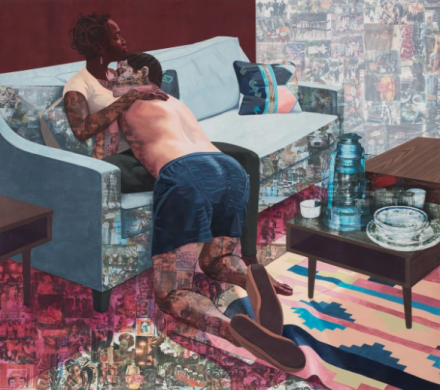
Njideka Akunyili Crosby, Ike Ya (2016), courtesy of Victoria Miro

Njideka Akunyili Crosby, Ike Ya (2016), courtesy of Victoria Miro

In the work Ike Ya (2016) she captures an affectionate moment between a couple. However, alongside the tenderness of the embrace there is also a sense of pacifying another’s behaviour. Like most of her other portraits, the viewer doesn’t meet the gaze of the subject, rather examining the work from a slightly voyeuristic perspective. Additionally she and her husband are often the models for her paintings, so in many ways this image addresses her anxieties about marrying a white American man, someone who is rooted in another culture. As in many of her other works, her loaded symbolic iconography becomes clear only upon closer inspection. At first glance the painting portrays a relatively westernised couple in their home, however there are key objects that are indicative of an attention to Nigerian pop culture and politics. Using an acetone transfer technique the artist lays a second wave of imagery that layers her Nigerian self with her American self. Offsetting the couple are Nollywood film posters, Nigerian celebrities, and ‘Bring Back our Girls’ slogans, in reference to the 2014 kidnapping of Nigerian schoolgirls by Boko Haram. Additionally the artists grandmother’s storm lantern is included in the scene, an item that is present throughout her oeuvre, such as in Grandmother’s Parlour (2016).
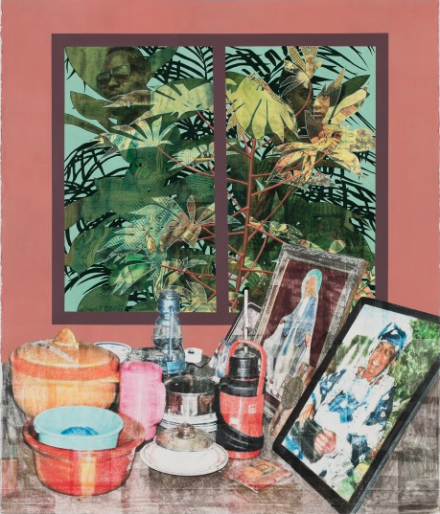
 Njideka Akunyili Crosby, Grandmother’s Parlour (2016), courtesy of Victoria Miro

Njideka Akunyili Crosby, Grandmother’s Parlour (2016), courtesy of Victoria Miro

Truly a master storyteller Akunyili Crosby”s work operates in an ‘in-between’ realm, examining different zones of identity and normalcy. In Super Blue Omo (2016), the title refers both to a well-known brand of washing powder that was advertised in Nigeria in the 1980s, and that Akunyili Crosby would have been familiar with as a child, as well as an emotional state of ‘blueness.’ The advertisement for the cleaning product is playing on the television, while the lone female figure stares off into the distance. Sitting on a couch with a tea set for two, this image of coolness draws connections between commodity goods and psychological states.
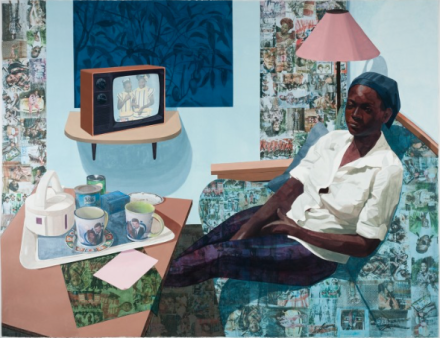
 

Njideka Akunyili Crosby, Super Blue Omo (2016), courtesy of Victoria Miro

Njideka Akunyili Crosby, Super Blue Omo (2016), courtesy of Victoria Miro

The objects in Akunyili Crosby’s works hold equal symbolic weight as the sitters, sometimes acting as stand-ins for particularly loaded visual icons. The Twain Shall Meet (2015) alludes to traditional still lives in the art historical canon. The image depicts an interior scene with a table owned by her grandmother centrally placed. Atop the table are framed images of her family members, as well as the recurring motif of her grandmother’s kerosene lamp which makes reference to rural areas of Nigeria where electricity is unreliable or nonexistent. There are also tea containers and images of the Virgin Mary, making a commentary on the history of British colonial rule.
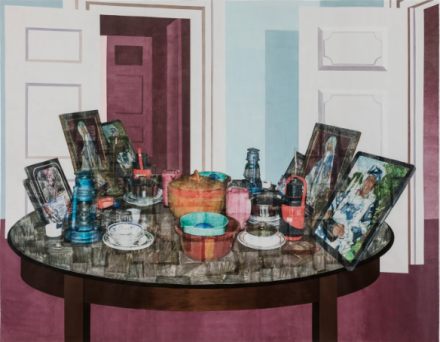
Njideka Akunyili Crosby, The Twain Shall Meet (2015), courtesy of Victoria Miro

Njideka Akunyili Crosby, The Twain Shall Meet (2015), courtesy of Victoria Miro

The collaged elements and attention to texture plays into notions of dual identity, and counteract generalisations made about African culture and the diasporic experience.  Akunyili Crosby explains that ‘the layers of herself change over time, as she moves farther out into the world.’  Her patchwork of iconography allows her to create multi-faceted individuals. Speaking to both urban and rural life, she depicts the many identities that exist in a single person. It is hard to categorise her figures into a simple box, because the specific idea of a character doesn’t exist. Her vibrant works portray the contemporary experience of postcolonial self, of an individual who inhabits a liminal space.

-S. Ozer

Related Links:

Exhibition Page [Victoria Miro]

London – Yayoi Kusama at Victoria Miro through July 30, 2016

Monday, June 27th, 2016

Kusama Chandelier
Yayoi Kusama, Chandelier of Grief (2016). All images via Victoria Miro.

Now through July 30th, Victoria Miro in London is presenting new works by Yayoi Kusama, spanning the gallery’s three locations and waterside garden across the British capital.  The work featured here was created exclusively for this show, including the artist’s iconic pumpkin sculptures, immersive mirror rooms, and her ongoing My Eternal Soul series. Across the work exhibited, the artist’s ongoing investment in themes of the infinite and the sublime is explicit. (more…)

Eric Fischl on his Art Fair Paintings

Tuesday, October 14th, 2014

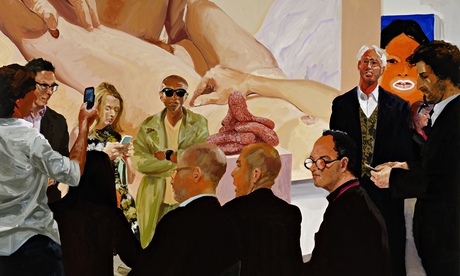
The Guardian profiles painter Eric Fischl’s recent series of works documenting the peculiar, occasionally surreal landscapes and politics of the modern art fair circuit.  “The big collectors do this kind of speed-dating thing,” the artist tells The Guardian. “They try to get in and out before anyone buys what they are after and certainly before the hoi polloi gets to look. And then you’ve got people who are just there for the social scene. So you have people texting or not paying any attention at all. But when you stop the moment you can see this weird world that is taking place. They are being regarded and judged by the work itself in some ways.” (more…)

Yayoi Kusama, Damien Hirst to Leave Gagosian Gallery. Koons showing at Zwirner.

Friday, December 14th, 2012

Yayoi Kusama is reportedly leaving Gagosian Gallery, reports the ArtNewspaper. Damien Hirst also reportedly broke off his representation of 17 years as well this week. David Zwirner recently announced plans to host a Jeff Koons exhibition a long standing artist of Gagosian. Koons and Kusama currently have shows up at Gagosian locations (Los Angeles and Beverly Hills, respectively). Kusama is represented in London by Victoria Miro.  Hirst is represented in London by White Cube.
(more…)

London – “Chris Ofili: To Take and To Give” at Victoria Miro, Through November 10th, 2012

Tuesday, November 6th, 2012


Chris Ofili, installation view(2012) courtesyVictoria Miro/The National Gallery

Chris Ofili’s latest collection of works  on display at Victoria Miro in London are actually intended for use as backdrops for a collaborative piece that involved The Royal Opera House, The Royal Ballet and the National Gallery. The project, involving artists, choreographers and dancers, depicts scenes from Ovid’s Metamorphosis that were in turn been recreated by Titian in a trilogy of paintings recounting stories of Diana and Actaeon, Diana and Callisto and The Death of Actaeon.

The narratives recall Diana’s nude encounter with Actaeon upon which she turns him into a deer and he is consequently killed by his fellow hunters; the revelation that Callisto, one of Diana’s nymphs who is sworn to chastity, is impregnated by the god Jupiter and subsequently banished; and finally a depiction of Actaeon’s gory death.


Chris Ofili, Stag (2012) courtesy Victoria Miro/The National Gallery

(more…)

London – Elmgreen & Dragset: “Harvest” at Victoria Miro, Through November 10th, 2012

Sunday, October 14th, 2012


Elmgreen & Dragset, The Stag, 2012, courtesy Victoria Miro

Elmgreen & Dragset’s Harvest is a unique twin exhibition divided into two coexisting halves, presented on the upstairs and downstairs of the Victoria Miro gallery in London.

The lower half of the gallery presents a banal, almost “mock tranquillity”, exhibiting sheets of paint that have been carefully peeled from notorious art galleries from all over the world and are named retroactively. The works both pay homage to the galleries’ ability to facilitate the work, yet simultaneously mock the uniformity and pedantic nature of art culture. The installation on this floor plays on the irony of a modern art exhibition space: consistent, precise, conforming; yet the works that lie within are anything but.

To reinforce the subliminal jest upon which Elmgreen & Dragset have built their career, the upstairs of the installation is completely paradoxical to the work from which it ascends. What can only be described as a barn awaits the unaware viewer, the immediate submergence of hay forcing him to interact with the installation.

(more…)

AO On Site – New York: The Armory Show at Piers 94 & 92, March 8-11, 2012

Thursday, March 8th, 2012


All photos on site for Art Observed by Aubrey Roemer.

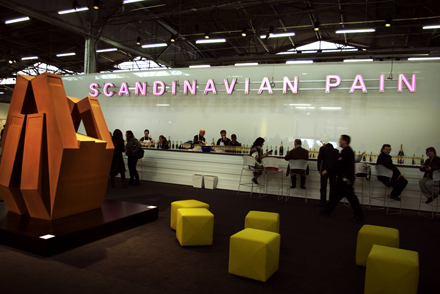
The Armory Show 2012 hosts 228 international exhibitors, “showing work that realizes the fair’s mission of innovation and discovery.” Split between Piers 92 and 94 on the west side of Midtown Manhattan, the show runs March 8–11, with several new programming initiatives and a re-designed floor plan added to the show’s fourteenth edition. Pier 94 is the larger exhibition hall, the Contemporary section featuring mainstay galleries Lisson Gallery, Sean Kelly, Victoria Miro, Kukje Gallery/Tina Kim Gallery, David Zwirner, Sprüth Magers, Gallery Hyundai, and Kaikai Kiki, among many others—including 19 invited Nordic galleries in the ‘Armory Focus’—while the Modern sector on Pier 92 is home to Marlborough Gallery, O’Hara Gallery, Inc., Pace Prints, Peter Findlay, and many more.


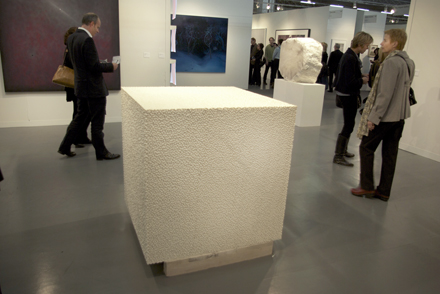
Ai Weiwei, Marble Cube at Lisson Gallery

(more…)

AO On Site – Paris: FIAC Preview (with photoset) and News Summary, October 20–23, 2011

Thursday, October 20th, 2011


–>
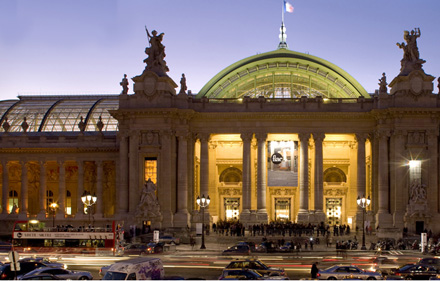
FIAC 2011 at the Grand Palais in Paris. All photos on site for Art Observed by Caroline Claisse.

FIAC 2011 (The Foire Internationale d’Art Contemporain) opens this weekend in Paris for its 38th year. The international art fair, which boasts an impressive array of 168 galleries from 21 countries, will show the work of some 2,800+ artists. Running October 20–23rd, the exposition comes at the tail end of Frieze Art Fair, drawing artists, collectors, gallerists, and enthusiasts eastward from London. While the focus of Frieze leans toward contemporary, FIAC includes both contemporary and modern, including works from Picasso, Calder, and Matisse. The fair has been building momentum since 2006; Jennifer Flay, appointed general director in 2010, credits this boost to the fair’s move to the Grand Palais, one of the city’s most cherished architectural gems. The fair also expands this year to the Jardin des Tuileries, the Jardin des Plantes, the Museum of Natural History, and other venues around the city. Another innovation, a mobile application (in French) is available through Windows Phone which enables visitors to book tickets directly from their phone, as well as receive realtime news updates from the fair, find exhibitors and artists, and access videos and photos of the show.


–>
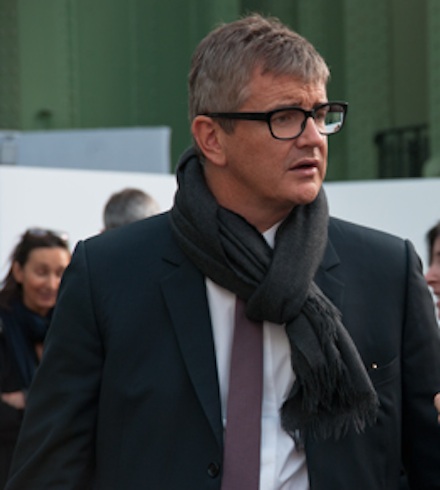
Jay Jopling of White Cube, which is exhibiting Damien Hirst’s Where Will It End.

More on site coverage and images after the jump… (more…)

AO on site – Final installment and news summary – Art Basel, Switzerland, sets attendance records, sets very positive tone, concludes

Monday, June 21st, 2010


–>
Quilt by Alexandre da Cunha, and Six Billboards by Angus Fairhust, Art Basel.  Image via Art Daily, AP Photo/Keystone/Georgios Kefalas.

Yesterday marked the end of the most highly-attended Art Basel to date. The 41st annual contemporary art fair boasted 306 galleries from 36 countries, and AO was on site to peruse the work of some 2,5000 artists.  62,500 dealers, collectors, curators, high-profile shoppers, artists, and art appreciators navigated installations, browsed gallery booths, mingled, and enjoyed the city of Basel.  Artists, established and newcomers both, showcased works ranging from Polaroids to performance pieces, paintings to videos, sculptures to large-scale installations.  A social and teeming affair with an obvious commercial edge, Basel’s sales were optimistic.  Picasso, Warhol, Prince, Hirst, de Kooning, Pollock, and other similarly established artists reigned supreme as the focus of this year’s event.  Franck Giraud, a New York dealer, spoke to the New York Times about the lack of prominently featured up-and-comers: “Is it because that’s what the market wants, or is it because dealers didn’t want to take risks? I think it was a bit of both.” Nonetheless, certain galleries used Basel as a platform to introduce new artists and show off their latest signings.

More text, images and related links after the jump…
–>
(more…)

AO On Site – London: Chris Ofili at Tate Britain through 16 May 2010

Tuesday, February 9th, 2010


The Raising of Lazarus, 2007 (David Zwirner Gallery)

Chris Ofili’s familiar hits are brought together with his more mature recent works for the first time in a mid-career survey at the Tate Britain, London, through 16 May 2010. The collective effect of the show is a kaleidoscope of wild humor, brilliant color and raw energy. What is striking about the exhibition is its unique position within the growing contemporary canon: firstly, Ofili is unusual as a painter in a conceptual era, and, secondly, he is intensely concerned with the aesthetic. The paintings in this exhibition are richly ornamented; their surfaces are imaginatively constructed from such incongruous materials as elephant dung (Ofili’s signature), map pins and glitter. The paintings are structural and highly tactile, and the viewing experience is a sensory event. This perhaps most evident in The Upper Room, a collaboration with the architect David Adjaye to design an independent and enclosed viewing space. The audience is guided down a barely lit corridor into a dim, yet glittering chamber that enhances the spiritually of viewing paintings which reference both the Christian and Hindu faiths.

More text, images and related links after the jump….
(more…)